
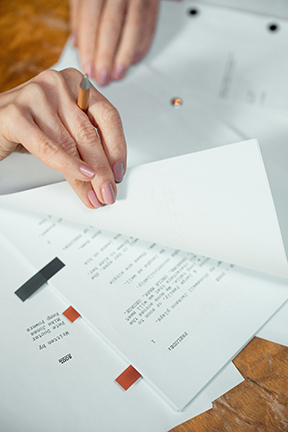
But that doesn’t mean they’re easy.
Some writers I know have said short stories are much harder than novels because you have to make every word count.
I just happen to have a long-standing love of the short story that started when I discovered science fiction magazines when I was in high school. That’s when I wrote my first short stories, all centering around sci-fi topics.
When my kids were little, I read mostly magazine short stories for the same reason I had a subscription to Reader’s Digest. I could devote a few minutes to reading after the kids went to bed or between tasks. I could get a beginning, middle and end in one sitting, something impossible with a novel.
When I discovered audio books that I could listen to on my commute, I did get back into novels and longer non-fiction, which pushed short stories into the background of my reading and writing. But in the past couple of years, I’ve rediscovered the format and jumped back in.
I’ve submitted short stories to a few anthologies, and won a spot in the Guppy anthology, Gone Fishin’: Crime Takes a Holiday. For those, I wrote stories, and sent them into the virtual slush pile for editors to evaluate without knowing who I am. For this story, third time was a charm, and I got to work with editor Jim Jackson of Wolf’s Echo Press, who really helped me improve the final version of “Blood on the White Rose.”
I’d already run several iterations of the story through my critique partners. Four in particular kept telling me the story on the page wasn’t the story I kept saying it was. Finally, days before the submission deadline, they got through to me. At least they spurred me on to rewrite the entire story, bringing forth a more fleshed out main character, and cutting the duration of the events. In its first version, the story took place over a period of weeks. In the end, it lasted something under 24 hours.
What really intrigues me about the OCWW process, though, is the attention to the story before it ever sees an editor. I was assigned to a critique group, given a deadline of March 20 to submit a draft, and received copies of my critique partners’ stories to review before our first critique meeting on April 1.
Of course, I had more than one short story I thought might fit the anthology theme: I didn’t see that coming. I sent two and asked the group to help me select one for my final focus. We’ll see what they say, because I will need to make a first round of revisions before our next meeting, April 17.
But we have until late June to work with each other before our next submission deadline. At that point, we’ll go into a developmental editing process. I have never done anything explicitly called developmental editing, although I may find that’s exactly what I went through with Jim.
I have always imagined developmental editing is something that takes place while the story or novel is in the draft stages with the author. I’m looking forward to being more enlightened as we head toward a 2026 publication of the OCWW anthology. I’ll keep you posted.
À bientôt!
 sharon p. lynn