Driftless in Decorah

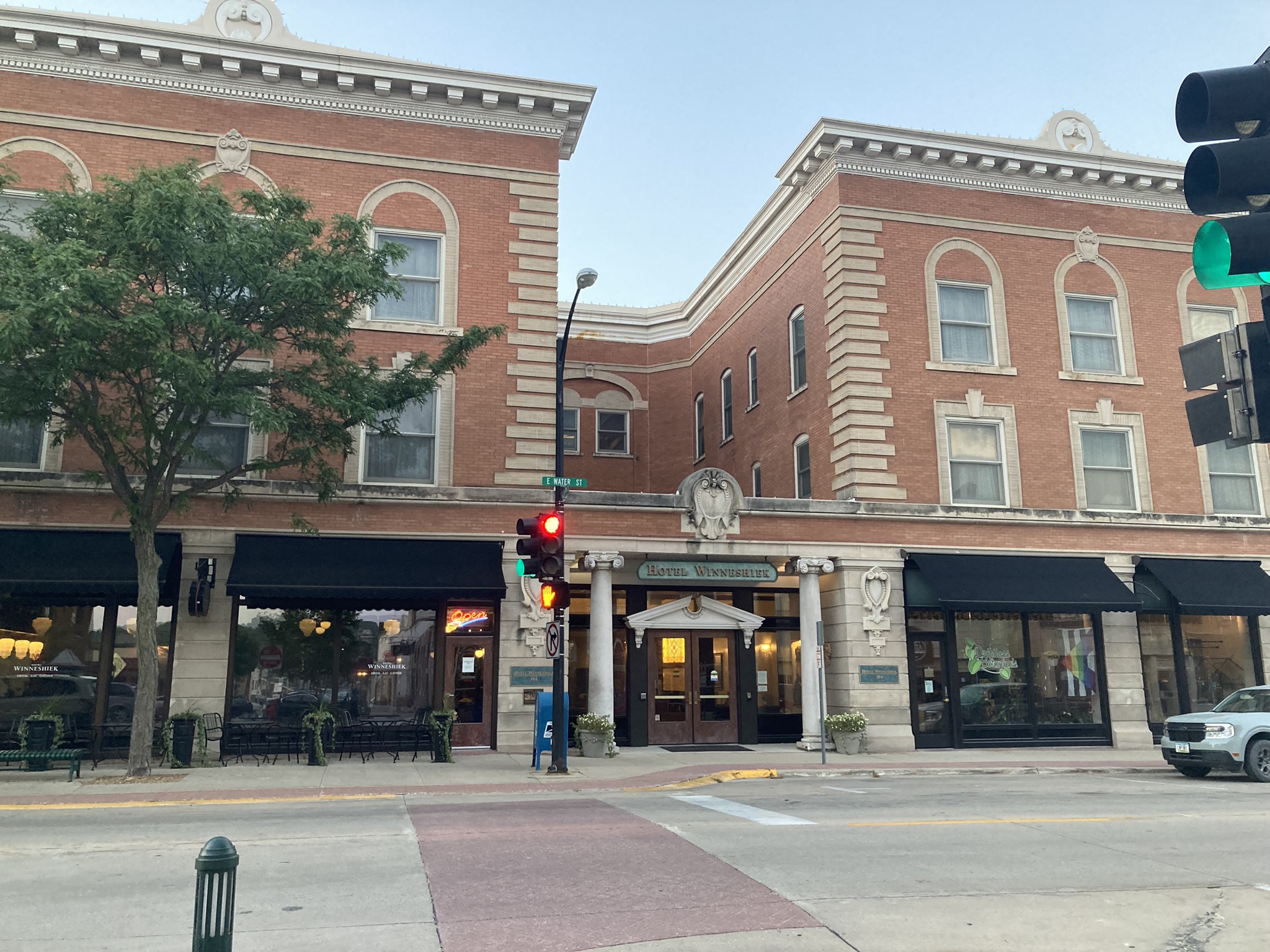
Hotel Winneshiek in downtown Decorah, Iowa. (Sharon’s pictures)

In the past few years, I’ve become fascinated to learn the geography of my home in north central Illinois. I learned more than twenty years ago that my house sits on the edge of the Driftless Area. Last year, I spent time exploring the Lansing, Iowa-Ferryville, Wisconsin, area, and the Dubuque, Iowa, environs. This year, I made a trip to Decorah, Iowa, and found a marvelous little town with a vibrant business district and a historic hotel.

My intention was to visit a few parks in the area, but I’m a heat wimp. The temperatures rose to the 100’s while I was there. I slowly strolled part of downtown Decorah and gave myself an unplanned writing retreat instead. I’ll have to go back for the parks, but I fell in love with the north central Iowa community.

The Driftless is an area of Minnesota, Wisconsin, Illinois and Iowa along the Mississippi that was simply missed by the several glaciations eons ago, from 120,000 to 11, 500 years ago. The region’s name comes from the lack of debris — what geologists call drift — throughout this part of the Upper Mississippi. In the flatter lands around it, there are random boulders, gravel, sand and clay brought by the glaciers and left when they receded. You can learn more about Midwest glaciers here.
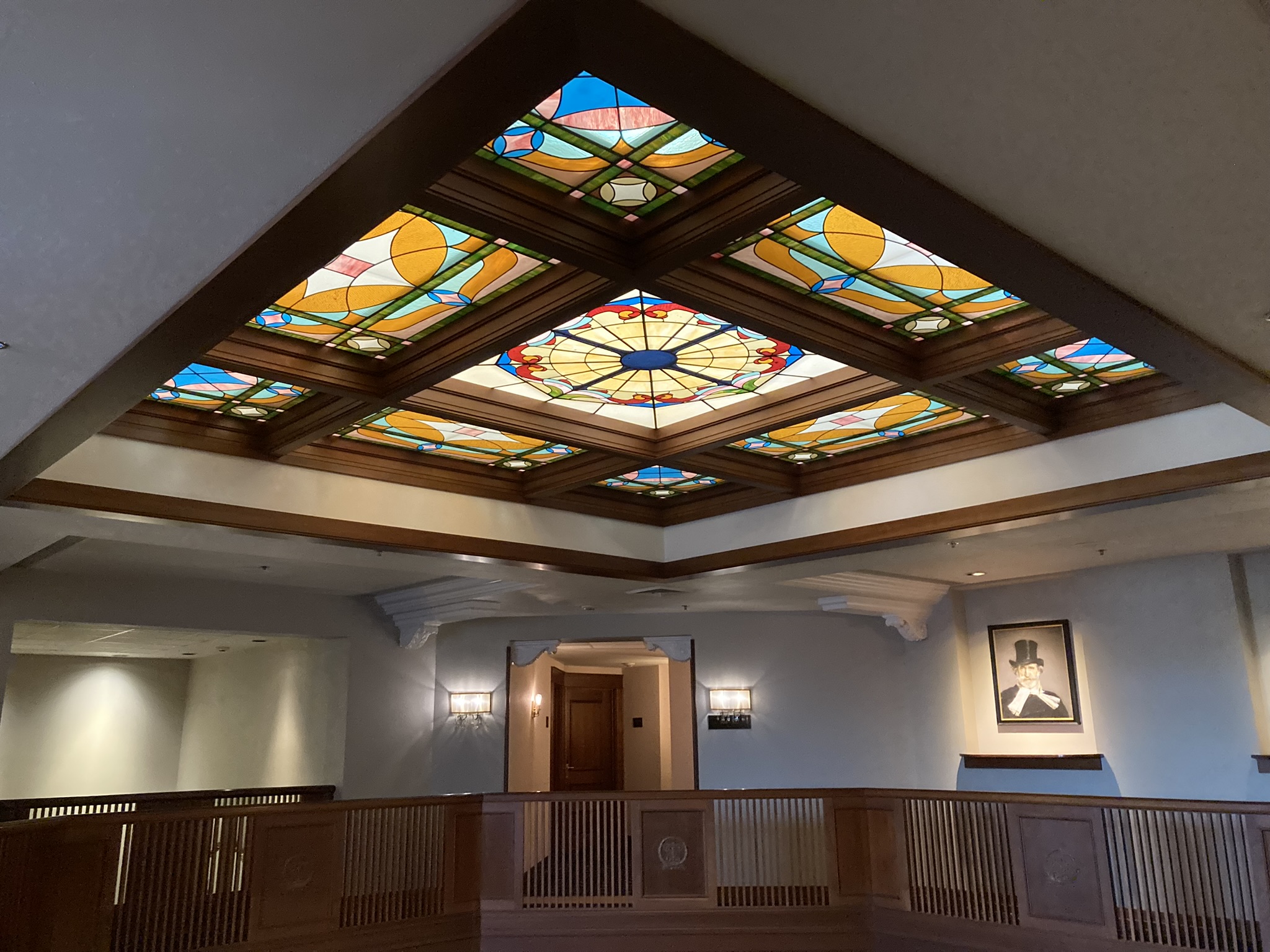
I enjoyed my room at Hotel Winneshiek, a lodging that has been part of Decorah for more than 100 years. The current hotel was begun in 1904 and opened for customers in 1905. Much of the hotel remains as it was when it opened, although amenities have been upgraded as needed. It holds meeting rooms and an opera house for local theater and other events. I loved the view from my third floor lobby balcony. The skylight is beautiful, and the old portraits and other art in the hallway are lovely touches from the past.

The shops downtown are a mix of what you need and what you might like — grocery, pharmacy, souvenirs, arts, crafts, clothing, books and more. I loved Driftless Botanicals. I was tempted to buy a plant, but it was still pretty hot and I had stops to make before I got home. I didn’t want anything wilting in the car. But I found a great, leafy tote bag there.
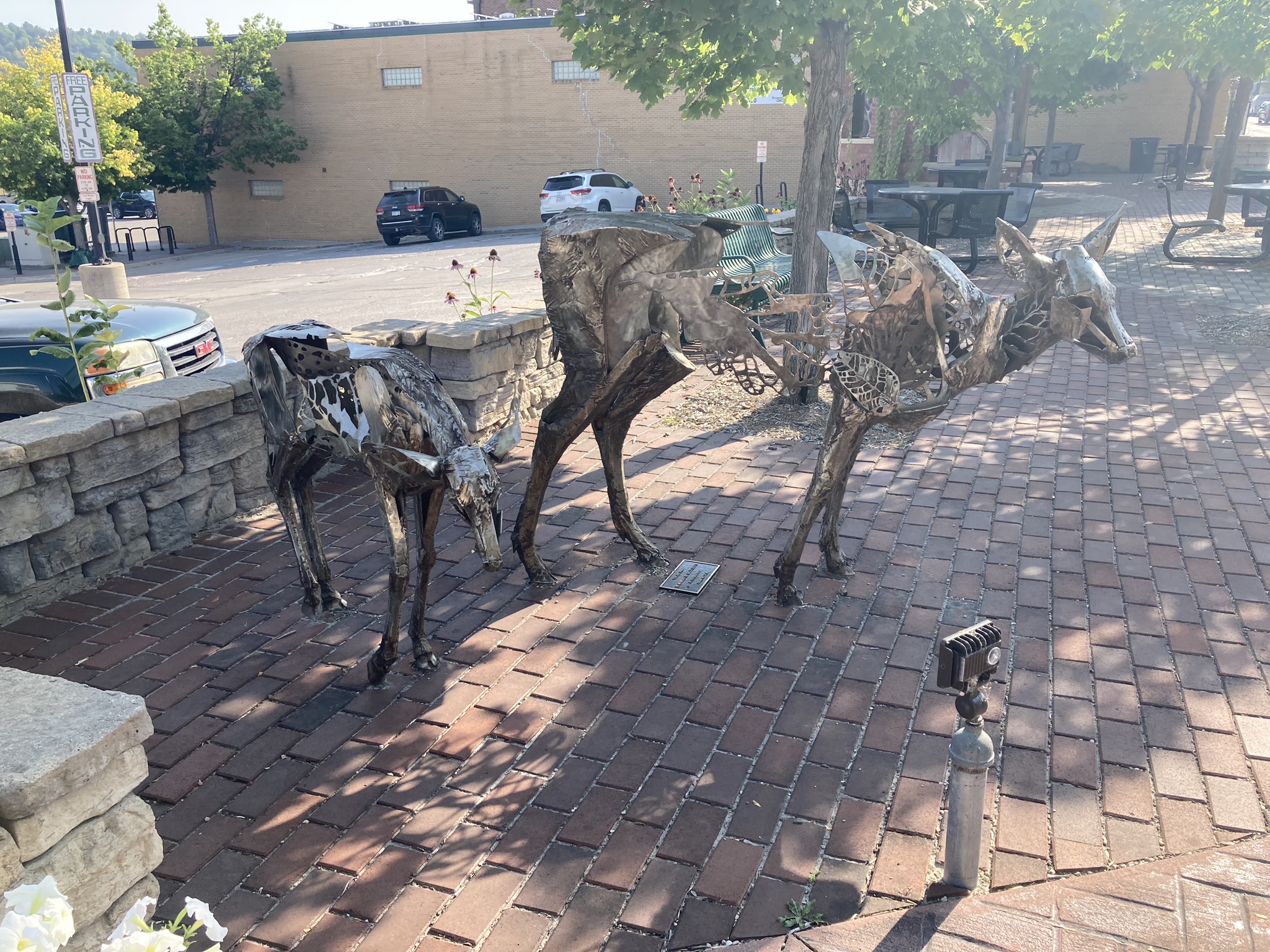
And don’t forget the ice cream shops. You could spend an afternoon doing a taste test at the different shops. There are also shaded seating areas along the main street, like the one near the deer sculptures, where you can rest as you roam.

Also downtown, there’s the Vesterheim, the National Norwegian-American Museum. There are also a couple of places to orient tourists. Say hi to the helpful folks at the shared space called the Decorah Visitor Center and Chamber of Commerce. They have lots of take-away maps, brochures and magazines. But if you miss the hours there, there are also plenty of outdoor stands with literature.

You might think a town in the middle of Iowa would have limited restaurant options, but you’d be surprised. In part because it’s also home to Luther College, you get food options that seem to follow the professors who may come from anywhere in the world. I had dinner at Koreana Japanese restaurant one night, and spaghetti at Mabe’s Pizza another. I think my favorite lunch was at Magpie Cafe and Coffee House. I also enjoyed an afternoon snack at Impact Coffee (where the ice tea was not too bad). I was going to try Don Jose Family Mexican Restaurant, but that was the day the heat broke and there was a 40 minute wait. I walked back across the street to the pizza place instead. Next trip I believe I’ll try to get to Don Jose’s, and to the Rubaiyat Restaurant, which bills itself as “modern American fare in a historic place.”

II found the town charming and do hope to go back. But I probably won’t go again in August. Too hot for my taste, although there were a few hardy bikers taking off from near the hotel. In any case, it was a success as a research trip. I have some book characters who will be stopping by Decorah.

If you want to know more about the Driftless, here are a couple of resources:

The Allamakee (Iowa) County Driftless Center

Decorah, Iowa Driftless Information
Backyard beauty

(Photos by Sharon)

Sometimes the museum right “next door” is one you forget to visit. But I’m glad our recent painting party with Barry Treu turned out to be small enough that he could host us at the Freeport Art Museum. We had fun creating variations on his “rainy day” picture of flowers in boot vases, we were literally sitting in the midst of the 19th Regional Juried Exhibition.

Featuring artists from throughout the Midwest, working in a variety of two- and three-dimensional media, the show will remain at FAM through July 29. Perry Eden, Linda Vietmeyer, Sheila Welch and Kathleen Wilken, all of Freeport, are just some of the artists whose work is featured in the regional show.

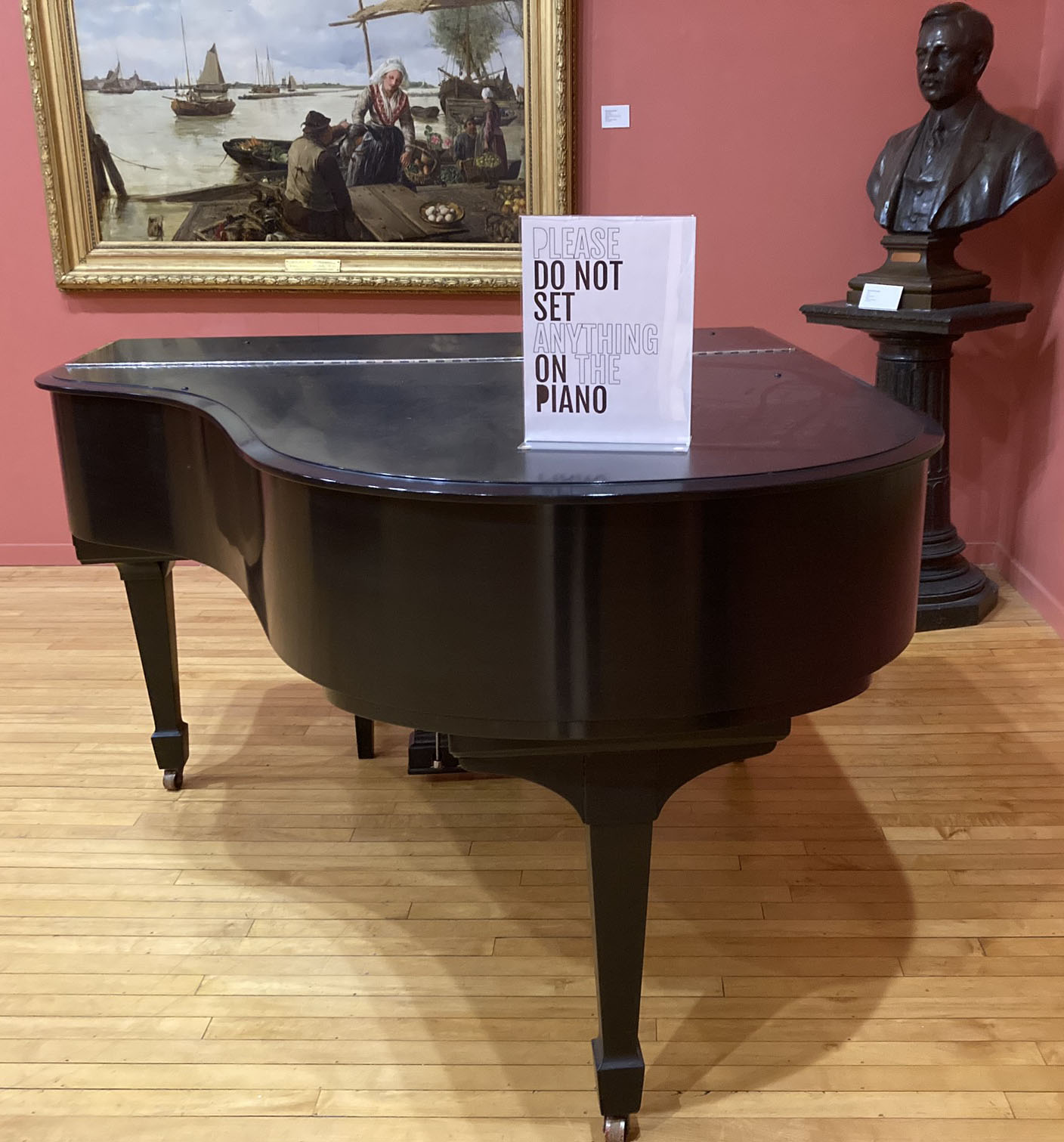
Before we left, we also had a chance to wander through the museum to see some of the other items on display. They are immensly varied. One of my favorites may not be intentional art, but it appeals to my (possibly weird) sense of humor. The “Please Do Not Set Anything on the Piano” sign — set on the piano — strikes my funny bone.

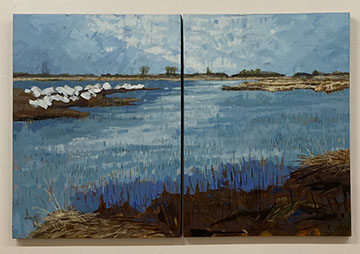
But on a more traditional note, I liked the dyptich — two-panel painting — called Pelican Island by Tara Keating.

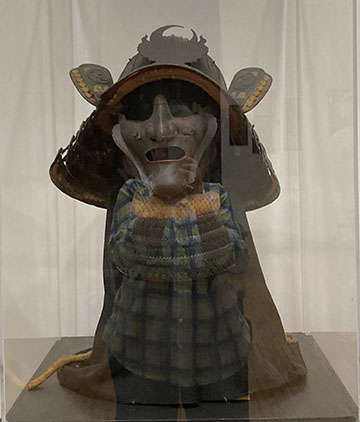
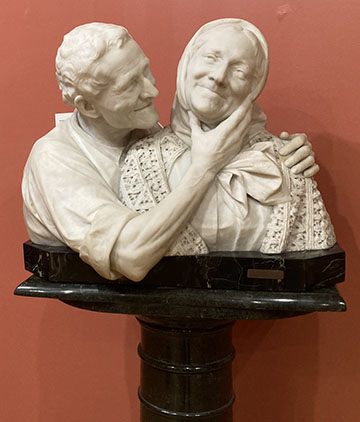
I also liked the late 17th century Samurai helmet and mask, and the flirty statue of peasants, carved in marble by Ferdinand Vichi.

No matter what is shown, its well worth a trip to enjoy the art in our midst at the Freeport Art Museum. And admission is a bargain at $3 for adults, $2 for senior citizens and students, and $10 for a family.

The museum is at 121 N Harlem Ave. Learn more at https://www.freeportartmuseum.com/

Back on the debate trail

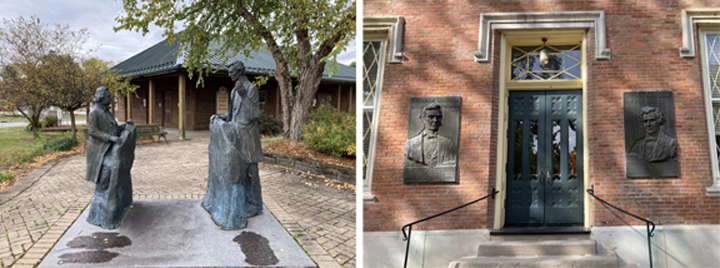
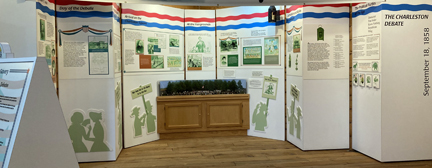
Charleston (left) and Galesburg, Illinois, debate sites. (Sharon’s photos)

A couple of months ago, after I finally took a few photos of the first Lincoln-Douglas debate site in Ottawa, Illinois, and the second one in Freeport, I said I was going to put the seven sites on my “to visit” list. Well, I ticked off two more this month on the way home from a southern road trip.

(Sharon’s photo)

I stopped at Charleston, site of the fourth debate, and Galesburg, site of the fifth debate. No, I’m not taking them in the order they happened. This was the order that worked for my route back home to northern Illinois. I figure I’ll try to do three, six and seven on my next trek south.

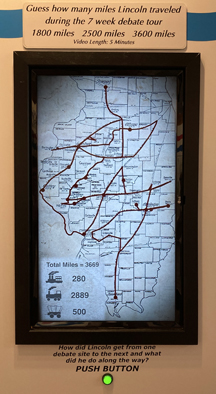
And I don’t expect to log as many miles as Lincoln did while he was on the debate circuit. There’s a map of the whole route, including details about how many miles Lincoln covered via train, boat and wagon at the Charleston museum. (Apparently Douglas didn’t keep track as closely.)

My only advance research for the sites was finding them on my GPS. I was expecting small parks, like the surroundings of the two sites I’d already seen. Each of those has some relatively new signs explaining what went on back in 1858. But neither of these sites is in a park.

Charleston’s debate site is at the Coles County Fairgrounds, and its statues of the debaters are the most accessible of the ones I’ve seen so far. They stand at the corner of a little museum that features some hands-on exhibits, as well as a little theater that shows a short film at the press of a button.

(Sharon’s photo)

The political nature of the debates is clear, with red white and blue bunting and colors throughout the room. But the location was considered especially friendly to Lincoln, where his stepmother, Sarah Bush Lincoln, and other family members still lived. The local hospital bears her name.

(Sharon’s photo)

In Galesburg (also the home of Carl Sandburg, but that’s another story), the debate was held outside Old Main, a building that was finished in the summer of 1857 on the campus of Knox College. There are no statues to commemorate the debate, but on the east side of the building large, bronze plaques of each candidate frame doorways into the building. (The handicapped entrance is on the west side of the building.)

Inside along the hall, several signs and photos illustrate the history of the college, as well as the significance of the debate. And in a small room on the left from the debate doorway is the Lincoln Chair room. The chair is the one Lincoln sat in while waiting for the debate to begin.

(Sharon’s photo)

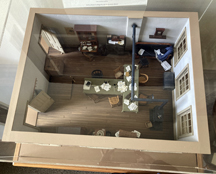
The room also houses a collection of memorabilia from the debate, as well as from the life of the 16th president. Across from the doorway sits a detailed miniature of the law office Lincoln shared with William H. Herndon in Springfield, Illinois. There are also a variety of images — posters, photos– and a small statue of Lincoln on a bookshelf.

Historical note: One of Knox College’s graduates was Hiram Rhodes Revels, who would become the first African-American U.S. Senator and the president of Alcorn University in Mississippi.

To the left of the miniature, is the window Lincoln and Douglas climbed through to reach a platform that was built for their debate. It blocked the door between the plaques, making the window the only access for the debaters. The effort, according to a small sign near the window, led to Lincoln’s remark, “At last, I have gone through college.”

À bientôt!