Adieu, Malice

For the past four years, I’ve been working behind the scenes for the mystery conference Malice Domestic®. This year, I stepped down. With mixed emotions.

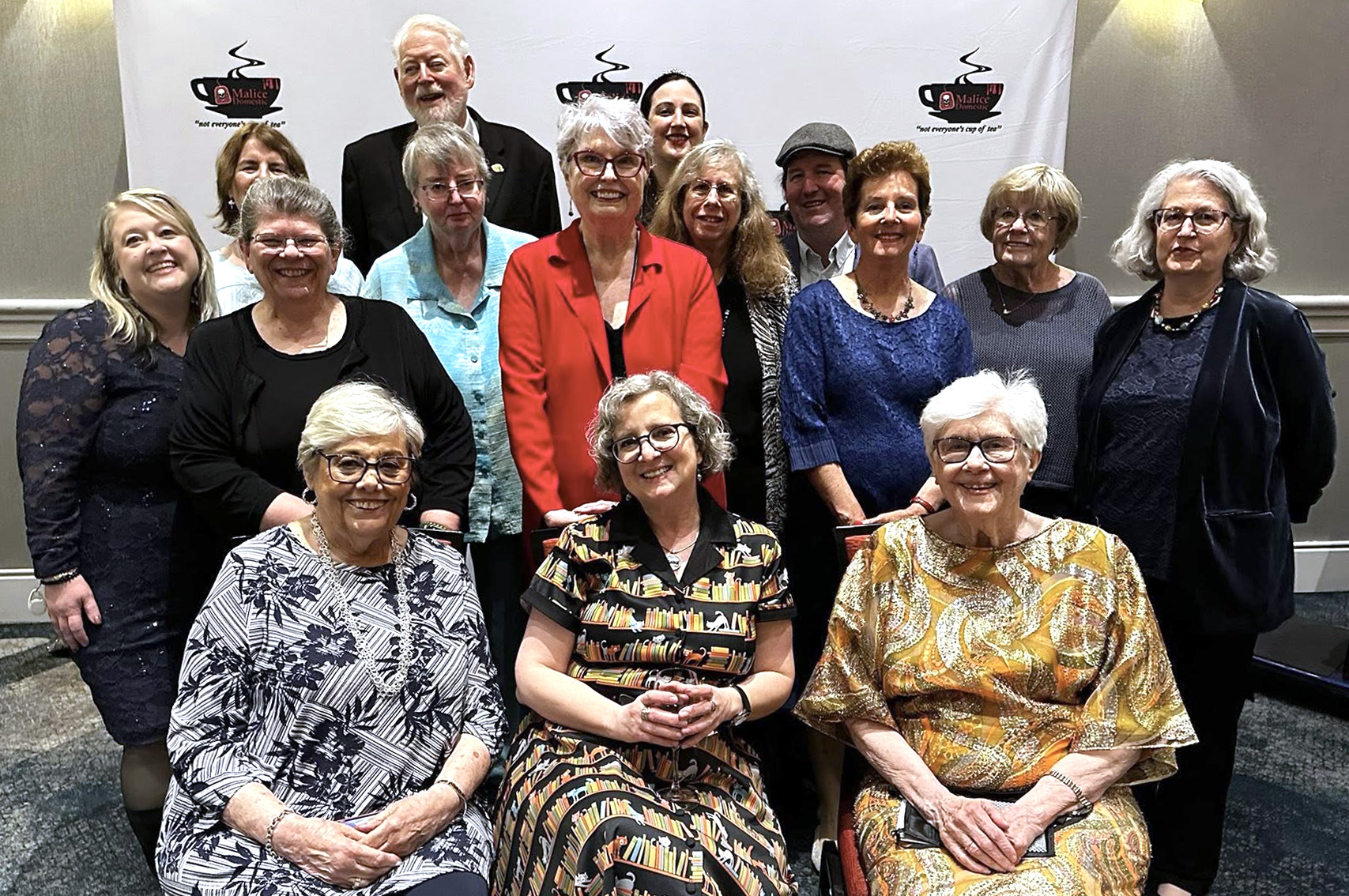
(Photo courtesy Malice Domestic/John Mewshaw)

The board I worked with this year was absolutely the best.

As with any new endeavor, the first year involved a steep learning curve. I really didn’t know what I was getting into when I offered my desktop publishing skills — learned over years of working in newspaper design — for the MD program. Turns out, my incredibly talented predecessor, Rita Owen, was doing way more than just slapping some program pages together. I never did fill her footsteps, as elements of the job she handed off to me got distributed among other board members.

My first year at the conference also was the first in-person Malice after COVID shut it down. My program had to incorporate two years of honorees and nominations and more. It was not flawless. (Not one of them has been.) And I lived in the office for most of the conference. I made it to two Sunday morning sessions in rooms that were mere footsteps away from my windowless corner office.

The second year went a little better, but I didn’t make it to a single session. Don’t get me wrong. I did make it to the banquet and the Agatha tea both years. They were wonderful. And I was hopeful for year three.

But shortly after we cleaned up and got home from Bethesda, Maryland, where Malice Domestic is held, we suffered through a painful board transition that threatened to derail a long-standing mystery community tradition. Cindy Silberblatt, who had been chair years before, stepped up and reeled us all back in. We had super help from our anthology publisher, John Betancourt of Wildside Press, to ensure that element of our tradition wasn’t interupted. Though it wasn’t our original theme, he and his hard-working staff gave us Mystery Most Devious (followed by this year’s Mystery Most Humorous) on time for our signing session. Even our honorees worked tirelessly to ensure a seamless conference.

A family health concern meant I was unable to attend the conference, though, so my fingers were crossed I could actually be there for my fourth Malice this year.

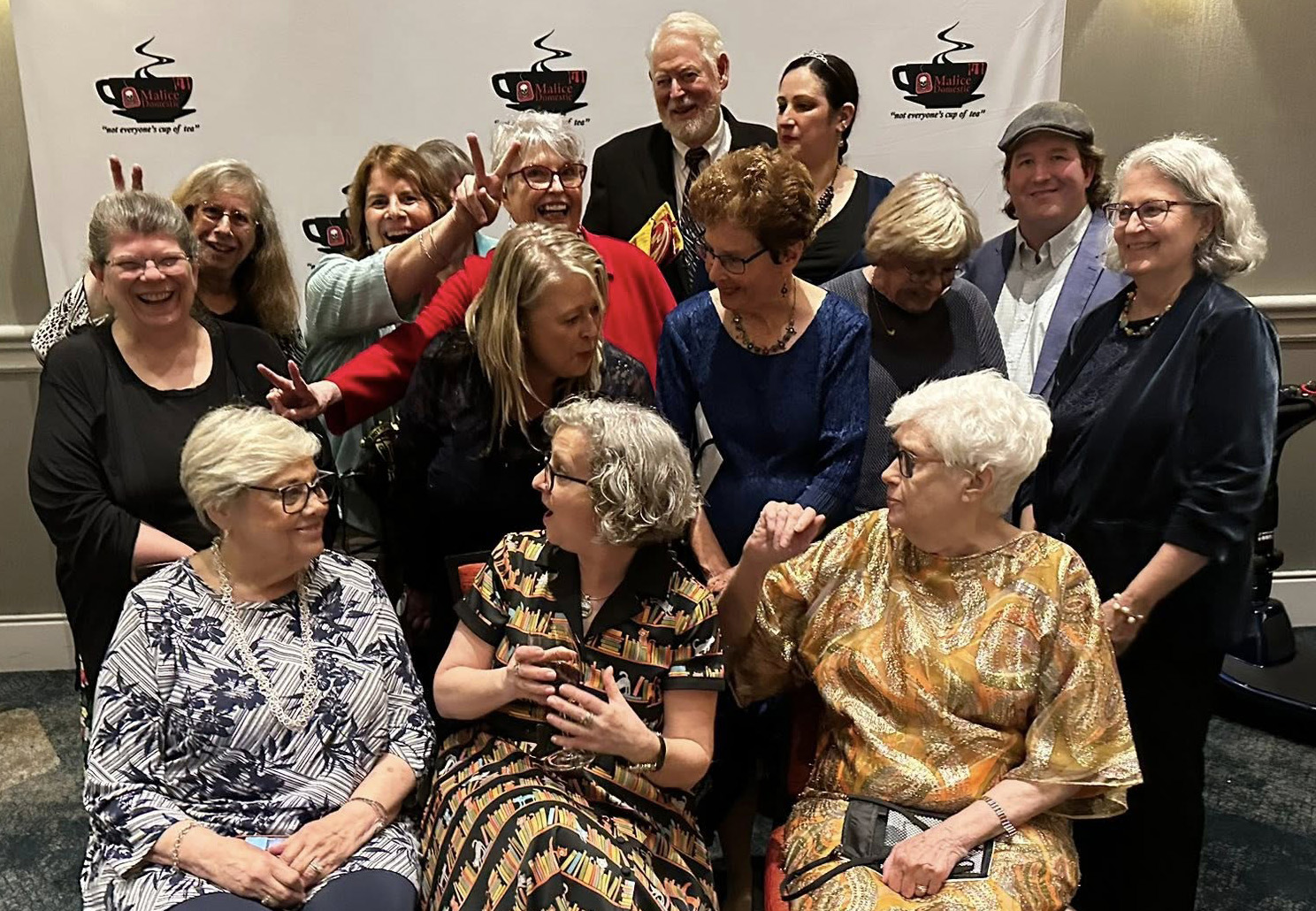
(Photo courtesy Malice Domestic/John Mewshaw)

Despite an unexpected budget hit — I had to get a new furnace — I managed to get to Bethesda for the conference. Since it was my last year on the board, I really wanted to see a few sessions. And, thanks to the generous (and sometimes goofy) board that I worked with, I did!

I finally feel like I’ve had the fun, fan experience that is is Malice Domestic®. I made it to several sessions, including the Guest of Honor interview of Marcia Talley and the Lifetime Achievement interview of Donna Andrews.

I got to visit with fans and authors alike. Everyone was so friendly you really needed the nametags to know who was a fan and who was an author.

I enjoyed the Dorothy Gilman book club session in honor of our “Malice Remembers” author. I hope that becomes a tradition. I bought a trunk of middle grade books at the live auction. My grands and greats will enjoy that. (Yes, I have both.) I had fun, and added a couple of rows to my current afghan project, at Ellen Byron’s crafting session in the hospitality room.

(Photo courtesy Tassey A. Russo)

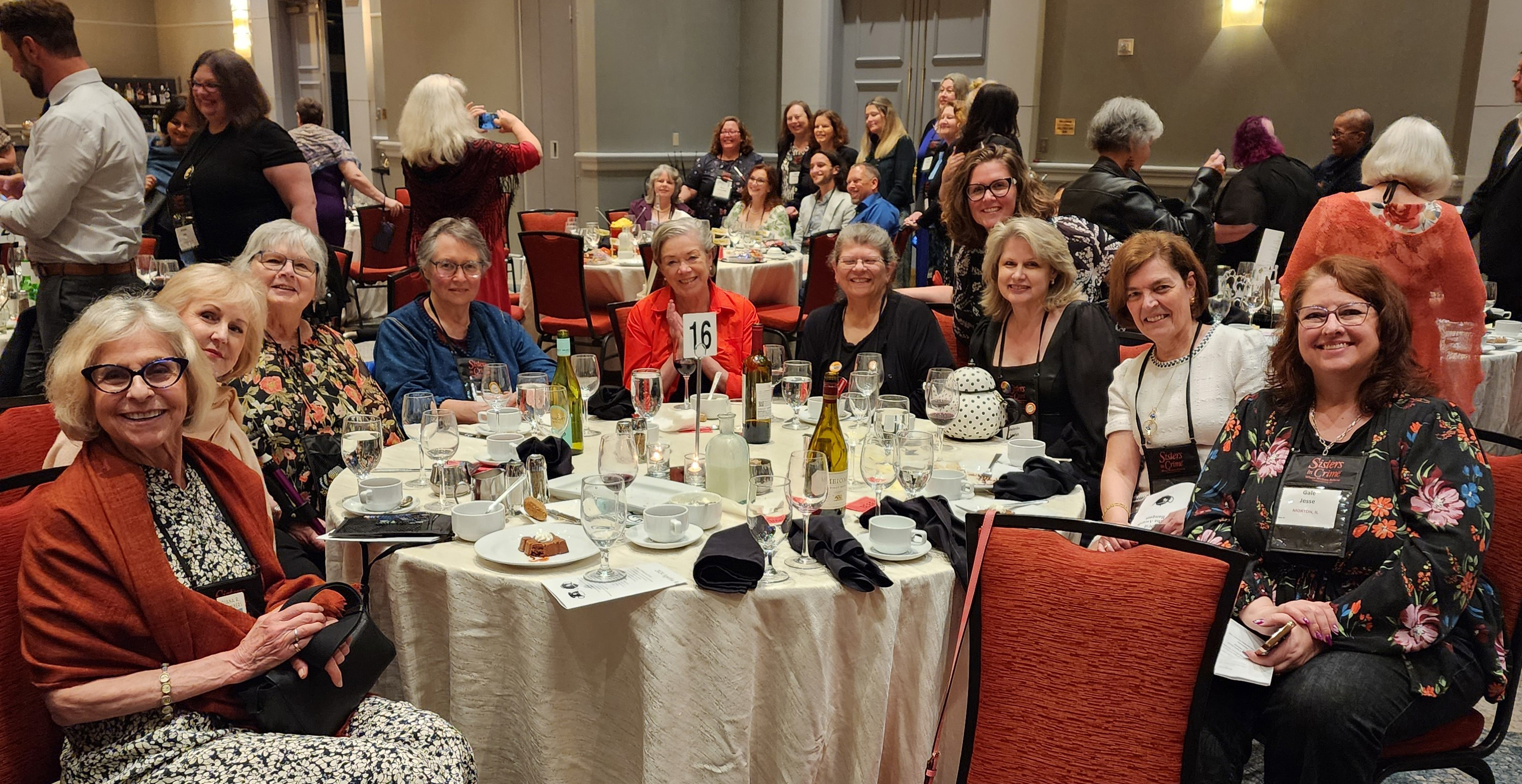
I was busy on Thursday when Jane Cleland hosted a pre-Malice writing workshop, but I was lucky enough to join her table at the Agatha Awards banquet. She was a marvelous hostess and I enjoyed the company of everyone at our table. (Jane is wearing a red jacket.) I always love her Saturday morning workshops, and I finally had a chance to thank her in person. If you haven’t read her Josie Prescott Antiques Mysteries, give them a try.

(Photo courtesy Rebecca Brittenham)

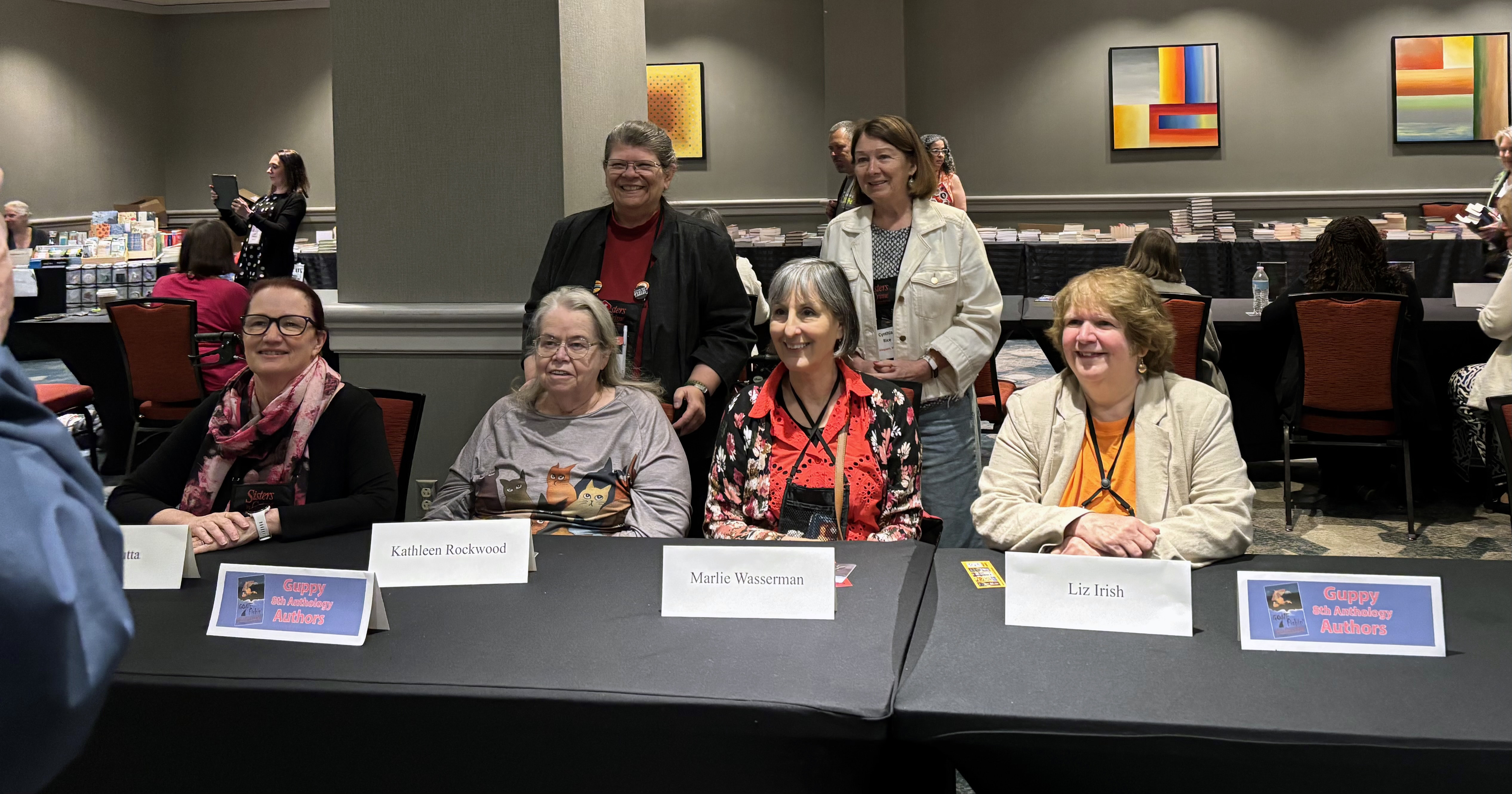
I even got to go to my first signing session as a short story author! A half dozen of the Guppies who are included in the eighth Guppy Anthology, Gone Fishin’: Crime Takes a Holiday, had our own signing session on Sunday morning. I have to thank the rest of the Malice board for making that happen, too. (Here’s hoping it becomes a new tradition.)

I’m sad to admit I’m probably not going to be able to attend next year for MD38, but I’m saving my money for a future Malice. (And I know a new furnace isn’t going to mess with my budgeting!)

If you like mysteries and have never attended Malice, I encourage you to go. The conference celebrates traditional mysteries in the vein of Agatha Christie (hence their awards, the Agathas). Check it out at malicedomestic.net! There’s still time for the early bird discount.

But for now, I need to hit the road for the next stop on my spring road trip.

À bientôt!

Short stories are fun

(Pexels photo by Ron Lach)

But that doesn’t mean they’re easy.

Some writers I know have said short stories are much harder than novels because you have to make every word count.

I just happen to have a long-standing love of the short story that started when I discovered science fiction magazines when I was in high school. That’s when I wrote my first short stories, all centering around sci-fi topics.

When my kids were little, I read mostly magazine short stories for the same reason I had a subscription to Reader’s Digest. I could devote a few minutes to reading after the kids went to bed or between tasks. I could get a beginning, middle and end in one sitting, something impossible with a novel.

When I discovered audio books that I could listen to on my commute, I did get back into novels and longer non-fiction, which pushed short stories into the background of my reading and writing. But in the past couple of years, I’ve rediscovered the format and jumped back in.

I’ve submitted short stories to a few anthologies, and won a spot in the Guppy anthology, Gone Fishin’: Crime Takes a Holiday. For those, I wrote stories, and sent them into the virtual slush pile for editors to evaluate without knowing who I am. For this story, third time was a charm, and I got to work with editor Jim Jackson of Wolf’s Echo Press, who really helped me improve the final version of “Blood on the White Rose.”

I’d already run several iterations of the story through my critique partners. Four in particular kept telling me the story on the page wasn’t the story I kept saying it was. Finally, days before the submission deadline, they got through to me. At least they spurred me on to rewrite the entire story, bringing forth a more fleshed out main character, and cutting the duration of the events. In its first version, the story took place over a period of weeks. In the end, it lasted something under 24 hours.

What really intrigues me about the OCWW process, though, is the attention to the story before it ever sees an editor. I was assigned to a critique group, given a deadline of March 20 to submit a draft, and received copies of my critique partners’ stories to review before our first critique meeting on April 1.

Of course, I had more than one short story I thought might fit the anthology theme: I didn’t see that coming. I sent two and asked the group to help me select one for my final focus. We’ll see what they say, because I will need to make a first round of revisions before our next meeting, April 17.

But we have until late June to work with each other before our next submission deadline. At that point, we’ll go into a developmental editing process. I have never done anything explicitly called developmental editing, although I may find that’s exactly what I went through with Jim.

I have always imagined developmental editing is something that takes place while the story or novel is in the draft stages with the author. I’m looking forward to being more enlightened as we head toward a 2026 publication of the OCWW anthology. I’ll keep you posted.

À bientôt!

Join my launch party

Have you heard of a book launch party? They are a way of celebrating new publications with friends and families.

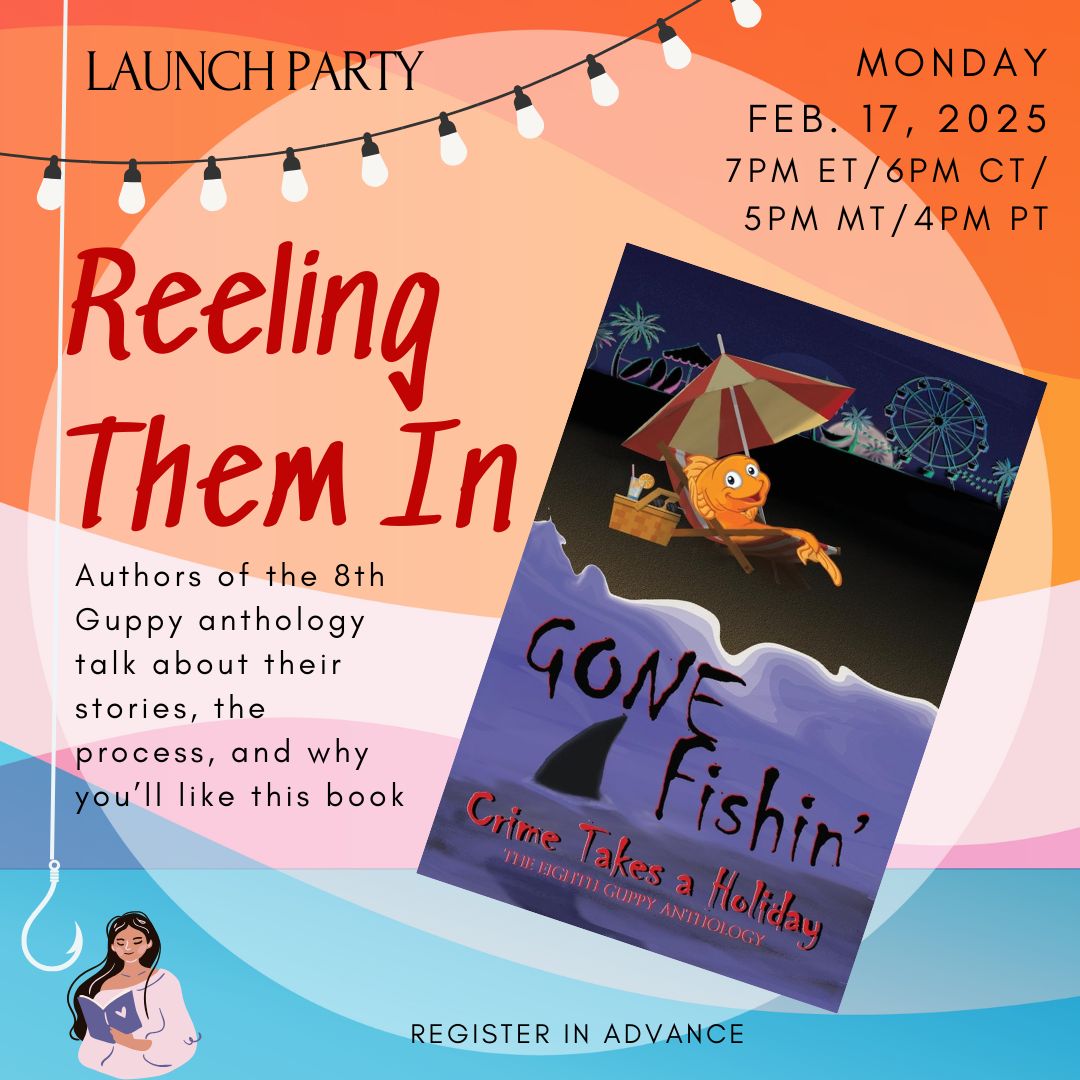
My short story, “Blood on the White Rose,” appears in Gone Fishin’: Crime Takes a Holiday, the eighth Sisters in Crime Guppy chapter anthology.

Not only is the story my first fiction publication, it’s also my first foray into book promotion. At least I’ll be part of a group, which makes me feel more comfortable about the process.

But I’d love you to join me when we debut our book in an online “gala” on Feb. 17 at 6 p.m. CT. Well, I think there will be something of the “gala” about it. I guess we’ll find out about that together.

You will need to register in advance at https://sistersincrime-org.zoom.us/webinar/register/WN_J2jaejhdRCCrcAtSJrO-DA. Please join us for our debut.

In the waning of the year

pexels.com | Tom Fisk

(I wrote this for my turn on my Lake Summerset Writing Gals blog, but it’s doing double duty this month.)

Cold weather tends to put me in mind of warm fires, hot mulled wine and poetry. Sadly, I have no fireplace. (But I can always put that Netflix fireplace video on my TV.) I can manage the wine, or maybe hot chocolate, and I always have poetry.

I still remember the day I discovered Robert Louis Stevenson’s A Child’s Garden of Verses in the kids’ section of my hometown library. One of my favorites was “My Shadow.”

I have a little shadow that goes in and out with me,
And what can be the use of him is more than I can see.
He is very, very like me from the heels up to the head;
And I see him jump before me, when I jump into my bed.
– Robert Louis Stevenson

At one point in my life, I memorized “My Shadow” and a few other verses in the book.

When I was in high school, John Lennon’s poem, “The Toy Boy” appeared in McCall’s Magazine. I cut out the page, memorized the poem, and took it on the road as my entry for our forensics club in the poetry category. (Back then forensics meant speech team, not CSI.) I think it’s still in my filing cabinet, but I haven’t looked for it in years. I did manage to find a post of the original image on Pinterest. I printed a copy and it’s hanging on the wall near my computer.

I just discovered “December” by Joseph D. Herron. I don’t know much about the author, but it felt right for the snowless chills we’ve had lately. The poem is included at one of my favorite websites — DiscoverPoetry.com. Another site I like is PoetryFoundation.org, which publishes Poetry Magazine. Both sites feature a poem each day; you can subscribe for free to have them emailed to you.

(Illustration by Sharon P. Lynn)

A third favorite poetry site is the Haiku Society of America. I love haiku, a traditional Japanese form of poetry. Like English sonnets, haiku has a specific format: seventeen syllables in three lines of five, seven and five. I was taught that the original haikus, before they even had that name, were supposed to be about nature. Today, at least in English, that rule has been abandoned. I’ve also seen variations on the seventeen-syllable format.

My first writing successes came in the newspaper business. But my first printed work that wasn’t nonfiction was poetry. I submitted several to my college literary magazine. A long-ish free verse took first place one year. A few of my haikus were also selected for publication there and in other small-circulation volumes.

I’ve never entirely abandoned my interest. I think my “old-year’s resolution” will be to read at least one poem a day before I start my own writing. I think it inspires me to write with all my senses. Maybe it will inspire others, too.

Back in class

The Sisters in Crime Guppy Chapter offers a variety of classes to its members every year. I just finished one about story structure last week that has not only helped me chart a path for my revision of a NaNoWriMo draft, it also led to a breakthrough on a plot hole. The former is due to James M. “Jim” Jackson who has developed another great Guppy class. The latter is thanks to my writing pal, Llewella Forgie, who spent some time brainstorming with me at the end of a writing session.

The class also left me with a notebook of great lectures, homework assignments and miscellany that Jim recommended along the way.

I also bought a couple of the books he talked about that I thought deserved my additional attention. And I decided I needed to reconsider a few characters. So I bought books about that, too.

The week before the two-week class started, I was lamenting to a few of my local writing group gals that I thought I had the wrong plot for the characters. I was considering scrapping the whole book and giving the plot elements to a completely different main character in another book, also a NaNo draft. (I have about a dozen drafts in various stages from participating in National Novel Writing Month.) The gals can vouch for the dismay I was feeling at the time.

Then I took the class. Talk about eye-opening. I tend to operate by “feel” when I throw my first drafts together. Some might consider what I do an elaborate outline rather than a draft. I firmly believe that you can’t fix what isn’t already on the page, so I do consider the NaNo stories to be my first drafts. But, unlike some, I have no illusions that they’re ready for prime time. They are, in fact, big messes. The goal of NaNo is crank out 50,000 words in 30 days. Sometimes pantsers like me run cold during the month. But, as one of my NaNo buddies says, if you get stuck, bring in the ninjas. Well, my NaNo drafts are full of “ninjas.”

And cleaning up the ninjas is what I’ve been trying to do with my drafts for the last few years. In each case, I think I have decent main plots, and I liked my characters when they came out of my head. Making them presentable has been my challenge.

Going through the class assignments — they were pretty involved — also convinced me I didn’t like what I’d done to one of my characters. I thought changing her would add drama to the story, but it just made me dislike her. I plan to go back to her original personality and make other adjustments to the plot. Hence the splurging on books about characters.

I still don’t have a finished novel, but thanks to classes, friends and bit of persistence, I hope to have one soon.

A bientôt!