More mystery

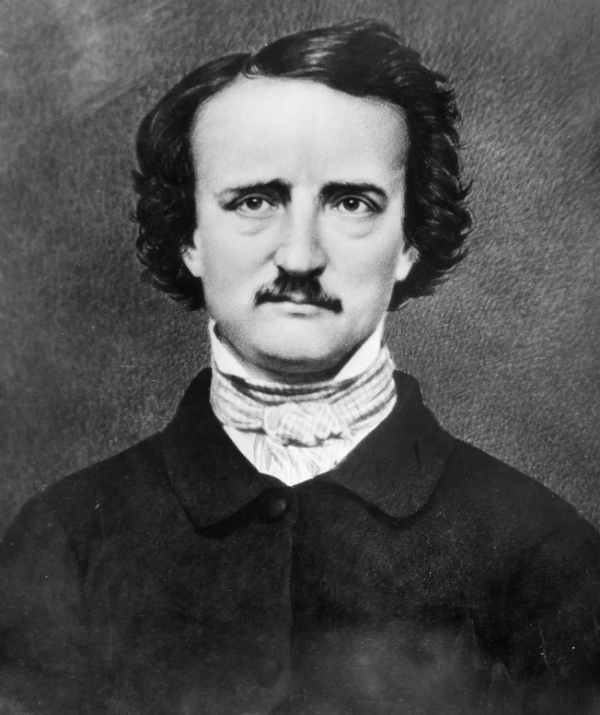
(Photo courtesy Library of Congress)

Just about all I’ve been doing lately (apart from the two weeks I took off to visit my son’s family down south — where it was already spring) has been to research the history of the mystery. I gave the talk about it last week, and was surprised that my timing was as good as it was. It fit the two-hour time block just great.

I can’t speak to how good the talk was, but several people said they liked it. I know I had fun putting it together.

While I worked on it, and even as I gave the talk, I kept thinking I was covering 100 years of mystery.

But, in fact, I started briefly before Edgar Allan Poe, who introduced us to the amateur detective C. Auguste Dupin in “The Murders in the Rue Morgue” in 1841. But my research convinced me I had to go back much further to set the stage. In fact, one source suggested that without Voltaire, who in 1748 divided people into two categories — those who observe and deduce versus those who intuit conclusions — we wouldn’t have either today’s detectives or mystery stories.

But from 1748, then 1841, and all the way to this year’s Edgar® and Agatha award winners gets us into the 200-year range. No wonder I felt a little rushed.

At any rate, I hope to give a couple more talks about mysteries. I think the first would focus on cozies. Another might just look at women’s contributions to mysteries. There are sooooo many!

Another possibility might include just “locked room” mysteries. Poe is credited with creating them in “The Murder of Marie Roget.” The “locked room” or  “closed room mystery is a puzzle based on a crime in a place with no apparent exit, yet somehow the perpetrator manages to sneak in and out, leaving, if not dead bodies at least mayhem in her or his wake.

A French mystery writer, Gaston Leroux’s most famous book isn’t really a mystery. He gave us The Phantom of the Opera. But in his 1907 book, The Mystery of the Yellow Room, Leroux expanded on the notion of the locked-room mystery.

Agatha Christie’s And Then There Were None, set on an isolated island, is a “remote location” mystery, a variation on a locked-room mystery. She also gave us variations in Murder on the Orient Express, Murder in Mesopotamia, and Hercule Poirot’s Christmas.

Gigi Pandian is another devotee of the locked-room mysteries. Her Under Lock and Skeleton Key (2022) is part of her Tempest Raj series of novels.

I might even consider doing a talk about Chicago and the mystery. That could be fun to put together.

À bientôt!

The woman in mystery

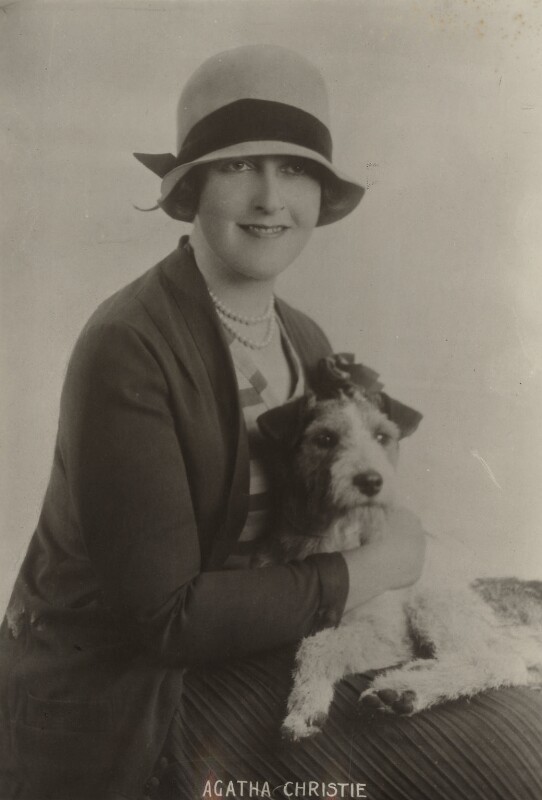
Photo borrowed from NPR

Next month, I’m scheduled to give a talk on the history of the mystery for the Center for Learning in Retirement, part of the offerings at our local community college.

I gave a version of the talk in September 2022 for one of my bookclubs, but that was an hour among friends. This is supposed to be two hours for people I’ve never met.

But while I’ve been working on expanding the talk, I’ve been discovering just how vast is the legacy Agatha Christie left behind. I like to think of her as the young woman who began a lifelong career of writing, as she is in this picture I found in an NPR article about her. (I couldn’t find my way back to the original article, but here’s another about her.)

And here are just a few of the things I plan to include in my talk.

Among contemporary writers who write Christie-style mysteries is Lucy Foley, whose 2020 debut The Guest List. Her was a Book of the Month Club selection when it came out.

Lori Rader-Day, a Chicagoan by way of central Indiana, wrote her only – so far – historical novel when she was reading about Christie and learned that Christie’s country home in southwestern Great Britian was a shelter for children – babies and toddlers, actually – evacuated from London during the war. Lori immediately thought she wanted to read the book about that moment in Christie’s life. But she learned no one had written it. So she decided to do it herself. Her Death at Greenway has since won an Agatha Award.

Because Christie’s family is still in the picture, they have been pretty focused on maintaining their rights to her copyrights and characters.

There is one authorized successor, however, who has their blessing to continue the Hercule Poirot stories. Sophie Hannah, who was a recognized Christie expert and fan, was invited by the family to continue the Poirot stories. I believe she’s up to five now.

It was through Lori that I met Sopie, who was a guest at the Midwest Mystery Conference before COVID. Back then it was called Mystery and Mayhem in Chicago, organized by Lori and book publicist Dana Kaye. Since then, Tracy Clark, another award-winning Chicago writer, has joined the MMC team. (This year’s conference is Nov. 9. Check it out here.)

If you like historical fiction, you might want to look into Marie Benedict’s The Mystery of Mrs. Christie. The novel focuses on the eleven days that Christie disappeared just before Christmas in 1926.

If you’d like to compare the novel to an actual biography, there are several. Lucy Worsley’s Agatha Christie: An Elusive Woman, is probably the most recent. It’s not the one that inspired Lori Rader-Day, but I enjoyed reading it. I also enjoyed Worsley’s PBS series based on her research.

But, back to work on the talk.

À bientôt!

Short stuff

(Photo by Jan van der Wolf, pexels.com)

March has blown by, hasn’t it?

But as it winds down, it the perfect time to offer kudos to my friends who are on the lists for short story awards this spring.

At Malice Domestic 36 — which begins with pre-conference activities April 25 and opens officially April 26 — there are five nominees in the Best Short Story category. There are links on the website’s Agatha Awards page if you want to read the short stories. There are also links at malicedomestic.net for general information (include late registration).

The Derringer Awards (could there be a better name for a mystery short story award?) came out on the last day of the month. Check them out on The Short Mystery Fiction Society Blog. The categories there are Flash, Short Story, Long Story and Novelette.

And in my own short news, I submitted a short story to an anthology. Fingers crossed, it gets picked. I’ll let you know.

À bientôt!

Building new habits

That’s what we do in the new year, right? We start fresh with a new calendar. We try to make this year “count” in some way that previous years haven’t.

I’ve always tried to give some of my time to volunteer pursuits, mainly by taking positions on various non-profit boards. And, thinking back, I’ve always taken the same kinds of roles — the ones that help with publicity or communication. These days, that tends to involve social media.

But since I’m mostly retired, I’m up to six groups. I counted the other day. (Stop me before I volunteer again!) Their demands vary, and one only needs attention from now until the end of April. But it needs a lot of attention.

Another needs a record of the hours its volunteers serve. In order to be eligible to vote at the annual meeting, volunteers must have provided at least 10 hours of service during the previous year. And the organization needs records of that service, not just to keep track of its voting members, but also to include in grant applications.

So, my new habit involves a timesheet — my new habit. I made a spreadsheet to help me keep track of the hours I’m spending for each group. I didn’t make it until Jan. 8, so I missed whatever I put in on the first week. That’s ok, because I didn’t do anything for the group that wants records until the day I started it. (And I need to give them a bit of time today.).

Since it’s all on the honor system, I’m rounding to the nearest quarter hour for all the groups. I hear that works for lawyers.

And I’ve been diligent since that first day.

I added it up yesterday and I’ve put in 51.75 hours of volunteer service to five of my six groups in the past two weeks. (The other one won’t meet until next week.)

But I also added a column for writing and revising. So I also learned that, until yesterday, I’d only put in 3 hours towards my novel. That’s no way to get revisions done.

I doubled the time yesterday. I focused on my revisions and spent 6 hours on them. That has to improve.

So, my new habit — my timekeeping — is already teaching me things about the balance in my life. And led me to my next goal, which is to make sure I get some writing and revising time in at least five days a week.

Wish me luck.