Sweltering, according to a dictionary, is “uncomfortably hot.” And that’s all the description we needed to describe days when all you had to do to work up a sweat was sit still.
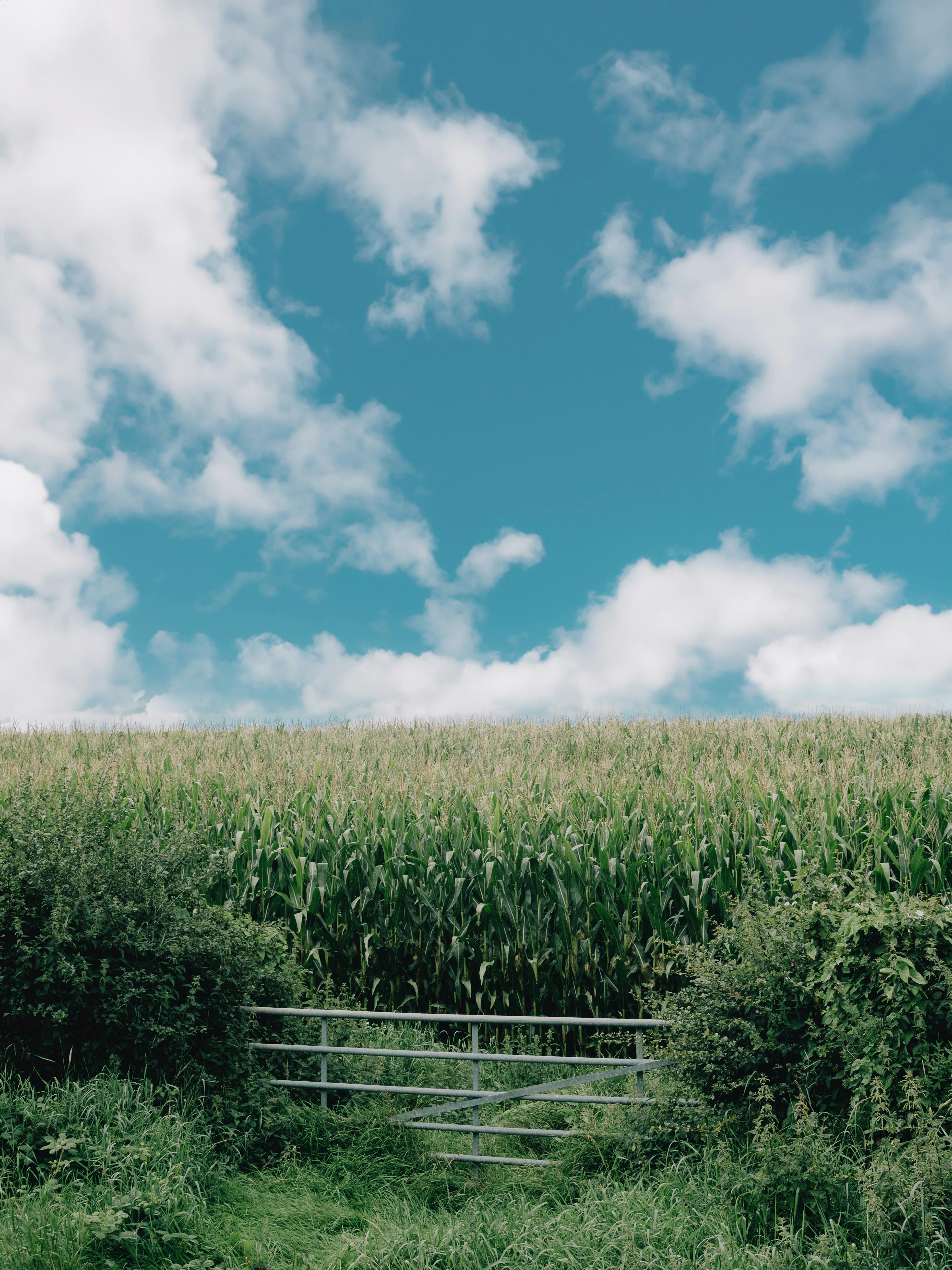
In my experience, the worst days of summer arrive when the corn is high and the earth’s respiration goes straight from the fields to the clouds.
I’m grateful the month started out below average in my part of the Midwest. My sisters gathered for our “weekend” together, visiting each other and relatives from both our parents’ families.
Cool temperatures prevailed in the weeks that followed. I, for one, enjoyed the respite from typical summer temperatures.
My mind gets sluggish in heat. I’m much happier in winter when I can pile on blankets and sweaters and sip hot cocoa and lots of tea. In summer, I try to drink lots of cool water, but even in AC, ice melts pretty fast at my house.
My three sisters are much more outdoorsy than I am — to their credit and their health. They all kayak and hike and pickleball. They never lost the art of play. I guess I was always the serious kid. I liked some sports, including swimming, but one after another, they slipped from my routine after my jobs grew more distant and my commute locked me in my car from forty to one hundred twenty miles daily. The girl who loved to ride her bike to a park with a book, find a shady spot and read easily switched her loyalty to audio books.
Today, I just hope to keep my electrical use to a minimum until sunset. Then I may walk out to check the mail and run the washer. And I need to put “new clothesline” on my shopping list. No reason to run the dryer if I don’t have to.
I find the idea of understanding meterological terms and measures much more fascinating than living through them. I’m still grappling with dew points versus humidity as a way to measure relative air comfort, but I keep trying.
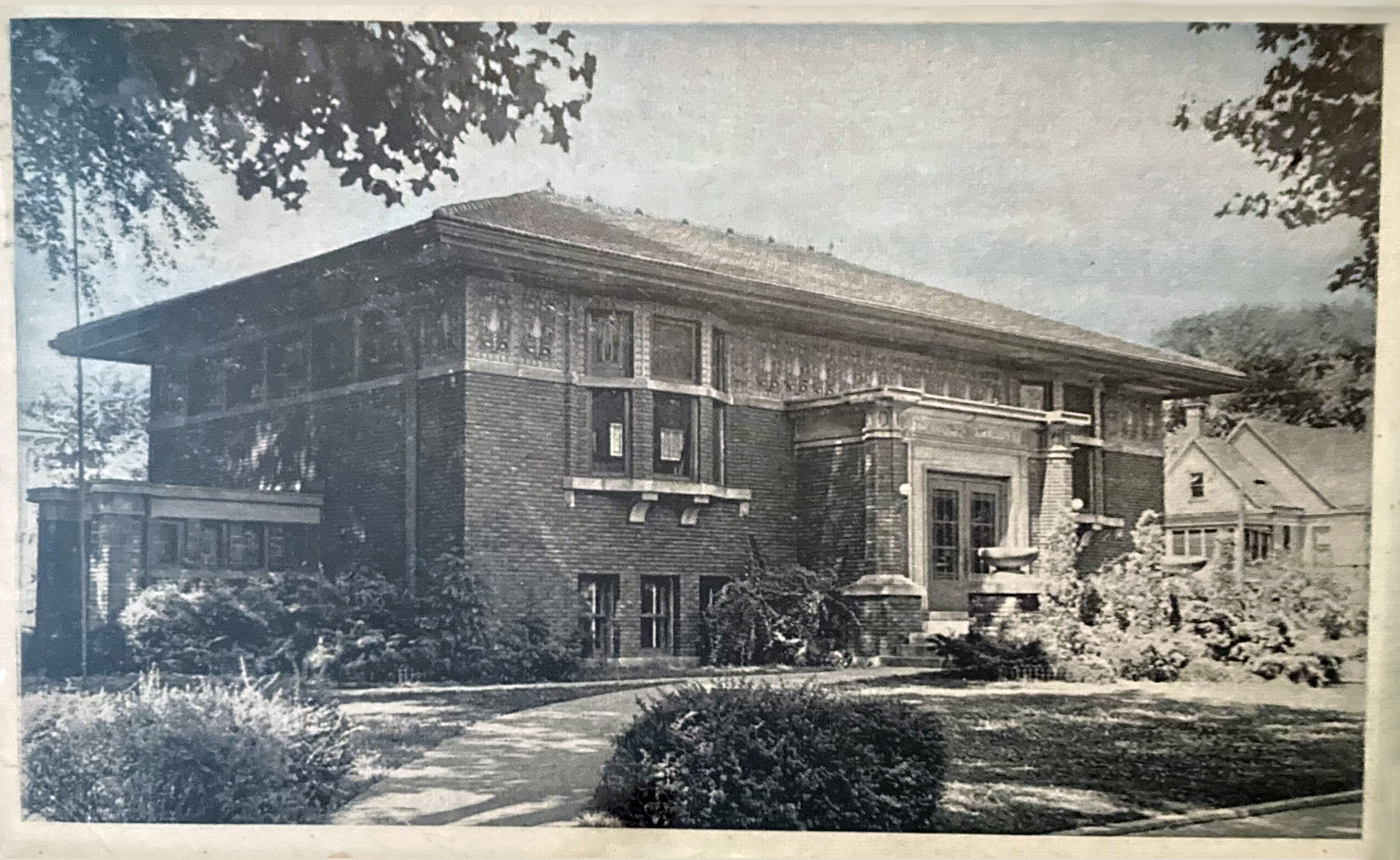
Sharon’s photo of an early 20th century postcard of her hometown library
The only thing that you absolutely have to know, is the location of the library.” –Albert Einstein, theoretical physicist
Decades ago — way last century — I took a walk to my local library with an older girl from around the corner. It was early in summer vacation after first grade. We came back to my house with an application for my library card and I begged my mom to let us walk back so I could get some books.
I came home with five of them and decided that day I wanted to be a writer.
So began my lifelong love affair with libraries.
When I got my library card, that was when my life began.” – Rita Mae Brown
My hometown library was one of many built through the largesse of Andrew Carnegie. As a child, I walked up the front steps, pulled open the heavy doors and glanced as the portrait of Mr. Carnegie before racing up or down the steps to the rooms that housed the books I wanted to read. Sadly, several years ago, someone broke into the building and stole the portrait. Hard to believe.
I spent so much time there growing up that the librarians knew me well enough to hire me as a page when I got old enough for a job. I worked there — very part time — for four years. And the library board was the first regular news assignment I had for my hometown paper.
I now live outside a tiny town in north central Illinois where the village board contributes the payroll for someone to sit in the school library on Saturday morning to check books out for anyone in the neighborhood. I believe the school district may be the boundaries for the village’s generosity.
Google can bring you back 100,000 answers. A librarian can bring you back the right one.” —Neil Gaiman, author
I also live about 45 minutes south of the wonderful libraries at the University of Wisconsin in Madison. Having been a student there, I became familiar with several of the campus libraries and take advantage of guest status from time to time.
And I have district resident access to the library at a community college about 30 miles from my house. I haven’t used it much since my kids stopped attending classes there.
But mostly I borrow books on line from the two libraries where I ante up cash for cards annually. The closest Illinois community with a library has a pretty small collection, but they’ll order almost anything on line for me. That’s been handy when I’ve been doing research for talks I’ve made to a few groups I belong to.
I ransack public libraries, and find them full of sunk treasure.” —Virginia Woolf, author
I also buy a card from Rockford, Illinois. That system just opened a new main branch building on the site of the former main branch along the Rock River. The spot, it turns out, was a hazardous waste site from previous use in manufacturing and power generation. The new building is gorgeous, and I’ll probably make a stop there one of these days.
But I am a huge fan of RPL’s online services. I borrow extensively from their digital audio collection, since my fiction consumption is almost exclusively audio these days. I never thought anything would surpass the experience of holding a book in my hands and curling up in a comfy chair with a seasonal beverage near me. But I started listening to audio books on my commute to work and have never gone back. Now I listen while I wash dishes or cook or other occasional house chores. And, of course, I still listen in the car.
Whatever the cost of our libraries, the price is cheap compared to that of an ignorant nation.” –Walter Cronkite, journalist
There is a persistent misunderstanding about libraries being free. They really aren’t, although they feel like it. Most are tax supported in one way or another, and when I pay for a card in districts I don’t live in, my few dollars are equivalent to what district residents pay in taxes. I think the cost is the best bargain on anyone’s tax bill. And for me, who reads 100 books a year, the cost is far less than if I bought all those books myself.
I do like to buy books from my friends, and have bought a few paperbacks and hardcovers when they don’t have audiobooks. (And apologize for not getting around to them in a timely manner.) I’ve been thinking about buying an old fashioned autograph book because I rarely have anything for them to sign when I see them in person.
The clash of ideas is the sound of freedom. –Claudia Alta “Lady Bird” Johnson, first lady of the USA
But all this is to say I love libraries and think everyone needs to support them. I hate the censorship some libraries are facing. Ideas should be widely circulated, whether you agree with them or not, so we can better understand each other’s experiences and points of view.
I say all this in July, because I happen to think libraries are a national treasure and one of the surest ways to make sure we all have the opportunity to learn our shared history and plan for a well-woven future. I admit, I’m an idealist. But without years of library time, I wouldn’t even know what ideals we might reach for.
For the first time in several years, I spent the entire month of June at home. And what do I have to show for it?
My biggest thrill since May is that I learned a short story I wrote was selected for the Sisters in Crime Guppy Chapter anthology, Gone Fishing: Crime Takes a Holiday. I have comments from the editor and I’ll be making changes before the book comes out next February. That alone makes this a great month to be home.
But I also have a bit more than 13,000 words in my novel rewrite. And I spent some time with visiting family and friends.
I also took a few more random drives than I normally do this month because I was itching to get out of the house and see places. There’s something about being on the road that always sparks my imagination.
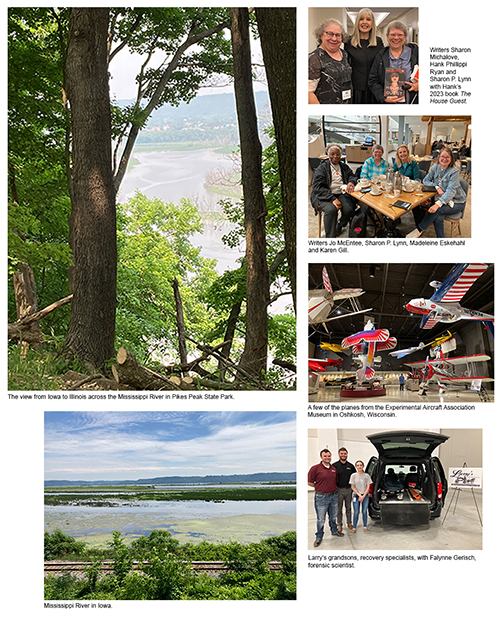
Compared to last year, when I spent days doing research in the Driftless Region of the Upper Mississippi and visiting museums in Wisconsin and Iowa, all after meeting people and learning things at Cop Camp and Writer’s Police Academy, this June seemed pretty tame.
I still have to master the discipline of working on the road. Award-winning journalist and author, Hank Phillippi Ryan, told me last year that she retreats to her hotel room at conferences so she can maintain her daily writing schedule. No wonder she wins awards!
Still, travel is a way to widen one’s experience in a way that sitting with books or travel shows on TV just can’t do.
I feel the need for a short, research trip. Maybe — if I can get to 50,000 words on my novel revision — I should plan a short jaunt to another spot in the Midwest that I want to write about.
In the meantime, I should put my words toward that effort.
Just about all I’ve been doing lately (apart from the two weeks I took off to visit my son’s family down south — where it was already spring) has been to research the history of the mystery. I gave the talk about it last week, and was surprised that my timing was as good as it was. It fit the two-hour time block just great.
I can’t speak to how good the talk was, but several people said they liked it. I know I had fun putting it together.
While I worked on it, and even as I gave the talk, I kept thinking I was covering 100 years of mystery.
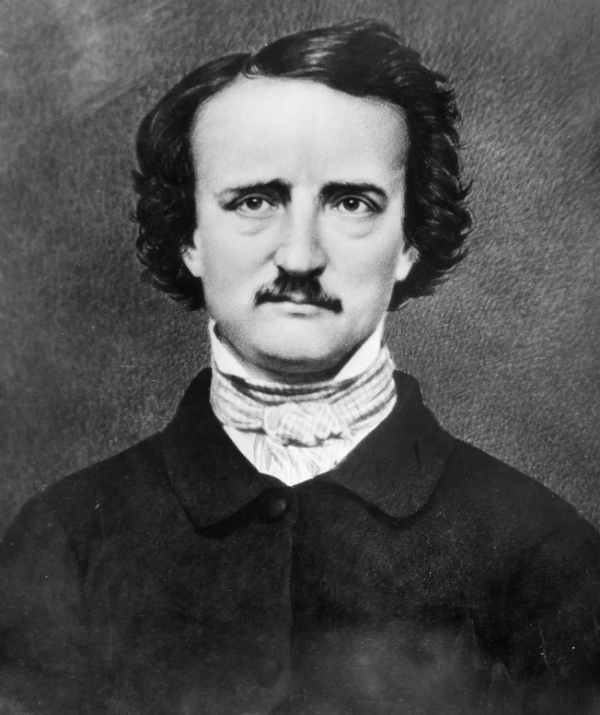
But, in fact, I started briefly before Edgar Allan Poe, who introduced us to the amateur detective C. Auguste Dupin in “The Murders in the Rue Morgue” in 1841. But my research convinced me I had to go back much further to set the stage. In fact, one source suggested that without Voltaire, who in 1748 divided people into two categories — those who observe and deduce versus those who intuit conclusions — we wouldn’t have either today’s detectives or mystery stories.
But from 1748, then 1841, and all the way to this year’s Edgar® and Agatha award winners gets us into the 200-year range. No wonder I felt a little rushed.
At any rate, I hope to give a couple more talks about mysteries. I think the first would focus on cozies. Another might just look at women’s contributions to mysteries. There are sooooo many!
Another possibility might include just “locked room” mysteries. Poe is credited with creating them in “The Murder of Marie Roget.” The “locked room” or “closed room mystery is a puzzle based on a crime in a place with no apparent exit, yet somehow the perpetrator manages to sneak in and out, leaving, if not dead bodies at least mayhem in her or his wake.
A French mystery writer, Gaston Leroux’s most famous book isn’t really a mystery. He gave us The Phantom of the Opera. But in his 1907 book, The Mystery of the Yellow Room, Leroux expanded on the notion of the locked-room mystery.
Agatha Christie’s And Then There Were None, set on an isolated island, is a “remote location” mystery, a variation on a locked-room mystery. She also gave us variations in Murder on the Orient Express, Murder in Mesopotamia, and Hercule Poirot’s Christmas.
Gigi Pandian is another devotee of the locked-room mysteries. Her Under Lock and Skeleton Key (2022) is part of her Tempest Raj series of novels.
I might even consider doing a talk about Chicago and the mystery. That could be fun to put together.
Next month, I’m scheduled to give a talk on the history of the mystery for the Center for Learning in Retirement, part of the offerings at our local community college.
I gave a version of the talk in September 2022 for one of my bookclubs, but that was an hour among friends. This is supposed to be two hours for people I’ve never met.
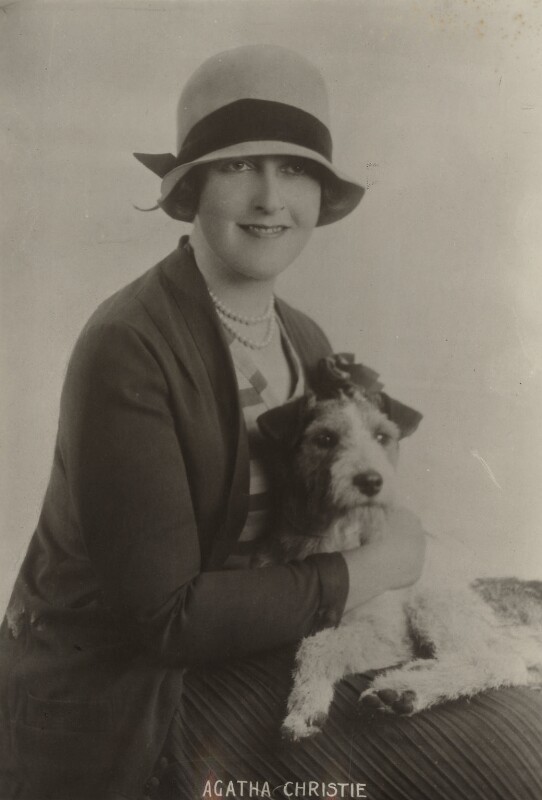
But while I’ve been working on expanding the talk, I’ve been discovering just how vast is the legacy Agatha Christie left behind. I like to think of her as the young woman who began a lifelong career of writing, as she is in this picture I found in an NPR article about her. (I couldn’t find my way back to the original article, but here’s another about her.)
And here are just a few of the things I plan to include in my talk.
Among contemporary writers who write Christie-style mysteries is Lucy Foley, whose 2020 debut The Guest List. Her was a Book of the Month Club selection when it came out.
Lori Rader-Day, a Chicagoan by way of central Indiana, wrote her only – so far – historical novel when she was reading about Christie and learned that Christie’s country home in southwestern Great Britian was a shelter for children – babies and toddlers, actually – evacuated from London during the war. Lori immediately thought she wanted to read the book about that moment in Christie’s life. But she learned no one had written it. So she decided to do it herself. Her Death at Greenway has since won an Agatha Award.
Because Christie’s family is still in the picture, they have been pretty focused on maintaining their rights to her copyrights and characters.
There is one authorized successor, however, who has their blessing to continue the Hercule Poirot stories. Sophie Hannah, who was a recognized Christie expert and fan, was invited by the family to continue the Poirot stories. I believe she’s up to five now.
It was through Lori that I met Sopie, who was a guest at the Midwest Mystery Conference before COVID. Back then it was called Mystery and Mayhem in Chicago, organized by Lori and book publicist Dana Kaye. Since then, Tracy Clark, another award-winning Chicago writer, has joined the MMC team. (This year’s conference is Nov. 9. Check it out here.)
If you like historical fiction, you might want to look into Marie Benedict’s The Mystery of Mrs. Christie. The novel focuses on the eleven days that Christie disappeared just before Christmas in 1926.
If you’d like to compare the novel to an actual biography, there are several. Lucy Worsley’s Agatha Christie: An Elusive Woman, is probably the most recent. It’s not the one that inspired Lori Rader-Day, but I enjoyed reading it. I also enjoyed Worsley’s PBS series based on her research.

 sharon p. lynn