Unbooking the overbooked

(Sharon’s Canva illustration)

When I tiptoed into retirement two years ago this month, I was worried about how to use my time. I wanted to finish my first novel. That was my number one goal. The thing I’d wanted to do since the day I got my library card. The thing I’d put off until the kids were grown, and until I didn’t have to go to work every day.

I already had a few volunteer posts I expected to continue, and some travel plans. But writing was supposed to be my reward for all those years of working.

Now, on the second anniversary of my mostly-retirement, I’m feeling as if I never quit working. I still haven’t finished revising that novel. I’m going through my travel budget at a much faster rate than I expected. And I’ve said “yes” to far too many requests for help.

I’ve decided it’s time to peel away some of the layers of volunteerism, back off on the travel plans and actually finish the revisions.

I didn’t find it easy to establish a schedule after retiring, but I was just getting into a nice routine when I took on another volunteer job. I hadn’t expected it, but from February through the beginning of May, I had to put everything on the back burner for it. Between learning the duties, adding the trip it required, and my usual summer conference, I was effectively off my newly-established schedule until mid-June.

When I got home, I found myself playing catch-up with my other volunteer roles, and working in some family time. Somehow, despite a few stabs at revision, I never really got back to the novel until November. And by then it was National Novel Writing Month again.

I expected the second year of that demanding task to be better, which in some respects it was. But I tacked another conference onto the East Coast trip that the volunteer job required. And I added a second summer conference. This year my novel went on the back burner again starting in February. I anticipated being off track for at least three months.

But since one of my volunteer boards went haywire in May, it’s been one IED explosion after another right into this month. I’ve been losing sleep and definitely not working on my novel.

But how to pick up the pieces of my schedule despite the unexpected challenges?

I came across a book called Start Finishing by Charlie Gilkey (who also puts many of his tips on his website, Productive Flourishing). Sure, there are plenty of “self help” books, and I read a few about organizing and time management right after I retired. I was looking for help in creating — and keeping — a routine that is self-imposed.
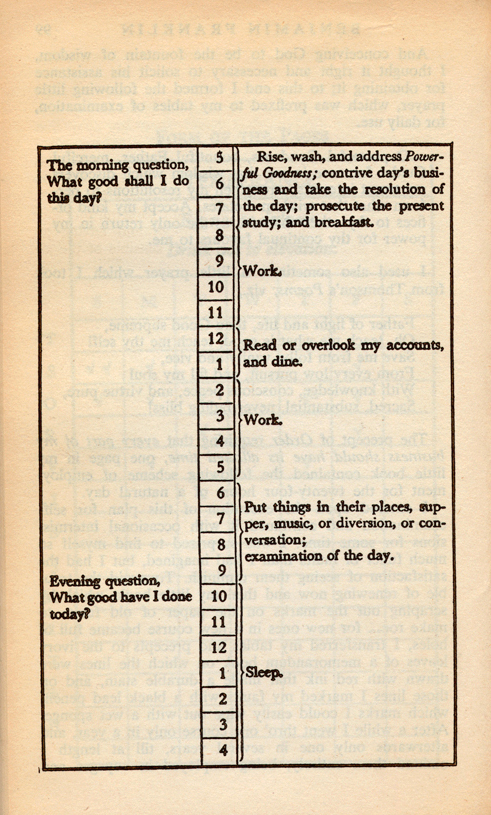
(image from Poor Richard’s Almanack)

I think Gilkey’s project-based approach to making time to do what he calls “your best work” may work for me. My goal right now is to set boundaries. I have to do that if I really plan to get my novel revised and into the world And then I have to keep doing it with all the NaNo novel drafts I created in the last ten years of my full-time work life.

To that end, I’m adopting Ben Franklin’s daily schedule as a template. I’m not likely to get up at five in the morning to start my day, but we’ll see.

And don’t ask me to volunteer for anything. In fact, I’m finishing the year (or the term) with several of my volunteer boards right now, and I don’t plan to sign on again.

Now, to the revisions!

Confessions of a Cop Camp ‘guinea pig’

It was was jam packed and over too soon

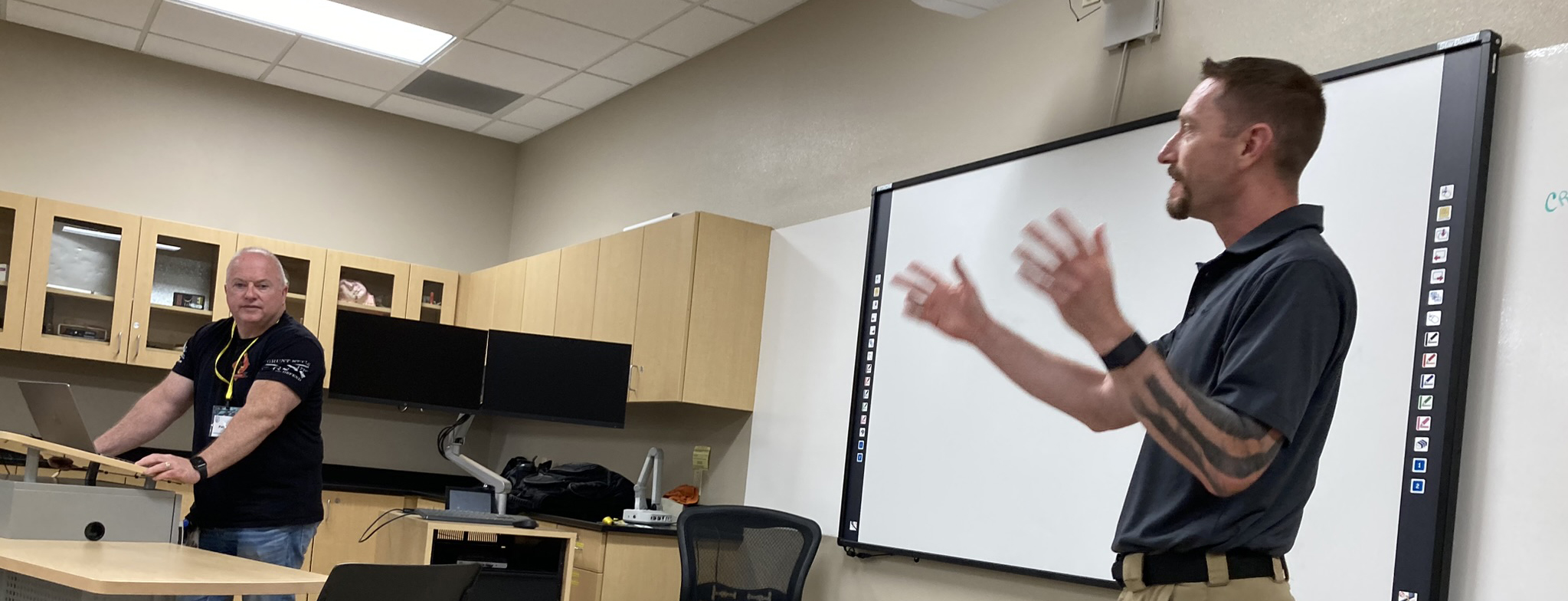
Instructors and students from the first “Cop Camp” pose after the crime scene exercise.

From the informal gathering the night before it started to the celebratory champaign at the end, Cop Camp in Appleton, Wisconsin, was amazing and inspiring.

Cop Camp is the informal name for the Cops and Writers Interactive Conference, and I was lucky enough to be in the inaugural group June 1-4.

Patrick O’Donnell and RJ Beam

Cop, writer and Wisconsin technical college instructor R.J. Beam approached Cops and Writers podcast host and author Patrick O’Donnell, a retired Milwaukee police officer, about setting up a workshop. They enlisted friends in law enforcement from across the nation, as well as friends from the indie writing world. Their goal was to develop a retreat for crime writers who want to get it right. Nothing too big, they planned to cap it at 30 to 40 writers.

Timing and conflict with other events reduced the number of the inaugural class to about a dozen. But for those of us who were there, it was both enlightening and inspiring. And, frankly, I am looking forward to next year. The small-group setting really appealed to my needs as a writer.

An end-of-day gathering

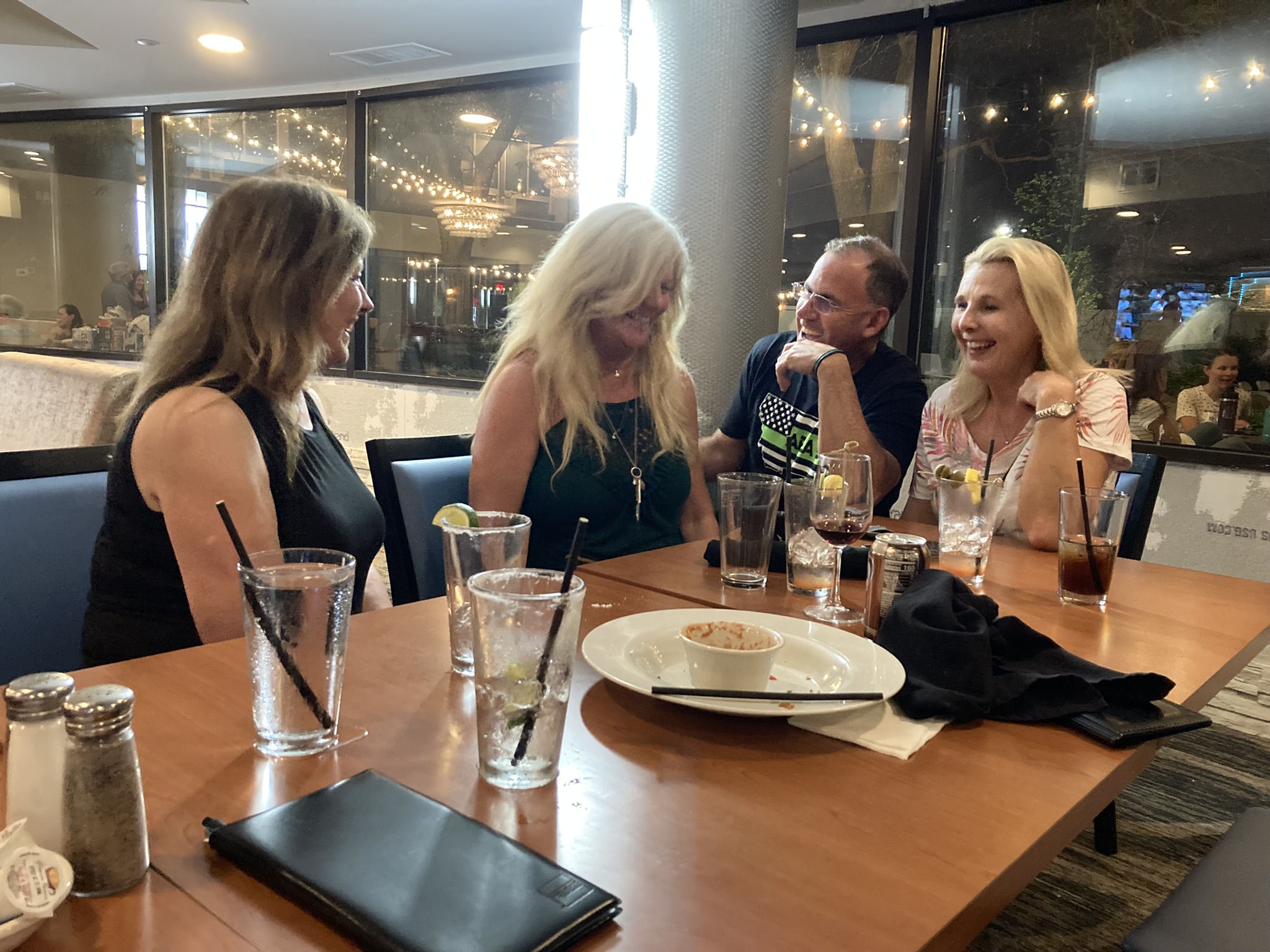
Most of us arrived the night before and gathered in the hotel restaurant for a casual gathering where we met, chatted, hoisted a few beverages, and waited while Patrick made trips to the airport to collect speakers whose flights were delayed. The friendly companionship we started the first night became a hallmark of the event.

Not only did we hear detailed first-hand accounts from folks who work in every aspect of law-enforcement, we also had time with some top-earning, fast-release indie authors, such as Michael Anderle.

I also enjoyed meeting some new authors — most from around the Midwest. One new friend, Madeleine Roberts, who writes as Madeleine Eskedahl, came all the way from New Zealand to immerse herself in US cop culture. (She also stayed for the following week’s Writers’ Police Academy, but I’ve talked about that before.)

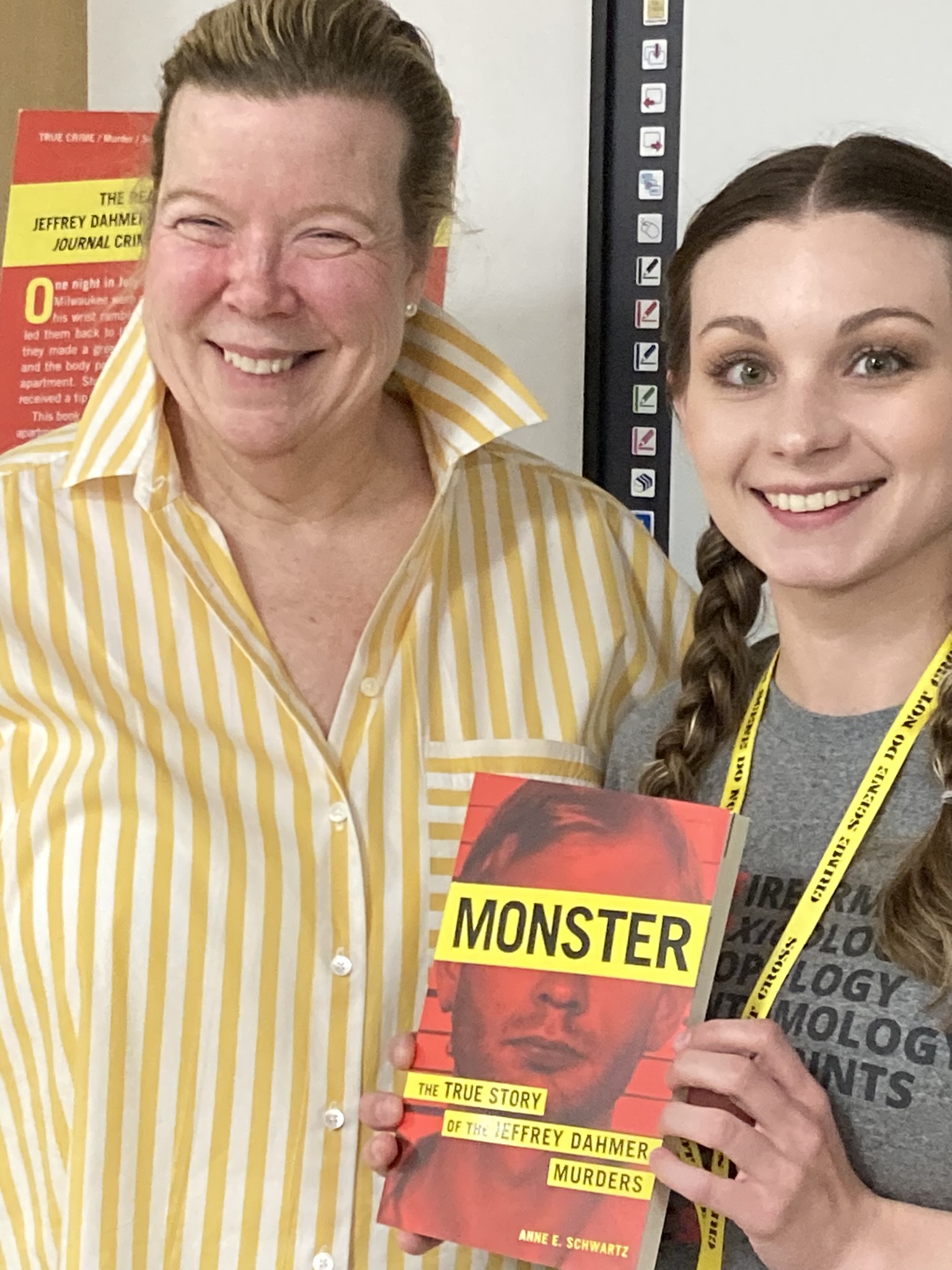
Speaker Anne E. Schwartz with CSI Falynne Gerisch.

Some of my favorite hands-on sessions were with Appleton, Wisconsin, crime scene investigator Falynne Gerisch. Not only did she help us collect fingerprints in a variety of ways, she also showed us some other techniques for evidence collection. And she’ll be showing up in my work-in-progress as my CSI.

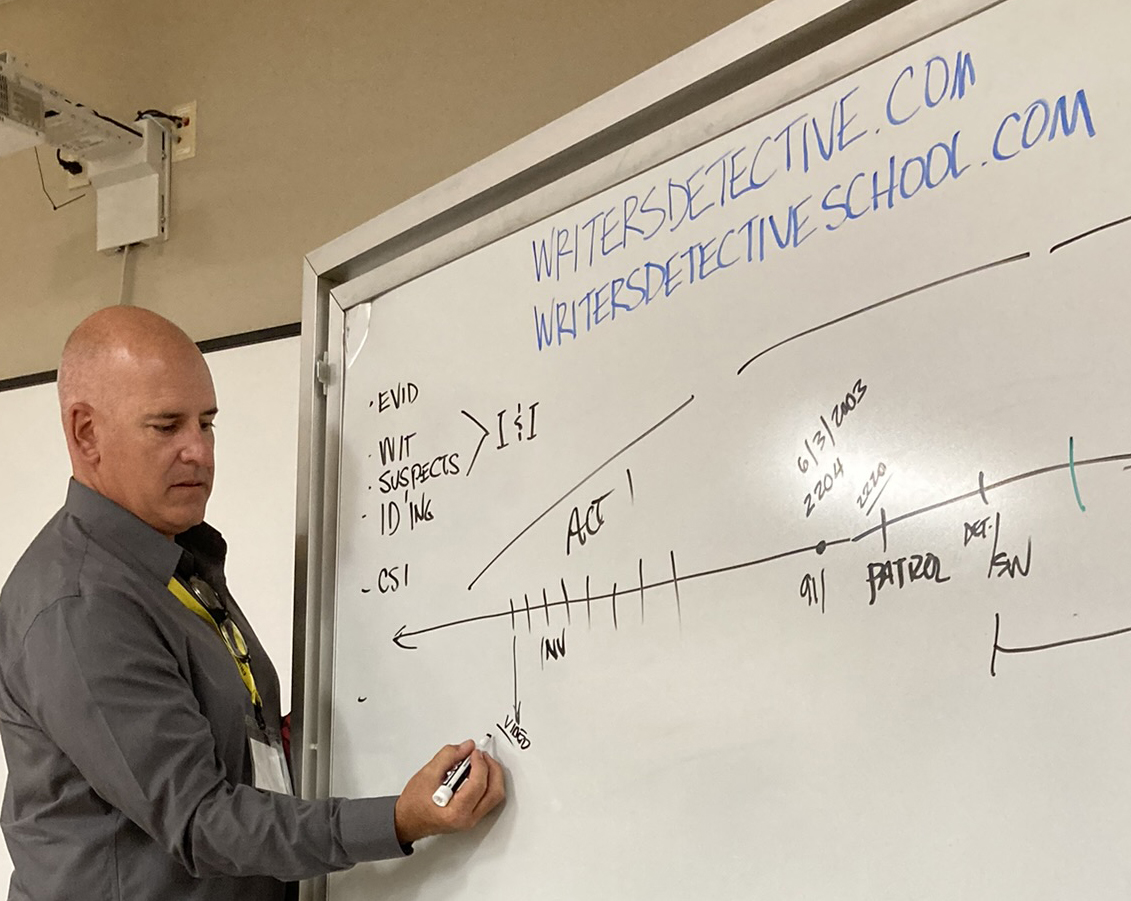
B Adam Richardson

I also loved the crime scene. We were teamed up with partners to investigate a shooting death at the police academy version of the “No-Tell Motel.” After we collected evidence and formed our theories, we got to debrief. And then, in one of the last sessions, B Adam Richarson of the Writer’s Detective Bureau podcast, turned our investigation into a murder board.

I could go on much longer, but I like to keep these short. Suffice it to say, I think if you are a slightly introverted crime fiction (or true crime) writer — or even if you are outgoing but love to get things right — you owe it to yourself to grab one of the seats at next year’s event.

You just can’t have mine.

(The top photo was provided by Cop Camp organizers; the rest are Sharon’s.)

Female flyers worth celebrating

(Sharon’s illustration)

While I was in Appleton, Wisconsin, earlier this month, I met two women crime fiction writers from New Zealand and England. (But that’s another story.) Neither had a car, so I took them to a couple of places they wanted to visit. One was a shooting range. The other was the Experimental Aircraft Association museum in Oshkosh.

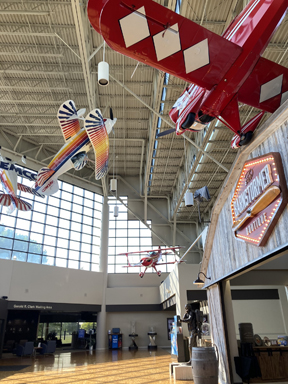
At the EAA museum, we went our separate ways to explore the huge museum and its many exhibits. I was surprised to find two areas of tribute to women aviators. There may have been more, but we only had about an hour to spend, so we kind of flew through. (No pun intended.)

One of the areas was dedicated to the history of the women called WASPs, variously defined as the Women Airforce Service Pilots, Women’s Army Service Pilots and Women’s Auxiliary Service Pilots. (There’s a bit of history at  https://www.worldwariiaviation.org/women-air-force-service-pilots-wasp.) Posters showed the history of their service, and some of the things they did during World War II. There was also an example of their uniforms.

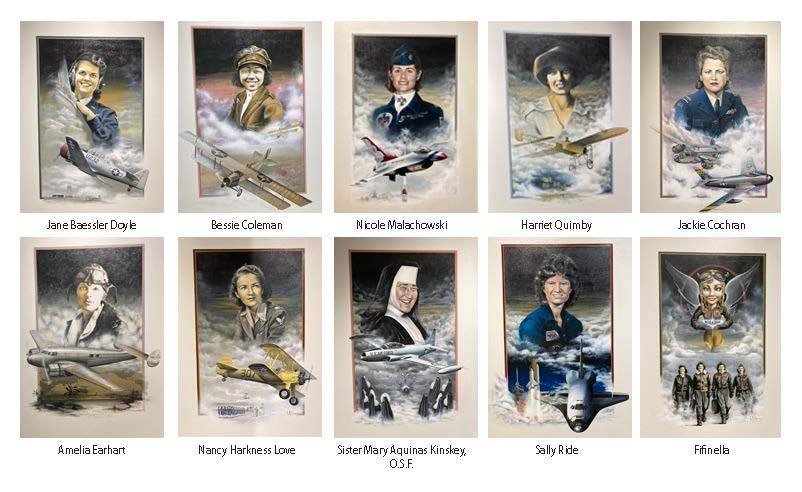
Another area was a walk-through portrait gallery. With these ten women (portraits with this post) were some of the men who contributed to aviation history. Sure, I knew about Amelia Earhart and Sally Ride, and I just learned about Bessie Coleman. But the others were new to me.

Roald Dahl wrote about fifinellas in his 1942 book, Gremlins. They are, he explained, female gremlins who plagued the pilots of the Royal Air Force. Walt Disney illustrated the book and developed the first image of a fifinella. The one at the EAA museum looks different, but her story is the same.

Disney and his empire are picky about the use of their illustrations, but in what I can only assume was generosity borne of the war effort, he allowed his original drawing in the Fifinella Gazette, the WASP newsletter, and to be used — for at least two years — as the official mascot of the WASPs. The initial permission could be renewed upon request.

Apparently (according to a history of the WASPs online), women pilots were already creating unofficial patches to wear on their flight jackets and other attire.

Another surprise to me was learning about Nancy Harkness Love, who was a civilian in the Army Air Force. She commanded the first units of female pilots during WWII. She earned her pilots license at age 16, after she saw Charles Lindbergh and the Spirit of St. Louis in Paris. (He has a section in the EAA museum, too, and there’s a replica of his plane in the exhibit.) Nancy, who later became a Lieutenant Colonel in the Women’s Airforce Service Pilots, earned a commercial pilot’s license in 1932. She flew people around the U.S. Northeast to earn money while a student at Vassar College.

Despite her work, she had to leave college after her junior year because she and her parents couldn’t afford it. She took a job selling aircraft in Boston, then worked as a test pilot for industry and for the Burea of Air Commerce (today, the Federal Aviation Administration).

She also flew across the country to try to convince communities and farmers to paint navigational signs on water towers and barns to improve flying safety.

(Sharon’s photo)

If you plan to visit the Oshkosh area, this is the 75th anniversary of the EAA. That makes it a great year to consider attending the annual Airventure. I think it’s probably the biggest “family reunion” of pilots and flying afficiandos in the world. Check it out at https://www.eaa.org/airventure.

And be sure to make a stop at the museum. I plan to go back.