And we’re off…

(Pexels photo by Andrea Piacquadio)

When my friend Mary and I headed north for the Wisconsin Writer’s Association conference in Stevens Point on Oct. 2, little did I know that I would cross one of the first hurdles in any writer’s life. A hurdle that would make me want to be glued to my keyboard for the rest of the month. But various life events and previous commitments turned into the second hurdle between me and the end of this particular race.

So, about that first hurdle. Writers who want to try to be traditionally published must first find an agent. I figured I’d try one of the practice pitches offered early in the conference, and, what the heck, I signed up for a real pitch, too. That was on the last day of the conference and I figured it would be good practice, too. I’d have a chance to talk to an agent about what she was looking for, how I could improve my pitch, what I should plan for next time.

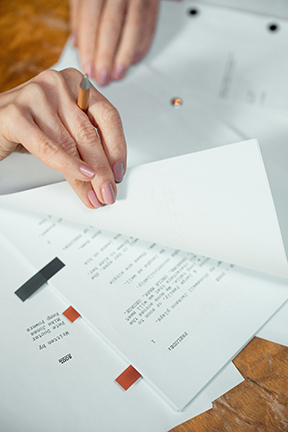
But as I paused in my initial statement — my mostly bungled log line and a bit about the plot and main characters — she grabbed a sheet of paper and said, “Here’s what you do next.” She actually asked to see my first fifty pages! I was astonished. (And to save us both embarrassment in case I trip over the next hurdle, I’ll keep her anonymous.)

But, after accepting congratulations from Mary and other friends at the conference, I got home and started polishing those pages. I’m still polishing with just a few days left to send them to the agent.

They were rougher than I remembered. And all in first person.

I made the decision months ago but didn’t act on it because I was busy with some short stories that had more immediate deadlines. So, on Oct. 6, I started changing the point of view from first to a version of third person, variously called “limited” or “close” third person.

I’ve had to fight two tendencies as I’ve revised. One battle is to keep away from the omniscience that is, frankly, a natural POV for me. I’m making it up, after all, so of course I know everything. The other is to let the reader into the head of my POV characters. In other words, I have to convince myself it’s okay to read my character’s minds and share all that with my readers.

Another problem was a decision to add the second POV, and that meant moving a discussion from a later chapter up closer to the front. Based on what my wonderful critique partners have said–independently, I might add–that seems to be my roughest chapter.

I should be working on that, not this, right now. I only have a few more days to get it done.

But in all the years I’ve been writing this blog, this is one of the key moments in my fiction career. And it may go no further if the agent who decided to take a chance on fifty pages decides they’re too rough for her to take any on. (Fingers crossed she likes them.)

Still, an agent let me cross the first hurdle and I’m still aglow with joy and hope. This is my celebration. (I’ll break out some wine after I send the pages.)

À bientôt!

Short stories are fun

(Pexels photo by Ron Lach)

But that doesn’t mean they’re easy.

Some writers I know have said short stories are much harder than novels because you have to make every word count.

I just happen to have a long-standing love of the short story that started when I discovered science fiction magazines when I was in high school. That’s when I wrote my first short stories, all centering around sci-fi topics.

When my kids were little, I read mostly magazine short stories for the same reason I had a subscription to Reader’s Digest. I could devote a few minutes to reading after the kids went to bed or between tasks. I could get a beginning, middle and end in one sitting, something impossible with a novel.

When I discovered audio books that I could listen to on my commute, I did get back into novels and longer non-fiction, which pushed short stories into the background of my reading and writing. But in the past couple of years, I’ve rediscovered the format and jumped back in.

I’ve submitted short stories to a few anthologies, and won a spot in the Guppy anthology, Gone Fishin’: Crime Takes a Holiday. For those, I wrote stories, and sent them into the virtual slush pile for editors to evaluate without knowing who I am. For this story, third time was a charm, and I got to work with editor Jim Jackson of Wolf’s Echo Press, who really helped me improve the final version of “Blood on the White Rose.”

I’d already run several iterations of the story through my critique partners. Four in particular kept telling me the story on the page wasn’t the story I kept saying it was. Finally, days before the submission deadline, they got through to me. At least they spurred me on to rewrite the entire story, bringing forth a more fleshed out main character, and cutting the duration of the events. In its first version, the story took place over a period of weeks. In the end, it lasted something under 24 hours.

What really intrigues me about the OCWW process, though, is the attention to the story before it ever sees an editor. I was assigned to a critique group, given a deadline of March 20 to submit a draft, and received copies of my critique partners’ stories to review before our first critique meeting on April 1.

Of course, I had more than one short story I thought might fit the anthology theme: I didn’t see that coming. I sent two and asked the group to help me select one for my final focus. We’ll see what they say, because I will need to make a first round of revisions before our next meeting, April 17.

But we have until late June to work with each other before our next submission deadline. At that point, we’ll go into a developmental editing process. I have never done anything explicitly called developmental editing, although I may find that’s exactly what I went through with Jim.

I have always imagined developmental editing is something that takes place while the story or novel is in the draft stages with the author. I’m looking forward to being more enlightened as we head toward a 2026 publication of the OCWW anthology. I’ll keep you posted.

À bientôt!

Back in class

The Sisters in Crime Guppy Chapter offers a variety of classes to its members every year. I just finished one about story structure last week that has not only helped me chart a path for my revision of a NaNoWriMo draft, it also led to a breakthrough on a plot hole. The former is due to James M. “Jim” Jackson who has developed another great Guppy class. The latter is thanks to my writing pal, Llewella Forgie, who spent some time brainstorming with me at the end of a writing session.

The class also left me with a notebook of great lectures, homework assignments and miscellany that Jim recommended along the way.

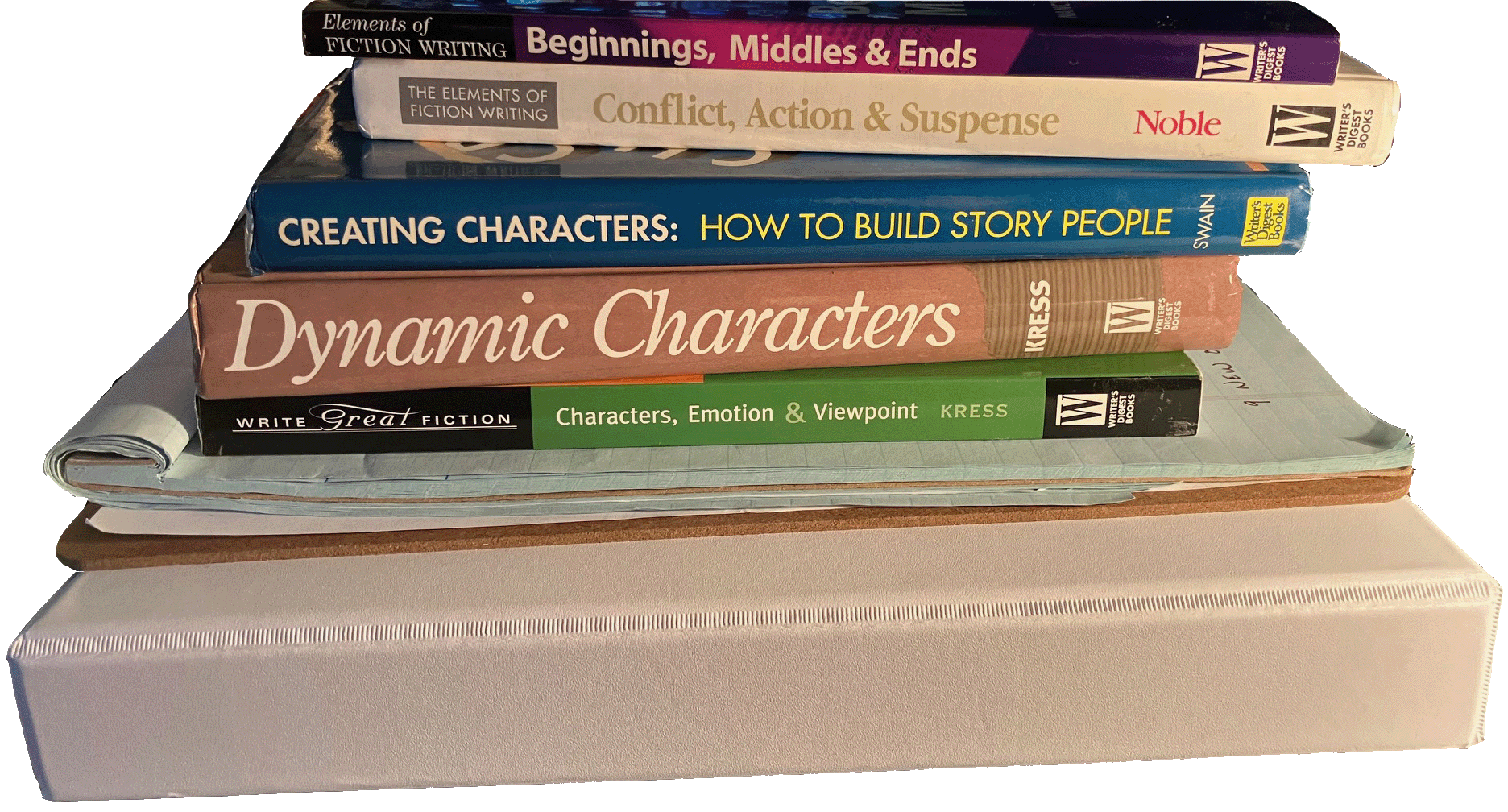
I also bought a couple of the books he talked about that I thought deserved my additional attention. And I decided I needed to reconsider a few characters. So I bought books about that, too.

The week before the two-week class started, I was lamenting to a few of my local writing group gals that I thought I had the wrong plot for the characters. I was considering scrapping the whole book and giving the plot elements to a completely different main character in another book, also a NaNo draft. (I have about a dozen drafts in various stages from participating in National Novel Writing Month.) The gals can vouch for the dismay I was feeling at the time.

Then I took the class. Talk about eye-opening. I tend to operate by “feel” when I throw my first drafts together. Some might consider what I do an elaborate outline rather than a draft. I firmly believe that you can’t fix what isn’t already on the page, so I do consider the NaNo stories to be my first drafts. But, unlike some, I have no illusions that they’re ready for prime time. They are, in fact, big messes. The goal of NaNo is crank out 50,000 words in 30 days. Sometimes pantsers like me run cold during the month. But, as one of my NaNo buddies says, if you get stuck, bring in the ninjas. Well, my NaNo drafts are full of “ninjas.”

And cleaning up the ninjas is what I’ve been trying to do with my drafts for the last few years. In each case, I think I have decent main plots, and I liked my characters when they came out of my head. Making them presentable has been my challenge.

Going through the class assignments — they were pretty involved — also convinced me I didn’t like what I’d done to one of my characters. I thought changing her would add drama to the story, but it just made me dislike her. I plan to go back to her original personality and make other adjustments to the plot. Hence the splurging on books about characters.

I still don’t have a finished novel, but thanks to classes, friends and bit of persistence, I hope to have one soon.

A bientôt!

Six days and counting

Last Monday I kicked off NaNoWriMo with a big day and I’ve been riding the wave of a couple of thousand banked words since then. With an extra hour on my clock today, I hope to move a little further ahead.

I’ve been learning some things about my main character and her friends in the past week. It’s the first draft of the second novel in a series I have planned. I just finished the first draft of the first book at the end of October, so I’m not dreaming up new characters — well, some are new; victims and suspects, mostly — or a new environment for them to live in.

Restraining myself from going back to make changes in the first novel has been one of my biggest battles. I did allow myself to make minor changes — the name of one character is different now, so I let myself do a global replace a couple of days ago. But otherwise, I’ve been making notes.

So far, I haven’t had to bring in the ninjas — a suggestions from some of my long-time NaNo friends about what to do when you get stuck. I know I have to raise the stakes for the main characters as the book goes along, but I don’t think ninjas really fit into my plot.

I’ve also got a rough idea of where I’m going. As I turn more and more into a “plantser,” I find a tendency to figure out what I need and make a Scrivener notecard for it, then go back to what I was doing. I still start out knowing very little. I like to keep things surprising — even to me.

Instead, I’ve been focusing on deepening my understanding of my characters’ back stories. I have a feeling I’ll be doing a bit of that today. I tend to put that in files that aren’t part of the novel, so I don’t usually include that in my word count. It’s legit, but they won’t be part of the final draft anyway, so why put them there now? We’ll see where I am come Nov. 30.

I hope you’re having a good NaNo! And remember, use all the words.

À bientôt