
For the past four years, I’ve been working behind the scenes for the mystery conference Malice Domestic®. This year, I stepped down. With mixed emotions.
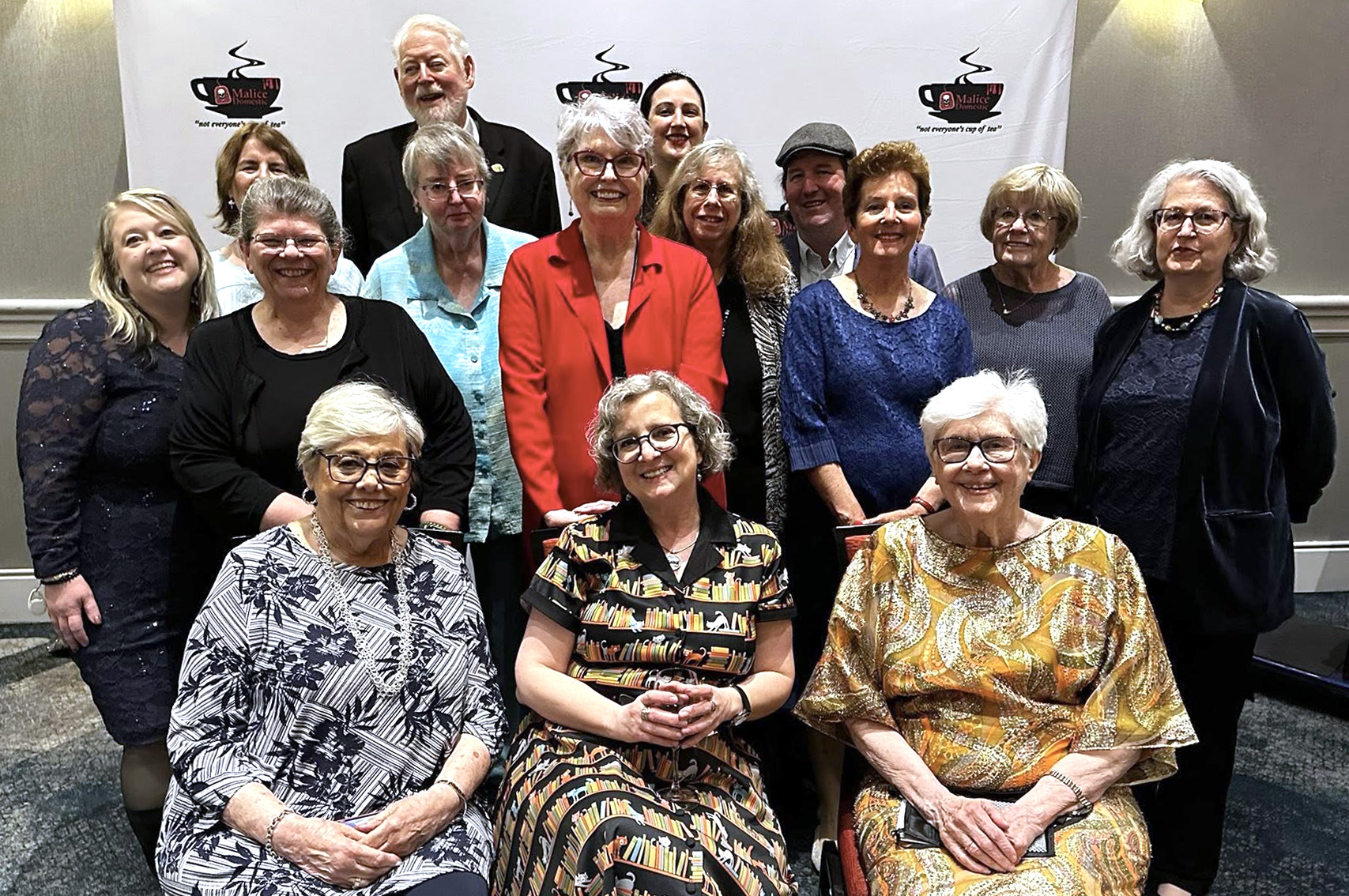
The board I worked with this year was absolutely the best.
As with any new endeavor, the first year involved a steep learning curve. I really didn’t know what I was getting into when I offered my desktop publishing skills — learned over years of working in newspaper design — for the MD program. Turns out, my incredibly talented predecessor, Rita Owen, was doing way more than just slapping some program pages together. I never did fill her footsteps, as elements of the job she handed off to me got distributed among other board members.
My first year at the conference also was the first in-person Malice after COVID shut it down. My program had to incorporate two years of honorees and nominations and more. It was not flawless. (Not one of them has been.) And I lived in the office for most of the conference. I made it to two Sunday morning sessions in rooms that were mere footsteps away from my windowless corner office.
The second year went a little better, but I didn’t make it to a single session. Don’t get me wrong. I did make it to the banquet and the Agatha tea both years. They were wonderful. And I was hopeful for year three.
But shortly after we cleaned up and got home from Bethesda, Maryland, where Malice Domestic is held, we suffered through a painful board transition that threatened to derail a long-standing mystery community tradition. Cindy Silberblatt, who had been chair years before, stepped up and reeled us all back in. We had super help from our anthology publisher, John Betancourt of Wildside Press, to ensure that element of our tradition wasn’t interupted. Though it wasn’t our original theme, he and his hard-working staff gave us Mystery Most Devious (followed by this year’s Mystery Most Humorous) on time for our signing session. Even our honorees worked tirelessly to ensure a seamless conference.
A family health concern meant I was unable to attend the conference, though, so my fingers were crossed I could actually be there for my fourth Malice this year.
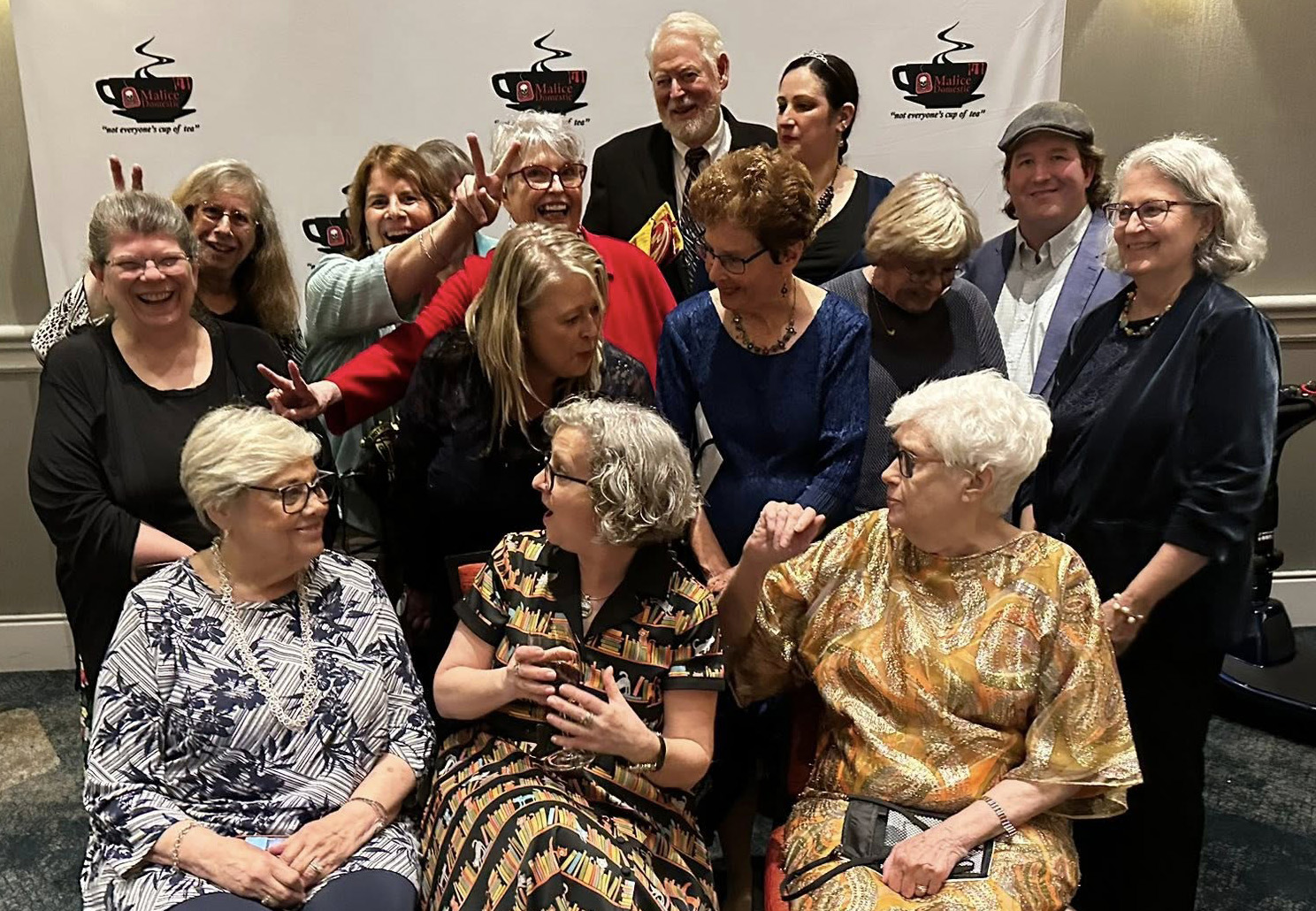
Despite an unexpected budget hit — I had to get a new furnace — I managed to get to Bethesda for the conference. Since it was my last year on the board, I really wanted to see a few sessions. And, thanks to the generous (and sometimes goofy) board that I worked with, I did!
I finally feel like I’ve had the fun, fan experience that is is Malice Domestic®. I made it to several sessions, including the Guest of Honor interview of Marcia Talley and the Lifetime Achievement interview of Donna Andrews.
I got to visit with fans and authors alike. Everyone was so friendly you really needed the nametags to know who was a fan and who was an author.
I enjoyed the Dorothy Gilman book club session in honor of our “Malice Remembers” author. I hope that becomes a tradition. I bought a trunk of middle grade books at the live auction. My grands and greats will enjoy that. (Yes, I have both.) I had fun, and added a couple of rows to my current afghan project, at Ellen Byron’s crafting session in the hospitality room.
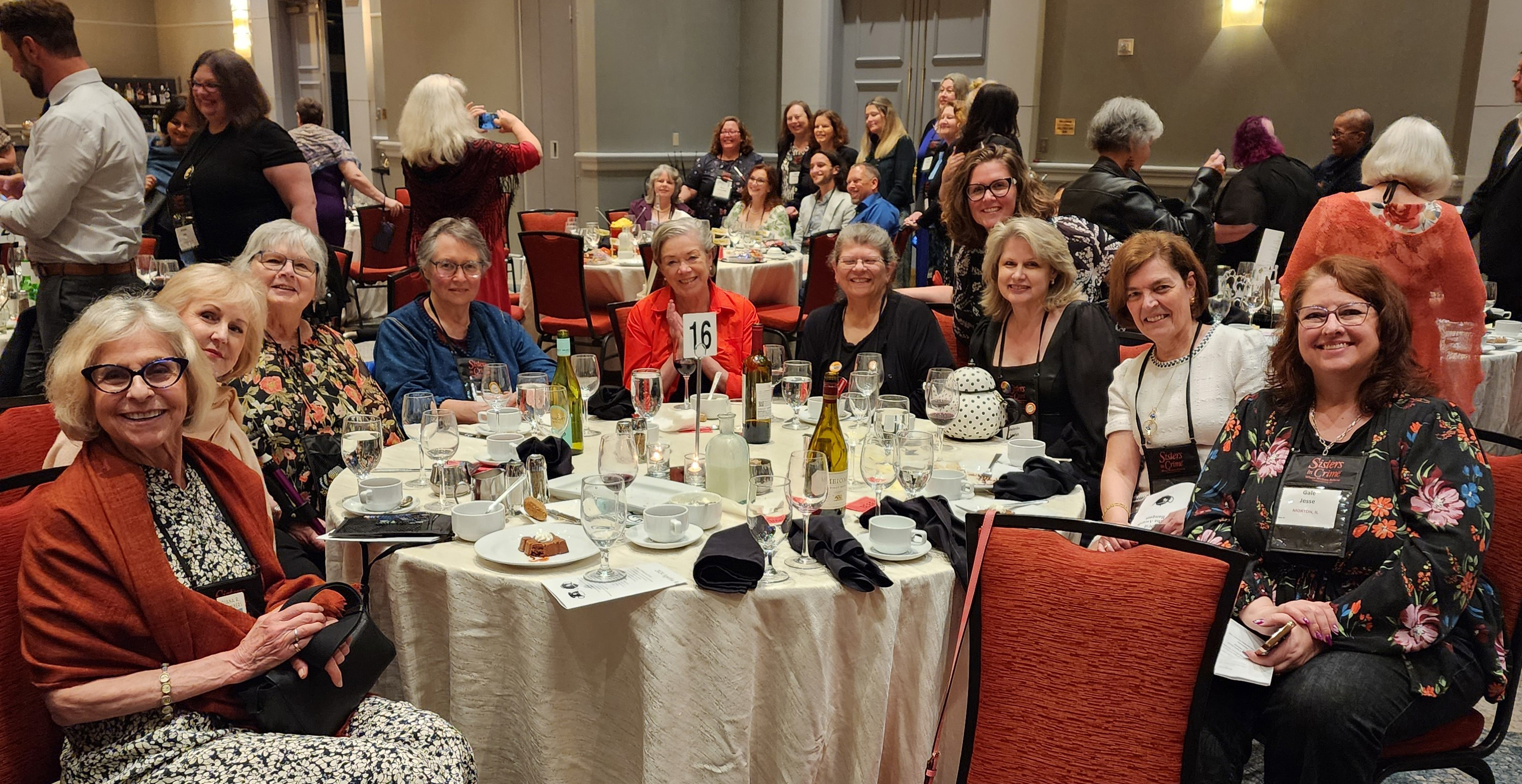
I was busy on Thursday when Jane Cleland hosted a pre-Malice writing workshop, but I was lucky enough to join her table at the Agatha Awards banquet. She was a marvelous hostess and I enjoyed the company of everyone at our table. (Jane is wearing a red jacket.) I always love her Saturday morning workshops, and I finally had a chance to thank her in person. If you haven’t read her Josie Prescott Antiques Mysteries, give them a try.
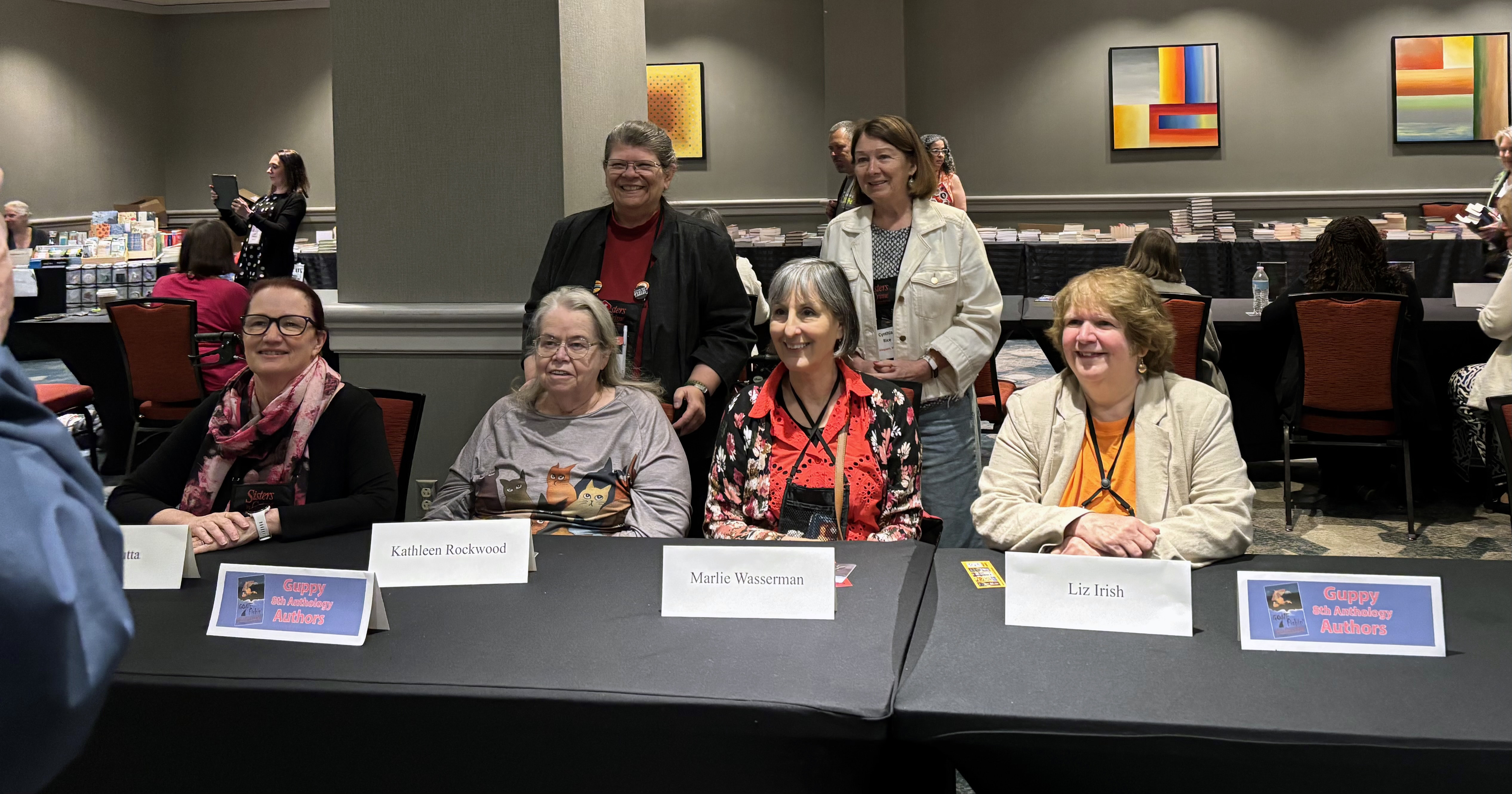
I even got to go to my first signing session as a short story author! A half dozen of the Guppies who are included in the eighth Guppy Anthology, Gone Fishin’: Crime Takes a Holiday, had our own signing session on Sunday morning. I have to thank the rest of the Malice board for making that happen, too. (Here’s hoping it becomes a new tradition.)
I’m sad to admit I’m probably not going to be able to attend next year for MD38, but I’m saving my money for a future Malice. (And I know a new furnace isn’t going to mess with my budgeting!)
If you like mysteries and have never attended Malice, I encourage you to go. The conference celebrates traditional mysteries in the vein of Agatha Christie (hence their awards, the Agathas). Check it out at malicedomestic.net! There’s still time for the early bird discount.
But for now, I need to hit the road for the next stop on my spring road trip.
À bientôt!
 sharon p. lynn