In the waning of the year

pexels.com | Tom Fisk

(I wrote this for my turn on my Lake Summerset Writing Gals blog, but it’s doing double duty this month.)

Cold weather tends to put me in mind of warm fires, hot mulled wine and poetry. Sadly, I have no fireplace. (But I can always put that Netflix fireplace video on my TV.) I can manage the wine, or maybe hot chocolate, and I always have poetry.

I still remember the day I discovered Robert Louis Stevenson’s A Child’s Garden of Verses in the kids’ section of my hometown library. One of my favorites was “My Shadow.”

I have a little shadow that goes in and out with me,
And what can be the use of him is more than I can see.
He is very, very like me from the heels up to the head;
And I see him jump before me, when I jump into my bed.
– Robert Louis Stevenson

At one point in my life, I memorized “My Shadow” and a few other verses in the book.

When I was in high school, John Lennon’s poem, “The Toy Boy” appeared in McCall’s Magazine. I cut out the page, memorized the poem, and took it on the road as my entry for our forensics club in the poetry category. (Back then forensics meant speech team, not CSI.) I think it’s still in my filing cabinet, but I haven’t looked for it in years. I did manage to find a post of the original image on Pinterest. I printed a copy and it’s hanging on the wall near my computer.

I just discovered “December” by Joseph D. Herron. I don’t know much about the author, but it felt right for the snowless chills we’ve had lately. The poem is included at one of my favorite websites — DiscoverPoetry.com. Another site I like is PoetryFoundation.org, which publishes Poetry Magazine. Both sites feature a poem each day; you can subscribe for free to have them emailed to you.

(Illustration by Sharon P. Lynn)

A third favorite poetry site is the Haiku Society of America. I love haiku, a traditional Japanese form of poetry. Like English sonnets, haiku has a specific format: seventeen syllables in three lines of five, seven and five. I was taught that the original haikus, before they even had that name, were supposed to be about nature. Today, at least in English, that rule has been abandoned. I’ve also seen variations on the seventeen-syllable format.

My first writing successes came in the newspaper business. But my first printed work that wasn’t nonfiction was poetry. I submitted several to my college literary magazine. A long-ish free verse took first place one year. A few of my haikus were also selected for publication there and in other small-circulation volumes.

I’ve never entirely abandoned my interest. I think my “old-year’s resolution” will be to read at least one poem a day before I start my own writing. I think it inspires me to write with all my senses. Maybe it will inspire others, too.

Back in class

The Sisters in Crime Guppy Chapter offers a variety of classes to its members every year. I just finished one about story structure last week that has not only helped me chart a path for my revision of a NaNoWriMo draft, it also led to a breakthrough on a plot hole. The former is due to James M. “Jim” Jackson who has developed another great Guppy class. The latter is thanks to my writing pal, Llewella Forgie, who spent some time brainstorming with me at the end of a writing session.

The class also left me with a notebook of great lectures, homework assignments and miscellany that Jim recommended along the way.

I also bought a couple of the books he talked about that I thought deserved my additional attention. And I decided I needed to reconsider a few characters. So I bought books about that, too.

The week before the two-week class started, I was lamenting to a few of my local writing group gals that I thought I had the wrong plot for the characters. I was considering scrapping the whole book and giving the plot elements to a completely different main character in another book, also a NaNo draft. (I have about a dozen drafts in various stages from participating in National Novel Writing Month.) The gals can vouch for the dismay I was feeling at the time.

Then I took the class. Talk about eye-opening. I tend to operate by “feel” when I throw my first drafts together. Some might consider what I do an elaborate outline rather than a draft. I firmly believe that you can’t fix what isn’t already on the page, so I do consider the NaNo stories to be my first drafts. But, unlike some, I have no illusions that they’re ready for prime time. They are, in fact, big messes. The goal of NaNo is crank out 50,000 words in 30 days. Sometimes pantsers like me run cold during the month. But, as one of my NaNo buddies says, if you get stuck, bring in the ninjas. Well, my NaNo drafts are full of “ninjas.”

And cleaning up the ninjas is what I’ve been trying to do with my drafts for the last few years. In each case, I think I have decent main plots, and I liked my characters when they came out of my head. Making them presentable has been my challenge.

Going through the class assignments — they were pretty involved — also convinced me I didn’t like what I’d done to one of my characters. I thought changing her would add drama to the story, but it just made me dislike her. I plan to go back to her original personality and make other adjustments to the plot. Hence the splurging on books about characters.

I still don’t have a finished novel, but thanks to classes, friends and bit of persistence, I hope to have one soon.

A bientôt!

Ah, summer

(pexels.com fotios)

Sweltering, according to a dictionary, is “uncomfortably hot.” And that’s all the description we needed to describe days when all you had to do to work up a sweat was sit still.

In my experience, the worst days of summer arrive when the corn is high and the earth’s respiration goes straight from the fields to the clouds.

I’m grateful the month started out below average in my part of the Midwest. My sisters gathered for our “weekend” together, visiting each other and relatives from both our parents’ families.

Cool temperatures prevailed in the weeks that followed. I, for one, enjoyed the respite from typical summer temperatures.

My mind gets sluggish in heat. I’m much happier in winter when I can pile on blankets and sweaters and sip hot cocoa and lots of tea. In summer, I try to drink lots of cool water, but even in AC, ice melts pretty fast at my house.

My three sisters are much more outdoorsy than I am — to their credit and their health. They all kayak and hike and pickleball. They never lost the art of play. I guess I was always the serious kid. I liked some sports, including swimming, but one after another, they slipped from my routine after my jobs grew more distant and my commute locked me in my car from forty to one hundred twenty miles daily. The girl who loved to ride her bike to a park with a book, find a shady spot and read easily switched her loyalty to audio books.

Today, I just hope to keep my electrical use to a minimum until sunset. Then I may walk out to check the mail and run the washer. And I need to put “new clothesline” on my shopping list. No reason to run the dryer if I don’t have to.

I find the idea of understanding meterological terms and measures much more fascinating than living through them. I’m still grappling with dew points versus humidity as a way to measure relative air comfort, but I keep trying.

And I understand sweltering just fine.

À bientôt!

Libraries and liberty

Sharon’s photo of an early 20th century postcard of her hometown library

The only thing that you absolutely have to know, is the location of the library.”
–Albert Einstein, theoretical physicist 

Decades ago — way last century — I took a walk to my local library with an older girl from around the corner. It was early in summer vacation after first grade. We came back to my house with an application for my library card and I begged my mom to let us walk back so I could get some books.

I came home with five of them and decided that day I wanted to be a writer.

So began my lifelong love affair with libraries.

When I got my library card, that was when my life began.”
– Rita Mae Brown

My hometown library was one of many built through the largesse of Andrew Carnegie. As a child, I walked up the front steps, pulled open the heavy doors and glanced as the portrait of Mr. Carnegie before racing up or down the steps to the rooms that housed the books I wanted to read. Sadly, several years ago, someone broke into the building and stole the portrait. Hard to believe.

I spent so much time there growing up that the librarians knew me well enough to hire me as a page when I got old enough for a job. I worked there — very part time — for four years. And the library board was the first regular news assignment I had for my hometown paper.

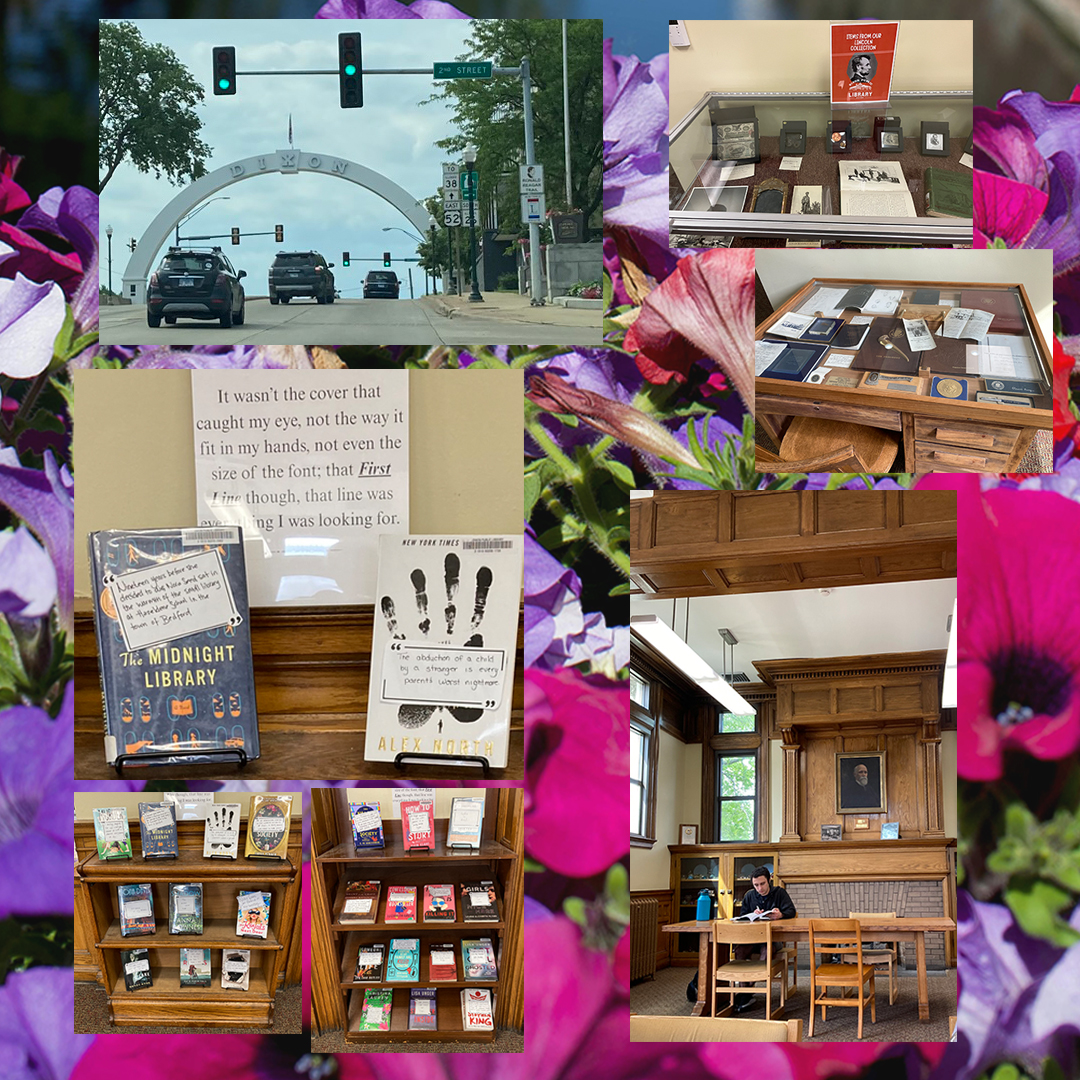
I now live outside a tiny town in north central Illinois where the village board contributes the payroll for someone to sit in the school library on Saturday morning to check books out for anyone in the neighborhood. I believe the school district may be the boundaries for the village’s generosity.

Google can bring you back 100,000 answers. A librarian can bring you back the right one.”
—Neil Gaiman, author

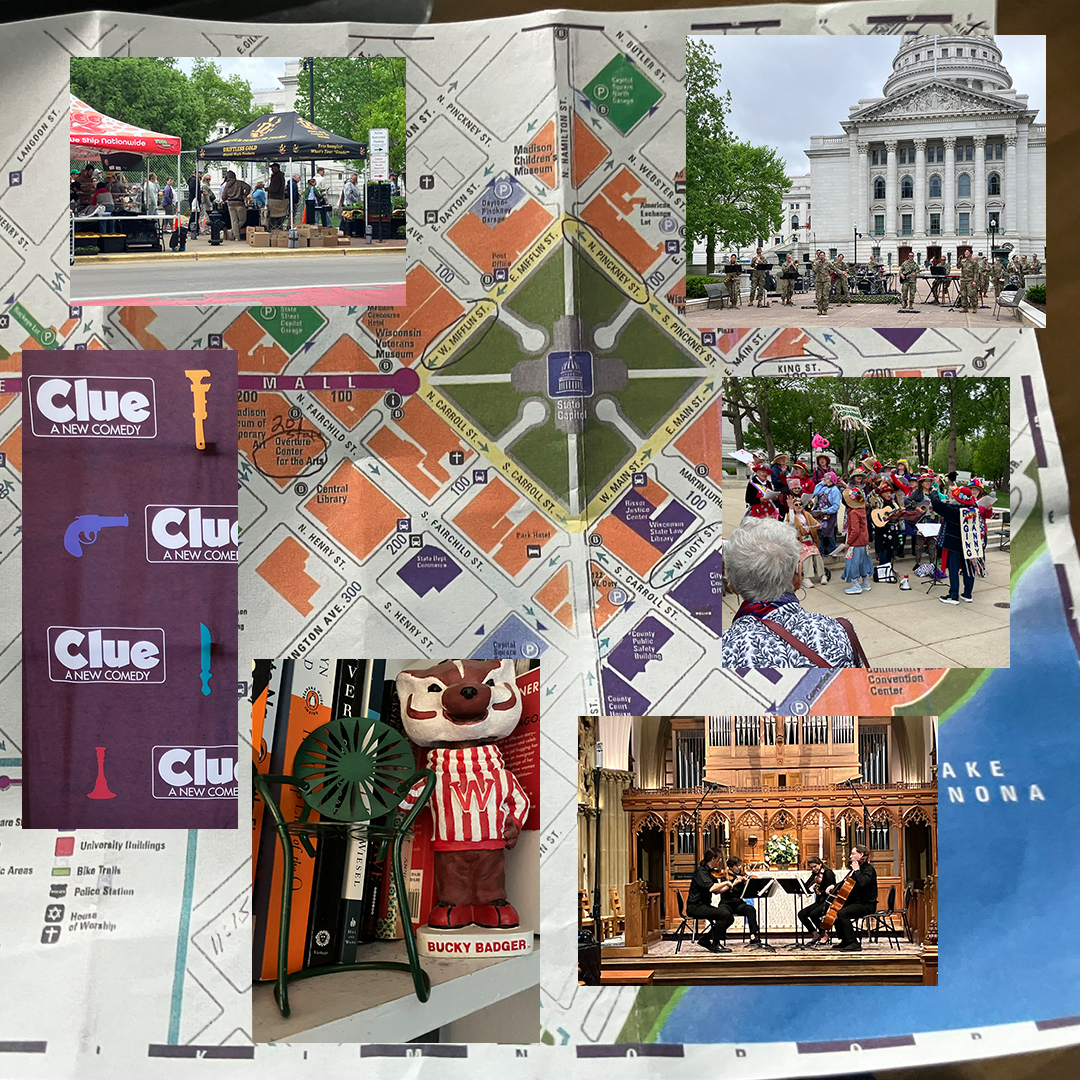
I also live about 45 minutes south of the wonderful libraries at the University of Wisconsin in Madison. Having been a student there, I became familiar with several of the campus libraries and take advantage of guest status from time to time.

And I have district resident access to the library at a community college about 30 miles from my house. I haven’t used it much since my kids stopped attending classes there.

But mostly I borrow books on line from the two libraries where I ante up cash for cards annually. The closest Illinois community with a library has a pretty small collection, but they’ll order almost anything on line for me. That’s been handy when I’ve been doing research for talks I’ve made to a few groups I belong to.

I ransack public libraries, and find them full of sunk treasure.”
—Virginia Woolf, author

I also buy a card from Rockford, Illinois. That system just opened a new main branch building on the site of the former main branch along the Rock River. The spot, it turns out, was a hazardous waste site from previous use in manufacturing and power generation. The new building is gorgeous, and I’ll probably make a stop there one of these days.

But I am a huge fan of RPL’s online services. I borrow extensively from their digital audio collection, since my fiction consumption is almost exclusively audio these days. I never thought anything would surpass the experience of holding a book in my hands and curling up in a comfy chair with a seasonal beverage near me. But I started listening to audio books on my commute to work and have never gone back. Now I listen while I wash dishes or cook or other occasional house chores. And, of course, I still listen in the car.

Whatever the cost of our libraries, the price is cheap compared to that of an ignorant nation.”
–Walter Cronkite, journalist 

There is a persistent misunderstanding about libraries being free. They really aren’t, although they feel like it. Most are tax supported in one way or another, and when I pay for a card in districts I don’t live in, my few dollars are equivalent to what district residents pay in taxes. I think the cost is the best bargain on anyone’s tax bill. And for me, who reads 100 books a year, the cost is far less than if I bought all those books myself.

I do like to buy books from my friends, and have bought a few paperbacks and hardcovers when they don’t have audiobooks. (And apologize for not getting around to them in a timely manner.) I’ve been thinking about buying an old fashioned autograph book because I rarely have anything for them to sign when I see them in person.

The clash of ideas is the sound of freedom.
–Claudia Alta “Lady Bird” Johnson, first lady of the USA

But all this is to say I love libraries and think everyone needs to support them. I hate the censorship some libraries are facing. Ideas should be widely circulated, whether you agree with them or not, so we can better understand each other’s experiences and points of view.

I say all this in July, because I happen to think libraries are a national treasure and one of the surest ways to make sure we all have the opportunity to learn our shared history and plan for a well-woven future. I admit, I’m an idealist. But without years of library time, I wouldn’t even know what ideals we might reach for.

À bientôt!