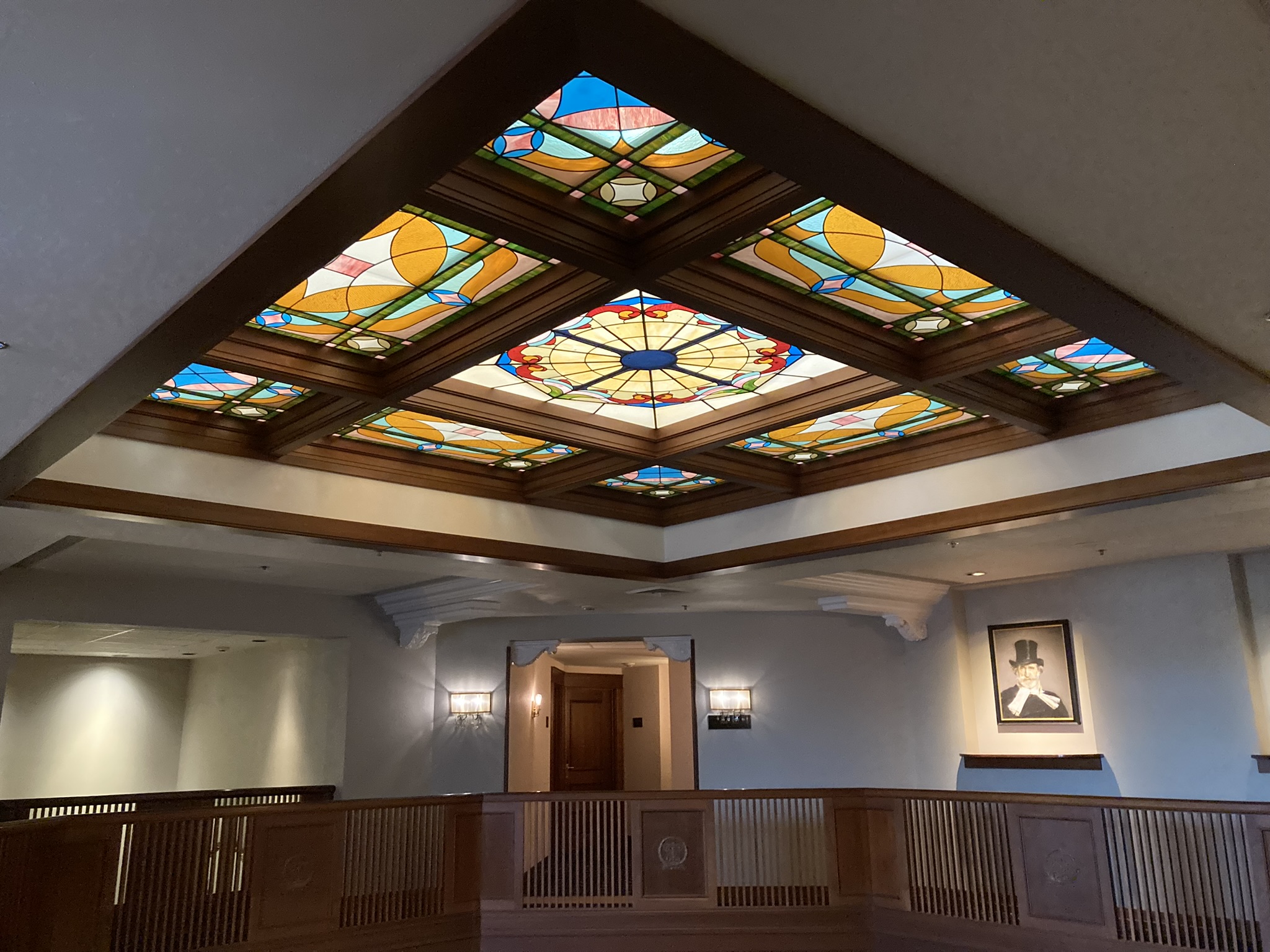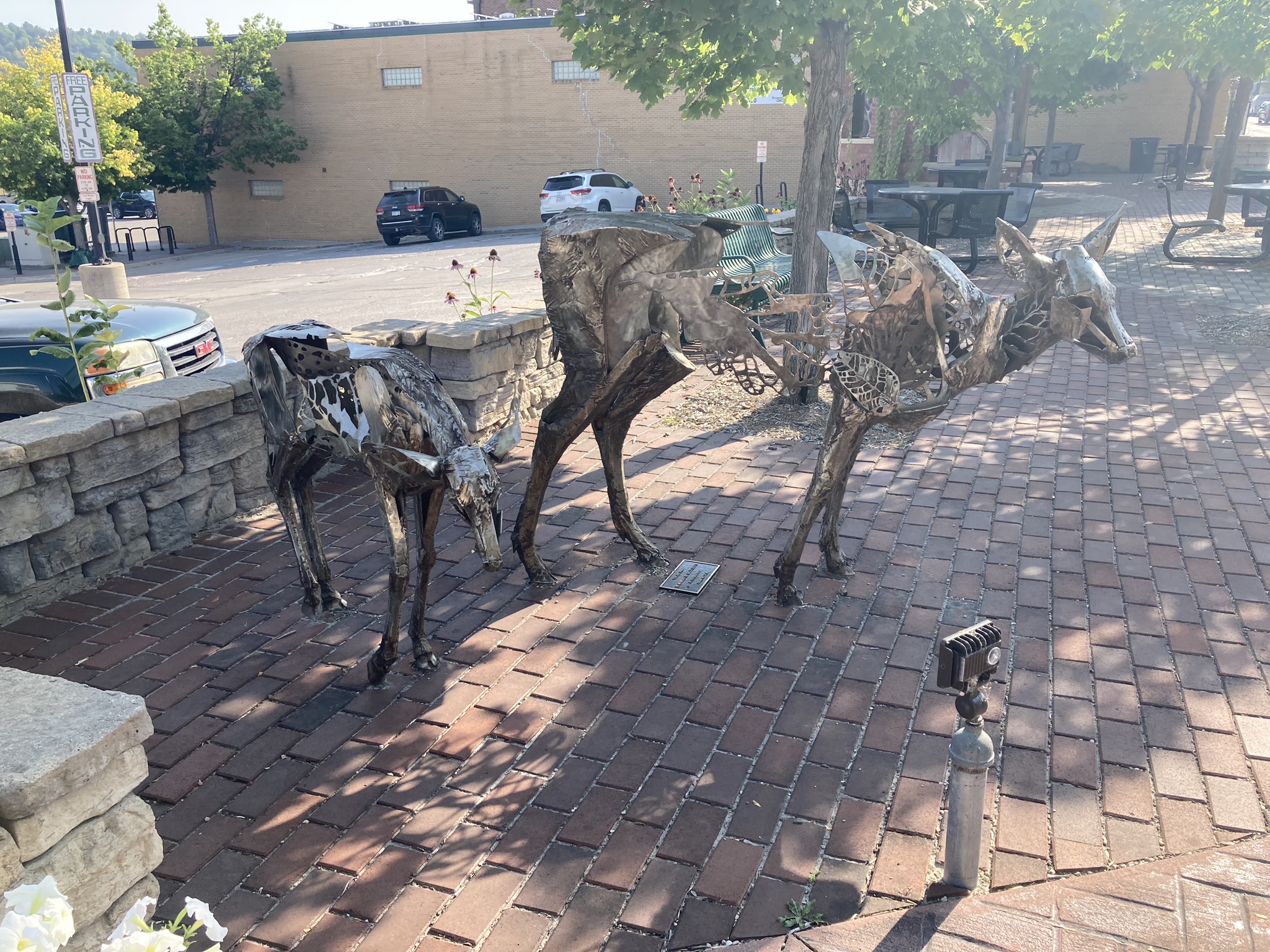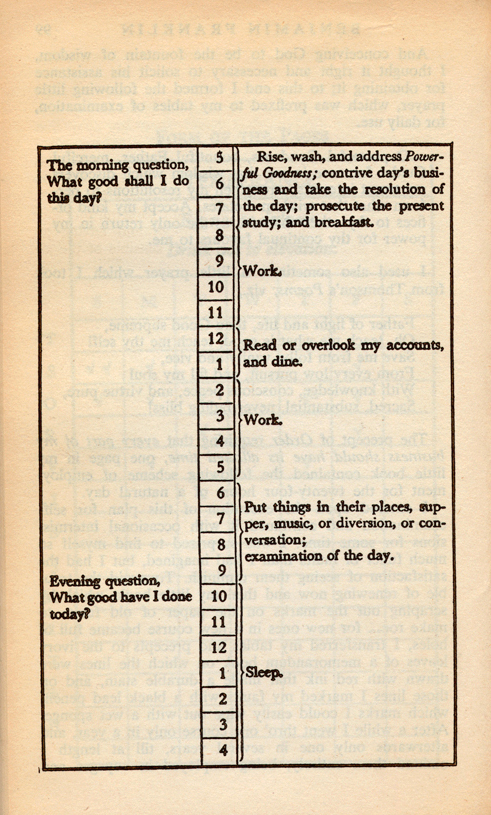
Sometimes the museum right “next door” is one you forget to visit. But I’m glad our recent painting party with Barry Treu turned out to be small enough that he could host us at the Freeport Art Museum. We had fun creating variations on his “rainy day” picture of flowers in boot vases, we were literally sitting in the midst of the 19th Regional Juried Exhibition.
Featuring artists from throughout the Midwest, working in a variety of two- and three-dimensional media, the show will remain at FAM through July 29. Perry Eden, Linda Vietmeyer, Sheila Welch and Kathleen Wilken, all of Freeport, are just some of the artists whose work is featured in the regional show.
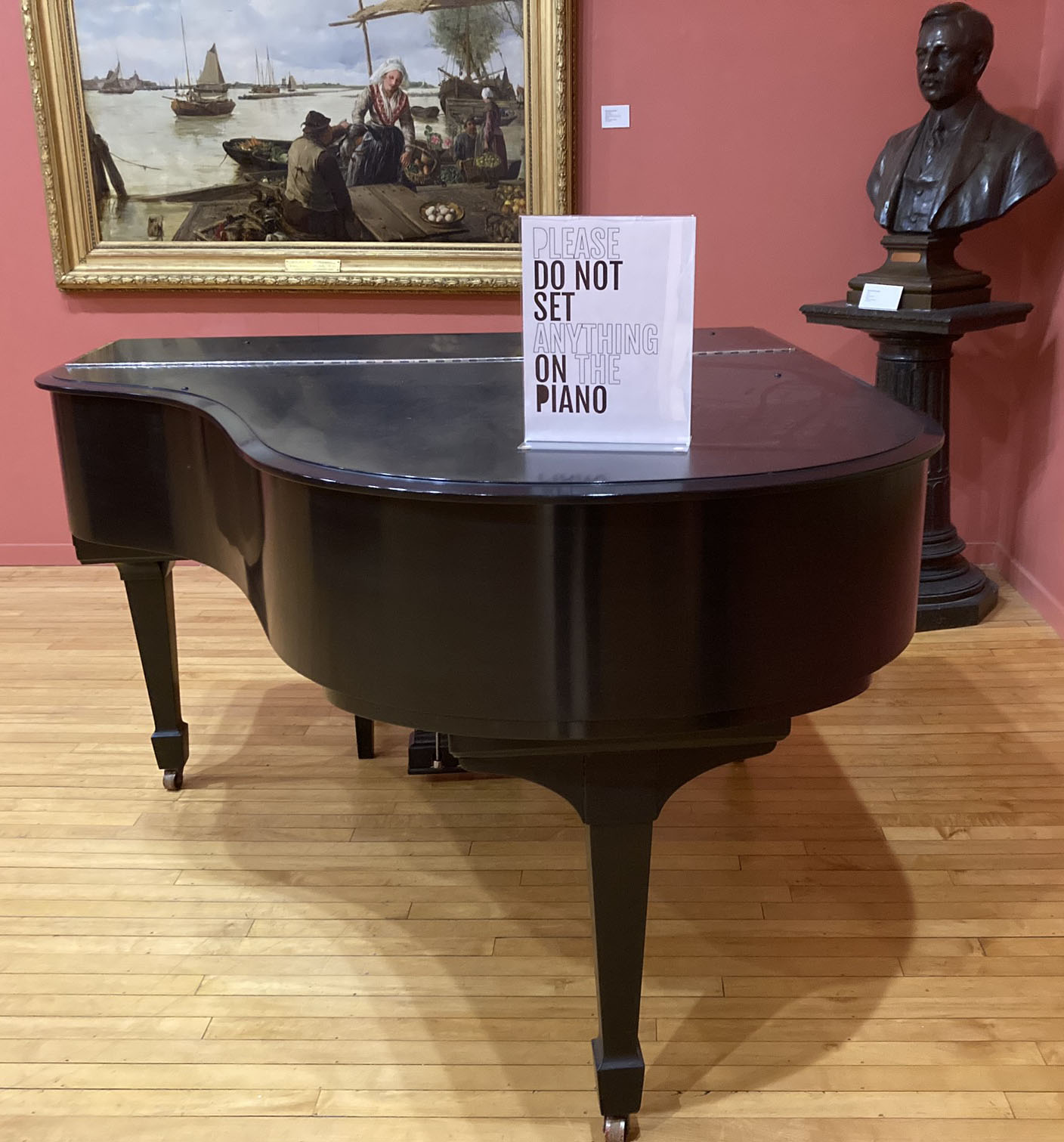
Before we left, we also had a chance to wander through the museum to see some of the other items on display. They are immensly varied. One of my favorites may not be intentional art, but it appeals to my (possibly weird) sense of humor. The “Please Do Not Set Anything on the Piano” sign — set on the piano — strikes my funny bone.
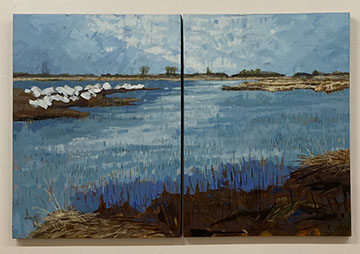
But on a more traditional note, I liked the dyptich — two-panel painting — called Pelican Island by Tara Keating.
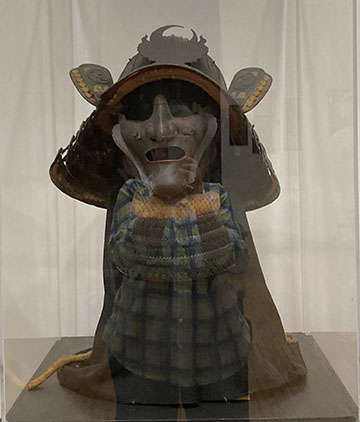
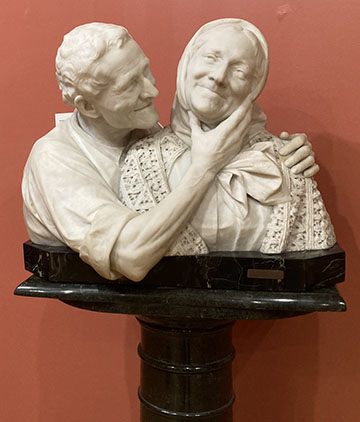
I also liked the late 17th century Samurai helmet and mask, and the flirty statue of peasants, carved in marble by Ferdinand Vichi.
No matter what is shown, its well worth a trip to enjoy the art in our midst at the Freeport Art Museum. And admission is a bargain at $3 for adults, $2 for senior citizens and students, and $10 for a family.
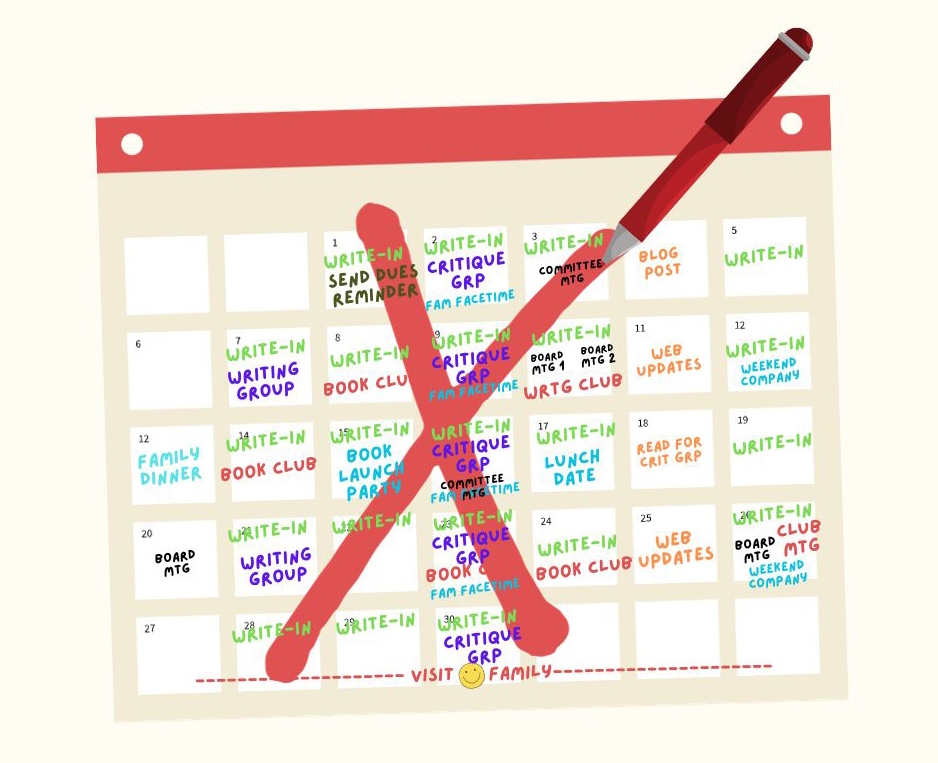
That’s what we do in the new year, right? We start fresh with a new calendar. We try to make this year “count” in some way that previous years haven’t.
I’ve always tried to give some of my time to volunteer pursuits, mainly by taking positions on various non-profit boards. And, thinking back, I’ve always taken the same kinds of roles — the ones that help with publicity or communication. These days, that tends to involve social media.
But since I’m mostly retired, I’m up to six groups. I counted the other day. (Stop me before I volunteer again!) Their demands vary, and one only needs attention from now until the end of April. But it needs a lot of attention.
Another needs a record of the hours its volunteers serve. In order to be eligible to vote at the annual meeting, volunteers must have provided at least 10 hours of service during the previous year. And the organization needs records of that service, not just to keep track of its voting members, but also to include in grant applications.
So, my new habit involves a timesheet — my new habit. I made a spreadsheet to help me keep track of the hours I’m spending for each group. I didn’t make it until Jan. 8, so I missed whatever I put in on the first week. That’s ok, because I didn’t do anything for the group that wants records until the day I started it. (And I need to give them a bit of time today.).
Since it’s all on the honor system, I’m rounding to the nearest quarter hour for all the groups. I hear that works for lawyers.
And I’ve been diligent since that first day.
I added it up yesterday and I’ve put in 51.75 hours of volunteer service to five of my six groups in the past two weeks. (The other one won’t meet until next week.)
But I also added a column for writing and revising. So I also learned that, until yesterday, I’d only put in 3 hours towards my novel. That’s no way to get revisions done.
I doubled the time yesterday. I focused on my revisions and spent 6 hours on them. That has to improve.
So, my new habit — my timekeeping — is already teaching me things about the balance in my life. And led me to my next goal, which is to make sure I get some writing and revising time in at least five days a week.
It was a journey through my keyboard this month, a journey to 50,000 new words toward as yet unpublished fiction. And, starting Dec. 1, my goal will be to get from the second half of the middle all the way to “The End.”
Charleston (left) and Galesburg, Illinois, debate sites. (Sharon’s photos)
A couple of months ago, after I finally took a few photos of the first Lincoln-Douglas debate site in Ottawa, Illinois, and the second one in Freeport, I said I was going to put the seven sites on my “to visit” list. Well, I ticked off two more this month on the way home from a southern road trip.
(Sharon’s photo)
I stopped at Charleston, site of the fourth debate, and Galesburg, site of the fifth debate. No, I’m not taking them in the order they happened. This was the order that worked for my route back home to northern Illinois. I figure I’ll try to do three, six and seven on my next trek south.
And I don’t expect to log as many miles as Lincoln did while he was on the debate circuit. There’s a map of the whole route, including details about how many miles Lincoln covered via train, boat and wagon at the Charleston museum. (Apparently Douglas didn’t keep track as closely.)
My only advance research for the sites was finding them on my GPS. I was expecting small parks, like the surroundings of the two sites I’d already seen. Each of those has some relatively new signs explaining what went on back in 1858. But neither of these sites is in a park.
Charleston’s debate site is at the Coles County Fairgrounds, and its statues of the debaters are the most accessible of the ones I’ve seen so far. They stand at the corner of a little museum that features some hands-on exhibits, as well as a little theater that shows a short film at the press of a button.
(Sharon’s photo)
The political nature of the debates is clear, with red white and blue bunting and colors throughout the room. But the location was considered especially friendly to Lincoln, where his stepmother, Sarah Bush Lincoln, and other family members still lived. The local hospital bears her name.
(Sharon’s photo)
In Galesburg (also the home of Carl Sandburg, but that’s another story), the debate was held outside Old Main, a building that was finished in the summer of 1857 on the campus of Knox College. There are no statues to commemorate the debate, but on the east side of the building large, bronze plaques of each candidate frame doorways into the building. (The handicapped entrance is on the west side of the building.)
Inside along the hall, several signs and photos illustrate the history of the college, as well as the significance of the debate. And in a small room on the left from the debate doorway is the Lincoln Chair room. The chair is the one Lincoln sat in while waiting for the debate to begin.
(Sharon’s photo)
The room also houses a collection of memorabilia from the debate, as well as from the life of the 16th president. Across from the doorway sits a detailed miniature of the law office Lincoln shared with William H. Herndon in Springfield, Illinois. There are also a variety of images — posters, photos– and a small statue of Lincoln on a bookshelf.
Historical note:One of Knox College’s graduates was Hiram Rhodes Revels, who would become the first African-American U.S. Senator and the president of Alcorn University in Mississippi.
To the left of the miniature, is the window Lincoln and Douglas climbed through to reach a platform that was built for their debate. It blocked the door between the plaques, making the window the only access for the debaters. The effort, according to a small sign near the window, led to Lincoln’s remark, “At last, I have gone through college.”
For the last several years, Halloween has been the day before National Novel Writing Month (NaNoWriMo) to me.
I am pretty excited about finishing the first draft of the novel I’ve been working on this year. It was an outgrowth of my 2020 NaNo project, and I didn’t spend a lot of regular time on it until September. Since then, I’ve had pretty regular writing sessions on Mondays, Tuesdays, Thursday and Saturdays. For November (NaNo month), I plan to put in some time every day of the month.
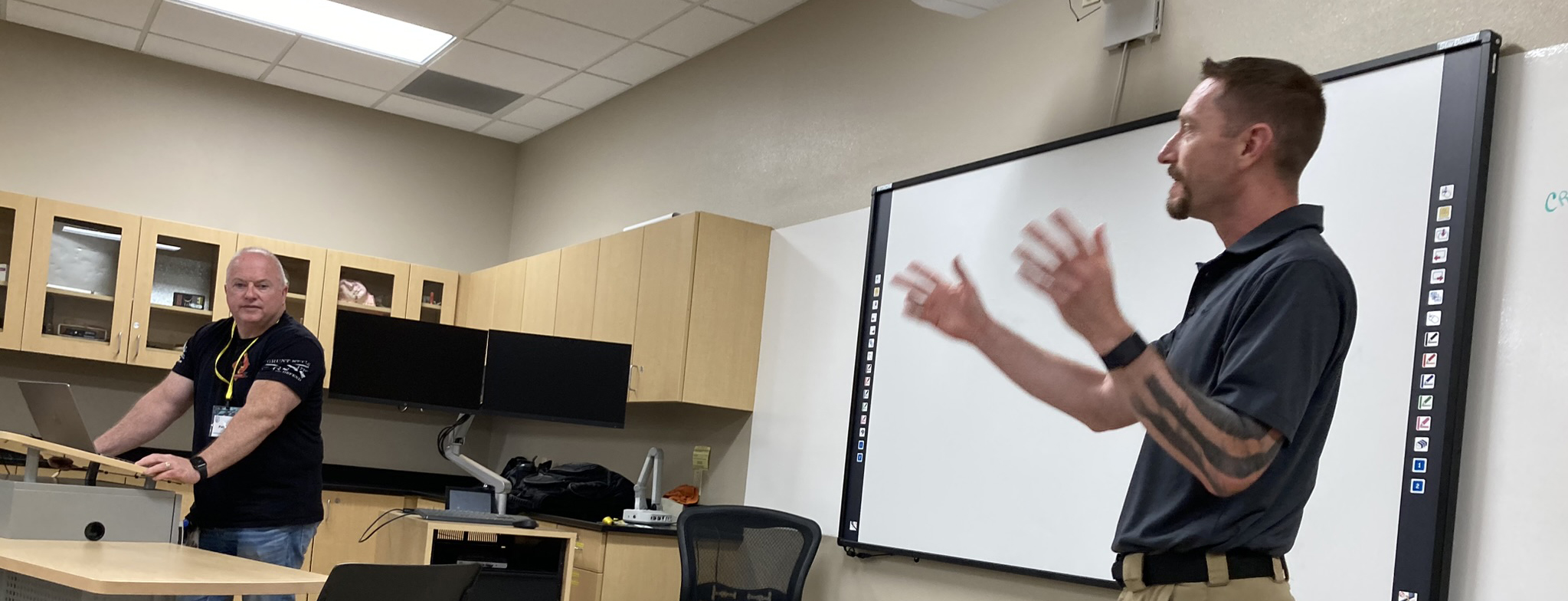
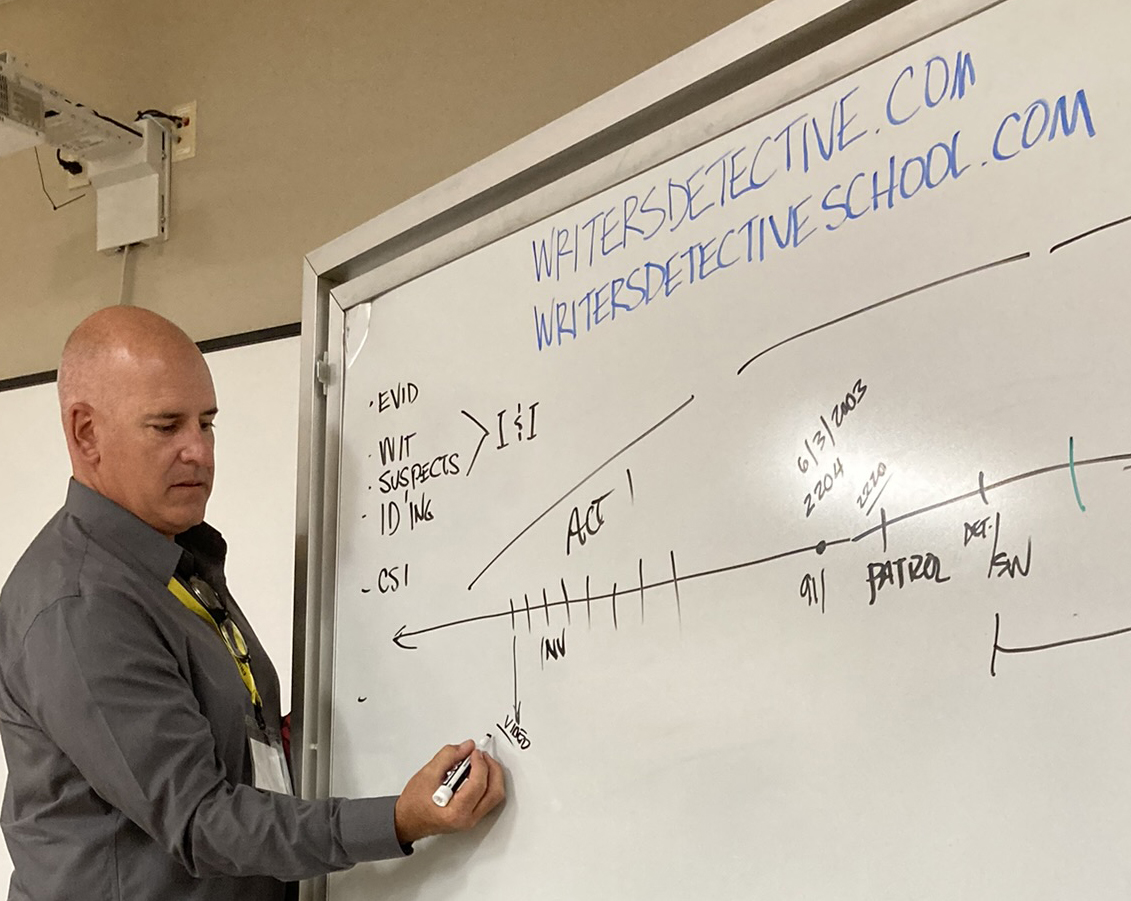
But I did want to pass on a few of the gems from the presenters at Write On Door County’s first mystery writing conference. The ideas weren’t new to me, but the reminders were just what I needed. Maybe you need them, too.
Everyone has a a different writing process
The first panel with the authors who led opening day workshops made that pretty clear. All were published authors, some of many novels, some of few. Some were plotters and some were pantsers. A couple admitted to being plantsers — those who start out with a vague idea, but make plans as they get into the story.
For the first few years I’ve done NaNo, I’ve been firmly in the panster camp, but I’m leaning toward plantser. I finished the first draft of my work in progress because I started figuring out which scenes I still needed to make the novel work. I didn’t write them from start to finish, but I made notes and wrote them whenever I got a fair idea of where each scene needed to go. I did write the first scene first and the last scene last, but that was about it.
Let the reader do some work
Years ago when I took a playwriting course in college, I learned a lesson from the professor. I wrote the last scene of my play with a happy ending — more or less. When he read the first draft, he told me, “You need to give the actors something to do. Why don’t you kill somebody?”
I realized then that acting is as crucial to a successful play as scriptwriting is. (And costuming, stage designing, directing and all the rest….) So, too, is leaving something for the reader to imagine. It’s possible to spell out too much in a story. Pete Hautman wasn’t asking us to be vague, but to leave a little to the reader’s imagination, too. It helps them get involved in — and keep reading — the story. The writer, he told us, must trust the reader to connect the dots.
Downtime counts, too
“Ruminating is also writing.” So said John DeDakis.
While nothing will ever get written without sitting in a chair pounding on a keyboard or writing in a notebook, storytelling begins in ideas, daydreams, imagination. It will take work for most of us to put those ideas into a form that will intrigue a reader. But never discount the time when you find yourself gazing out a window, mindlessly watching leaves fall from a tree or clouds scud across the sky.
We all need to give our creative minds a chance to run free so we can have words to put on pages (or screens).
There was much more packed into two short days, but right now I need to ruminate before I start this year’s NaNo novel.