Death knell for news

My hometown newspaper died Aug. 6, 2025.

No cause of death was reported as the news flew through social media, but I suspected sagging subscriptions and ad sales, coupled with rising materials costs as likely culprits in its demise. A press release reported later by area television stations and a regional daily said as much.

One more small piece of the formerly ubiquitous press is part of history. And I find it saddening for many reasons.

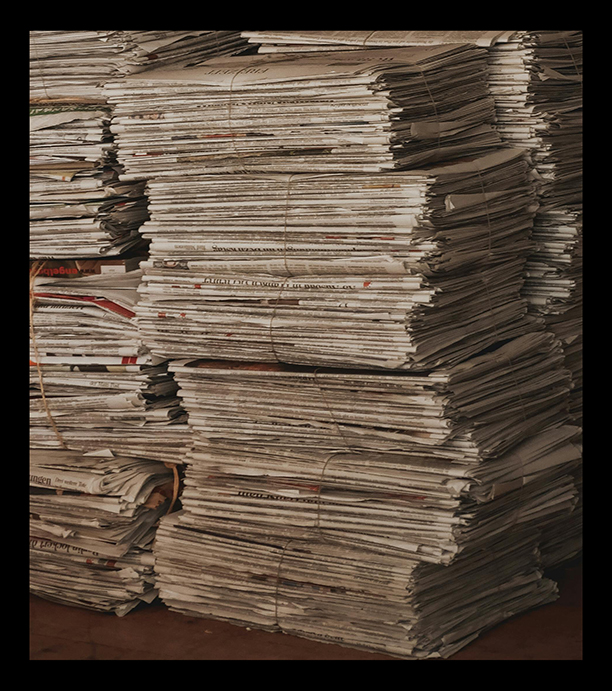
It was the first place I ever saw my words in print. In grade school, after I learned to read, I scanned every newspaper and magazine that came into our house. There were lots. We had a subscription to the now deceased local paper, which was actually two papers. The News and The Leader carried separate nameplates when I was growing up. The News was printed on Tuesday, with home mail delivery on Wednesday. The Leader came out Thursday, with Friday delivery.
(Pexels photo, Maxim)

I read lots of the articles, and looked at all the pictures. When I was elected scribe of my Camp Fire group in fourth grade, I copied the format of the new officer announcments from the adult clubs and wrote a short article. I recopied it in my best penmanship, carried it the four blocks from my school to the newspaper office, and handed it in. A week later, I read it in the paper. I remember the editor changed one word. (I learned early not to be too attached to my prose.)

The firt time I worked with a newspaper photographer was after I wrote to an area daily’s kids’ column, “Ask Andy.” I’ve always suspected my question was drawn from a hat, not selected because it was so interesting. But I won a set of World Books, which I still have despite its being hopelessly out of date. I remember going to the local newspaper office, the same one I carried articles to, for a photo shoot. The picture still shows up from time to time on my hometown museum’s Facebook post.

I grew up respecting our local newspaper photographer. We all knew to step over the cables in the high school gym because he brought extra lighting to the basketball games so he could get good shots. By the time I was taking sports pictures for the paper, we had strobe flashes for the cameras we carried but I don’t think our shots were as good as his.

I kept writing stories for school groups, from the seventh-and-eighth grade civics club to high school drama club, walking them downtown, and seeing my stories in print. I guess it’s no wonder I kept writing for newspapers for a good chunk of my life.

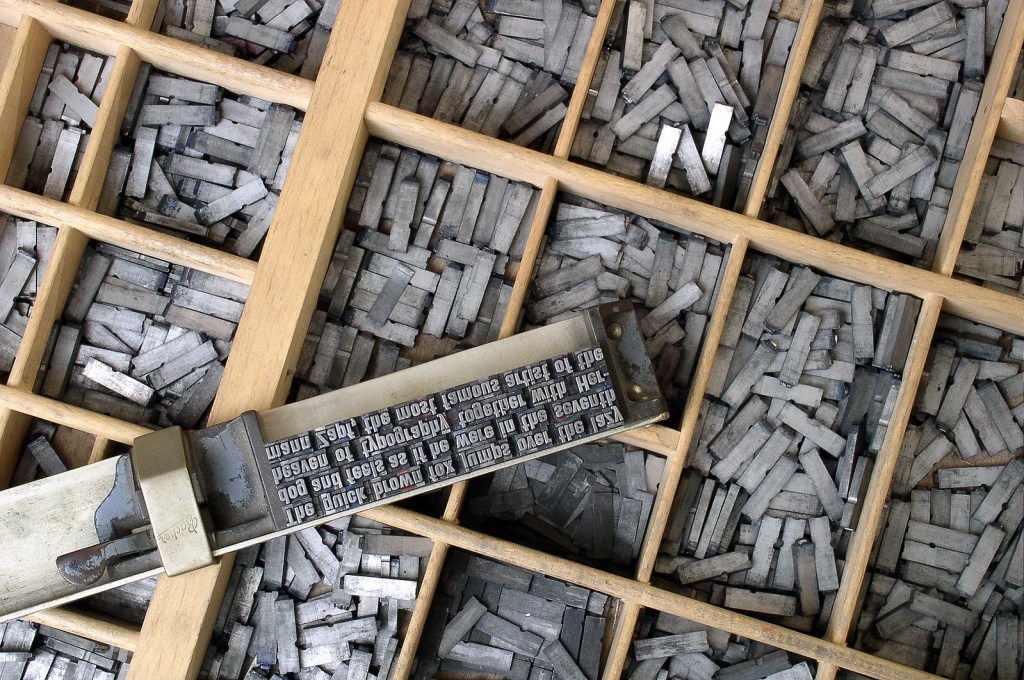
My first full time job was at that newspaper. I started in the backshop as a typesetter, eventually graduating to page design. I also got to help fix page negatives with a special red pen, “stuff” papers coming off the press, counting and tying them as I went. I could flip a stack of 100 papers back then. I even got to help change “dink” rolls on the press.

My boss in the back shop knew my goal was to work up front, so he helped me organize my schedule to attend classes at Northern Illinois University. Eventually I got a journalism degree there, but not until after my hometown paper had been sold to a young man my age who had dreams of building a nationwide newspaper group. He hired me as an editor for a county weekly, also owned by my hometown paper.

That was 1975. And 50 years later, his company closed, shuttering the papers in Rochelle, several other small towns in Illinois and in other states throughout the U.S.

But he really ended a tradition in my hometown that started in the 1800s. There were newspaperswhen the town was called Lane, before railroad progress required a name change. The Lane Leader ran from 1858 to 1859. The Lane Register was published from 1863 to `1865. The University of Illinois Newspaper Project says Lane changed its name to Rochelle on April 10, 1872.
The earliest papers I could find labeled Rochelle were the Herald, 1865-1877, and the longer-lasting Register, 1865-1926, although both seem to predate the changing of the town’s name. I think the records just include some of the Lane years.

The Library of Congress lists 1921 for the founding of the Rochelle News. According to the U of I Newspaper Project database, the Rochelle News succeeded the Rochelle Independent and the Rochelle Register when those nameplates died in 1926.

The News went into business with the .Rochelle Leader in 1934 but each continued under its own nameplate until 1994 when the two papers became the Rochelle News-Leader under the ownership that just closed its doors.

Sadly, no services have been scheduled to commemorate the loss.

À bientôt

Join my launch party

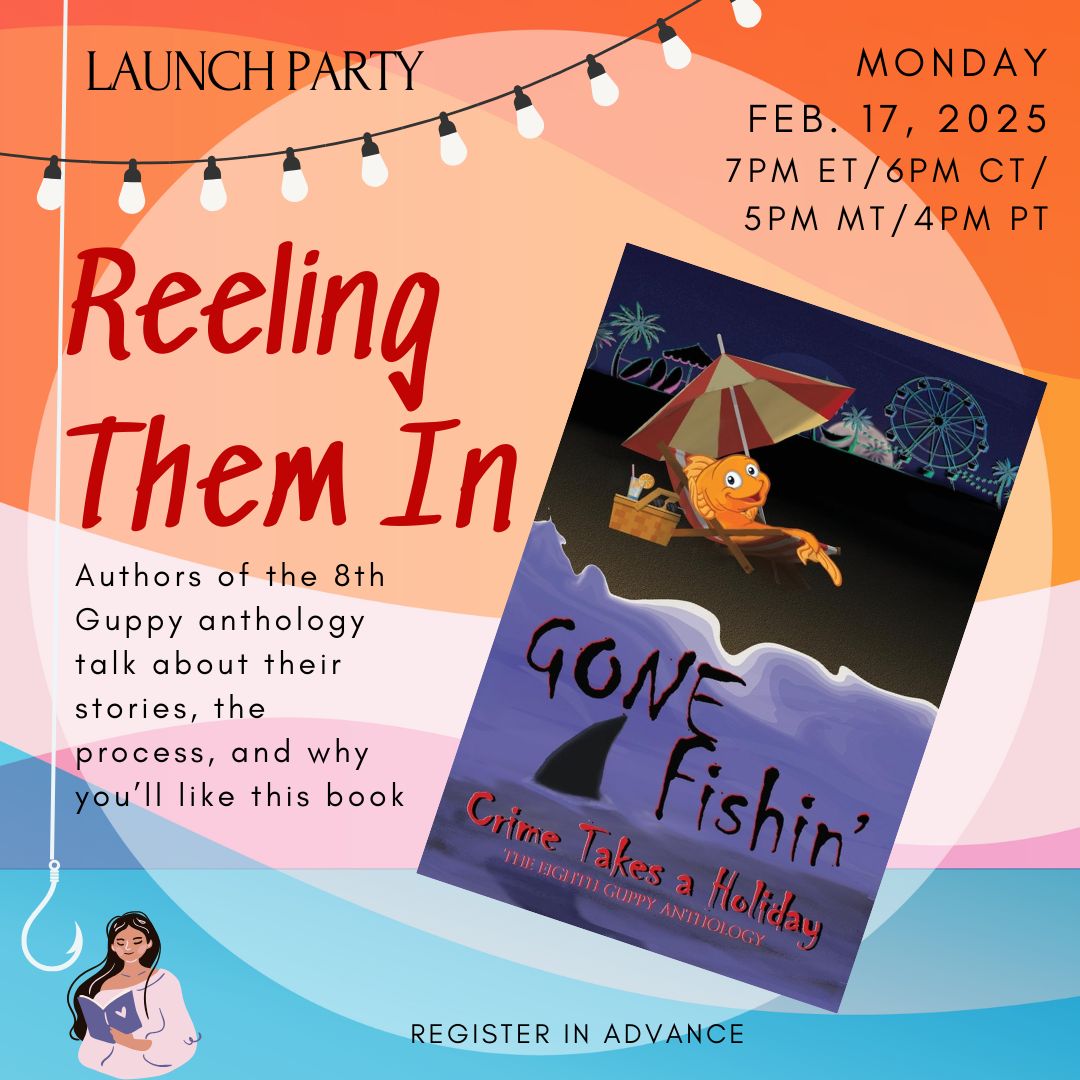
Have you heard of a book launch party? They are a way of celebrating new publications with friends and families.

My short story, “Blood on the White Rose,” appears in Gone Fishin’: Crime Takes a Holiday, the eighth Sisters in Crime Guppy chapter anthology.

Not only is the story my first fiction publication, it’s also my first foray into book promotion. At least I’ll be part of a group, which makes me feel more comfortable about the process.

But I’d love you to join me when we debut our book in an online “gala” on Feb. 17 at 6 p.m. CT. Well, I think there will be something of the “gala” about it. I guess we’ll find out about that together.

You will need to register in advance at https://sistersincrime-org.zoom.us/webinar/register/WN_J2jaejhdRCCrcAtSJrO-DA. Please join us for our debut.

Confessions of a Cop Camp ‘guinea pig’

It was was jam packed and over too soon

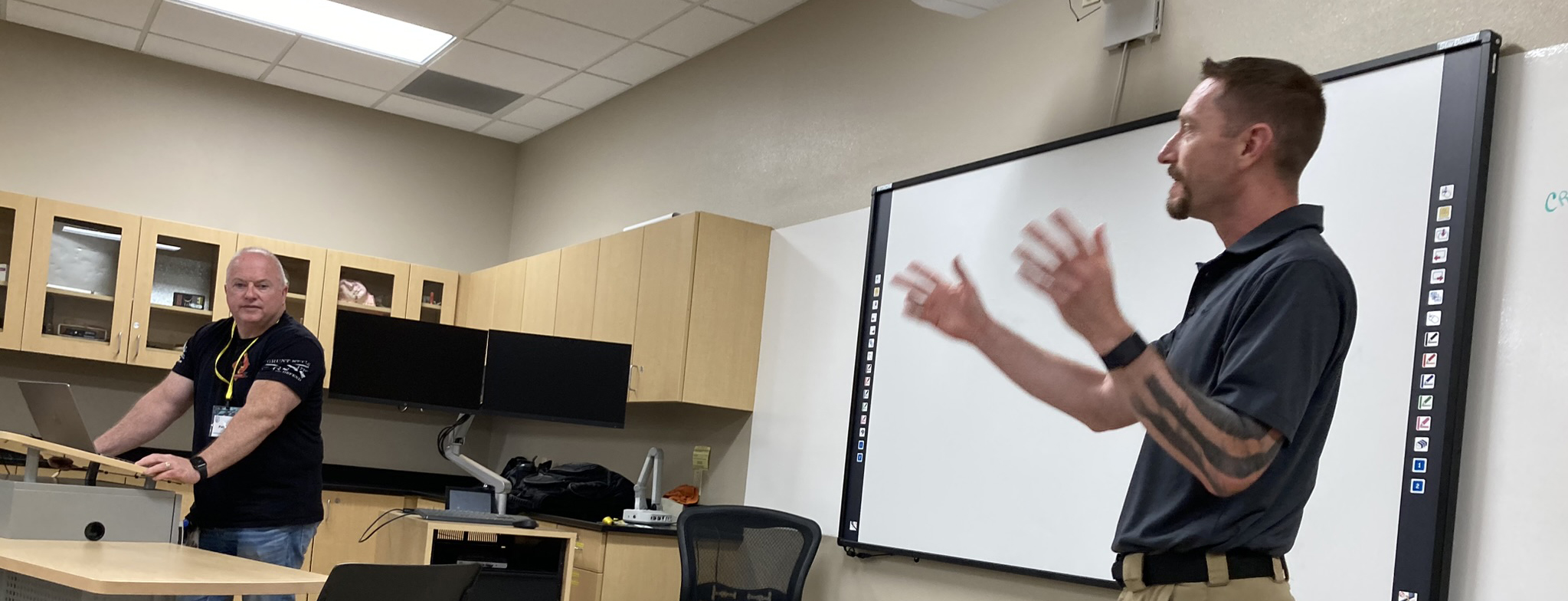
Instructors and students from the first “Cop Camp” pose after the crime scene exercise.

From the informal gathering the night before it started to the celebratory champaign at the end, Cop Camp in Appleton, Wisconsin, was amazing and inspiring.

Cop Camp is the informal name for the Cops and Writers Interactive Conference, and I was lucky enough to be in the inaugural group June 1-4.

Patrick O’Donnell and RJ Beam

Cop, writer and Wisconsin technical college instructor R.J. Beam approached Cops and Writers podcast host and author Patrick O’Donnell, a retired Milwaukee police officer, about setting up a workshop. They enlisted friends in law enforcement from across the nation, as well as friends from the indie writing world. Their goal was to develop a retreat for crime writers who want to get it right. Nothing too big, they planned to cap it at 30 to 40 writers.

Timing and conflict with other events reduced the number of the inaugural class to about a dozen. But for those of us who were there, it was both enlightening and inspiring. And, frankly, I am looking forward to next year. The small-group setting really appealed to my needs as a writer.

An end-of-day gathering

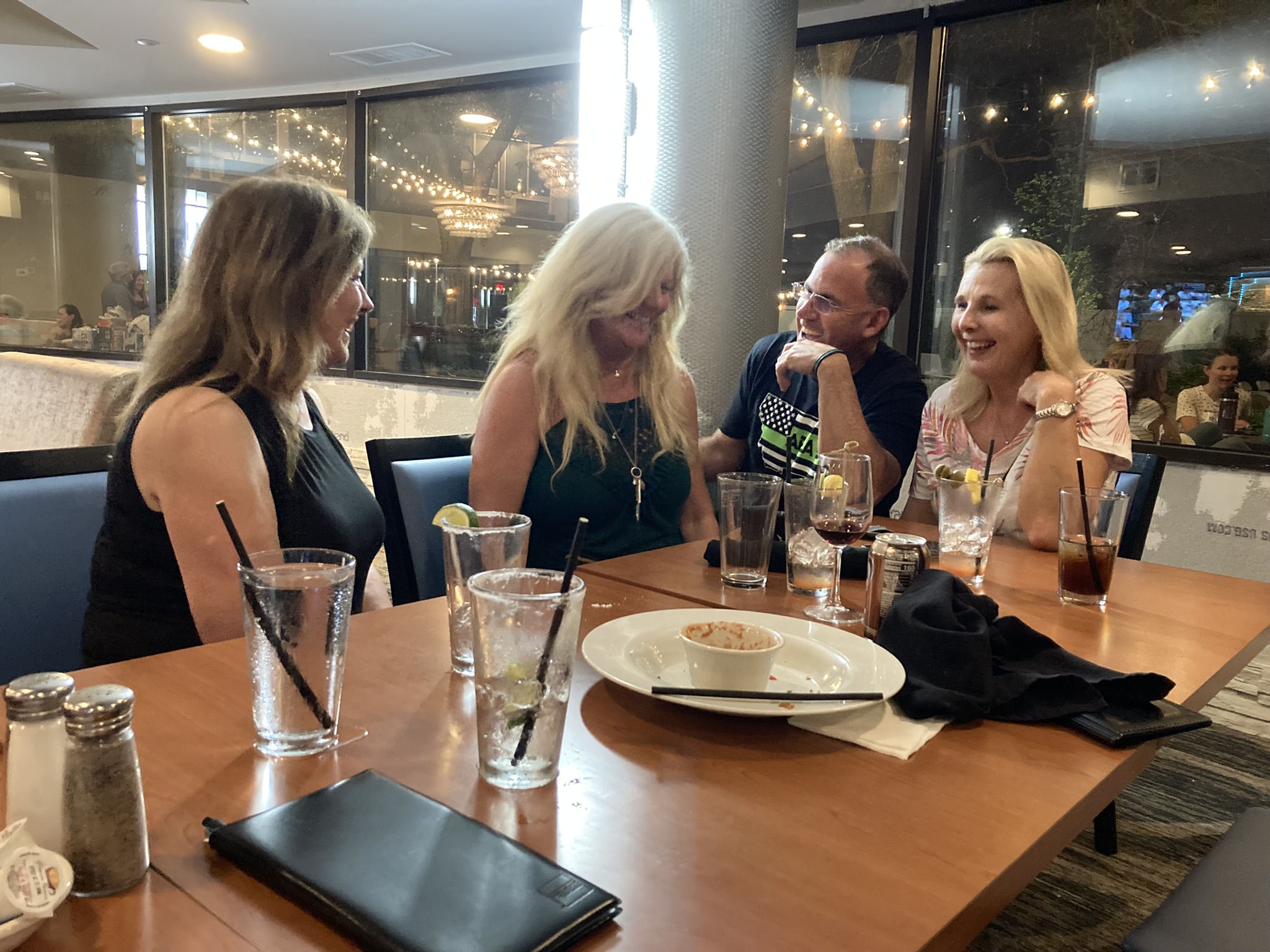
Most of us arrived the night before and gathered in the hotel restaurant for a casual gathering where we met, chatted, hoisted a few beverages, and waited while Patrick made trips to the airport to collect speakers whose flights were delayed. The friendly companionship we started the first night became a hallmark of the event.

Not only did we hear detailed first-hand accounts from folks who work in every aspect of law-enforcement, we also had time with some top-earning, fast-release indie authors, such as Michael Anderle.

I also enjoyed meeting some new authors — most from around the Midwest. One new friend, Madeleine Roberts, who writes as Madeleine Eskedahl, came all the way from New Zealand to immerse herself in US cop culture. (She also stayed for the following week’s Writers’ Police Academy, but I’ve talked about that before.)

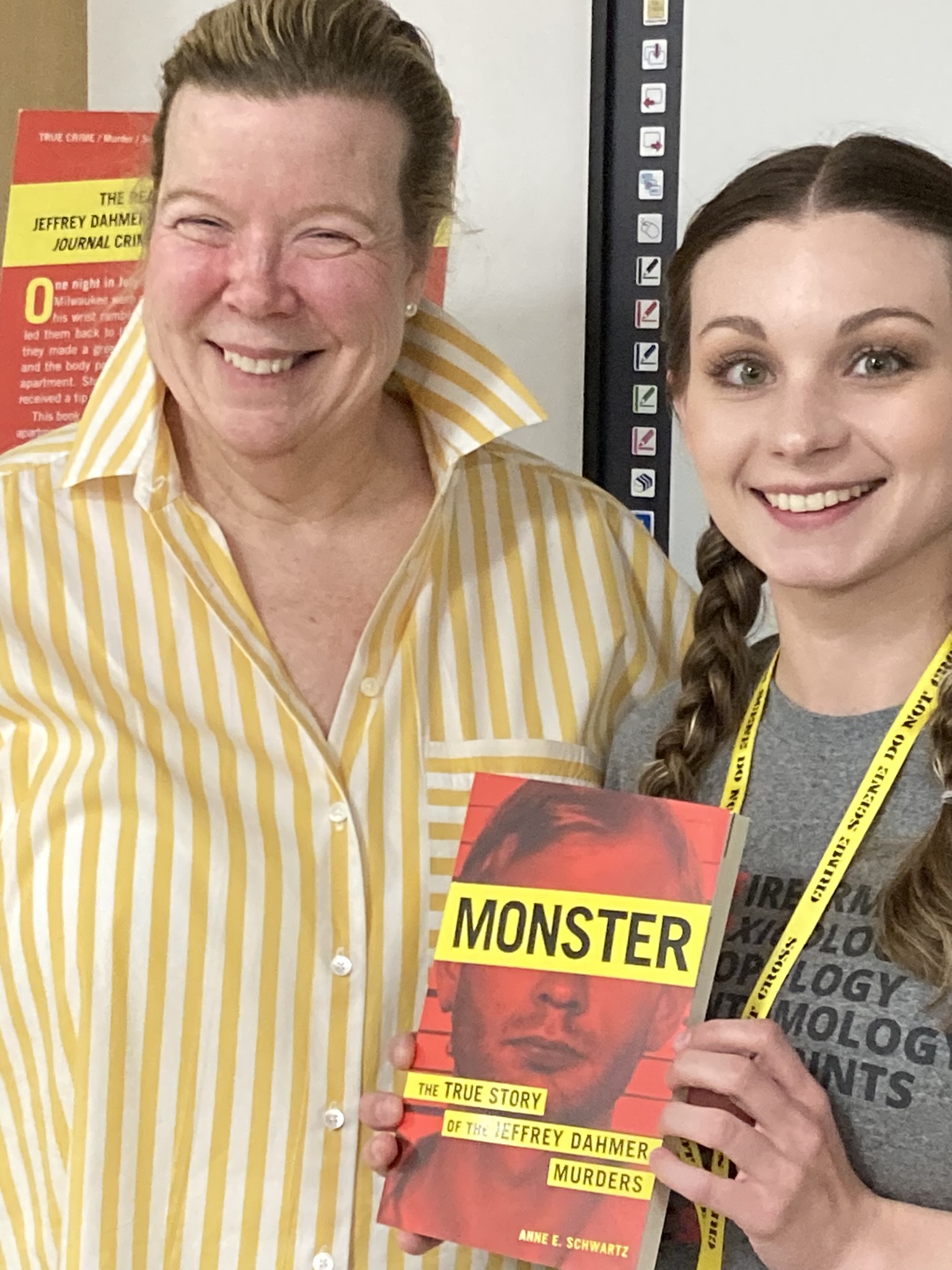
Speaker Anne E. Schwartz with CSI Falynne Gerisch.

Some of my favorite hands-on sessions were with Appleton, Wisconsin, crime scene investigator Falynne Gerisch. Not only did she help us collect fingerprints in a variety of ways, she also showed us some other techniques for evidence collection. And she’ll be showing up in my work-in-progress as my CSI.

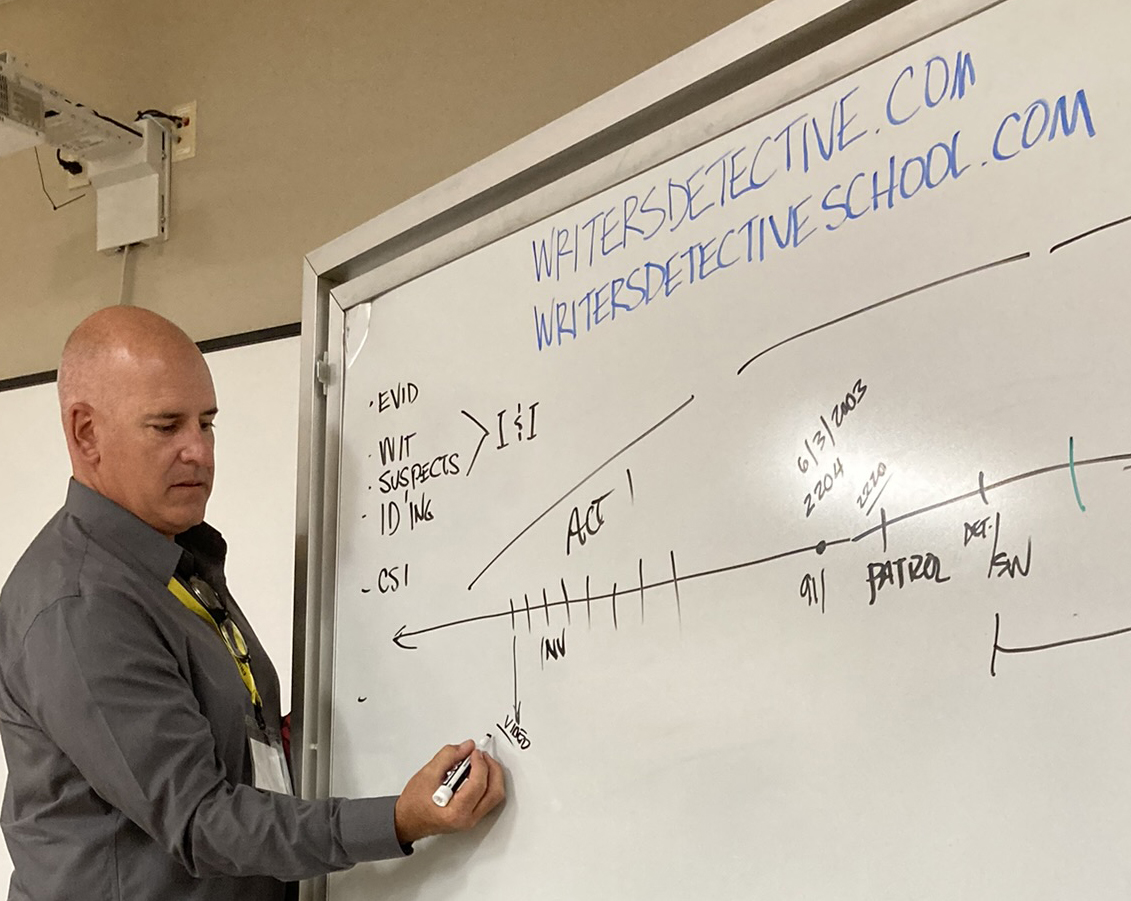
B Adam Richardson

I also loved the crime scene. We were teamed up with partners to investigate a shooting death at the police academy version of the “No-Tell Motel.” After we collected evidence and formed our theories, we got to debrief. And then, in one of the last sessions, B Adam Richarson of the Writer’s Detective Bureau podcast, turned our investigation into a murder board.

I could go on much longer, but I like to keep these short. Suffice it to say, I think if you are a slightly introverted crime fiction (or true crime) writer — or even if you are outgoing but love to get things right — you owe it to yourself to grab one of the seats at next year’s event.

You just can’t have mine.

(The top photo was provided by Cop Camp organizers; the rest are Sharon’s.)

To (self-)publish or not to (self-)publish….

(Wikipedia photo)

I finally made it past the programs and other materials I’ve been working on all March. And I managed to squeak over the finish line in a class I took on self-publishing.

I’ve grown up imagining seeing my books on the library shelf. “The” library was always the one in my home town, the one where I spent a lot of my spare time as a kid, the one where I got my first job.

But my first full time job — at my hometown newspaper — conditioned me to expect to hear presses run minutes after the last story landed on the last page. Not an ideal expectation for someone seeking a traditional book publishing experience, where the day you type “the end” can be years before the day you open the box with the finished copies of the book from the publisher.

I know more than most, I suppose, about the printing process. I even took a printing class when I was in college. I loved setting type and working hand-fed presses. But that’s another story.

I’ve waited so long to devote time to writing fiction, that I have my doubts about being able to wait patiently for that traditional book publishing cycle. And I haven’t even looked for an agent yet (although I’ve had a couple encourage me to send them something when I finish the book).

So, the class in self-publishing was led by Jim Jackson, a past president and past member of the Sisters in Crime Guppy Chapter. The Guppies are “the great unpublished,” although the name is a misnomer since many members stay in the chapter after they’re published, sharing what they’ve learned with the rest of us who haven’t reached that lofty stage yet.

Jim taught a great class on revisions last year. It was intense, but amazingly organized and detailed. I loved it.

When I heard he was teaching one on self-publishing, I new it, too, would be well-planned, well-researched and, well, amazing. I figured it would be the ideal way to get all the facts so I could make a good decision about whether to keep trying for a traditional contract or just go it alone.

I haven’t made my final decision yet, but I do feel well-prepared to make it in the next few months.

I’ll keep you posted.