
Last December I agreed to volunteer some time to do a little desktop publishing. I anticipated the job would take about a month, based on experience with similar projects. Who knew I’d end up putting in about three weeks of that month in ten days!
Part of crunch was my own fault. I went on a week-long vacation with my sisters. We didn’t do much, but it was our first get-together in nearly three years. But traveling in the middle of the project made me nervous. And I didn’t have all the materials from other volunteers before the trip.
I got home, dug in and managed to make the printer’s deadline. And I had a little fun along the way playing with pages. But I really hated cramming so much into so little time. I wanted the finished product to look nice. I wanted it to be accurate. And the rush made me change my goal simply to getting done.
Oh, sigh.
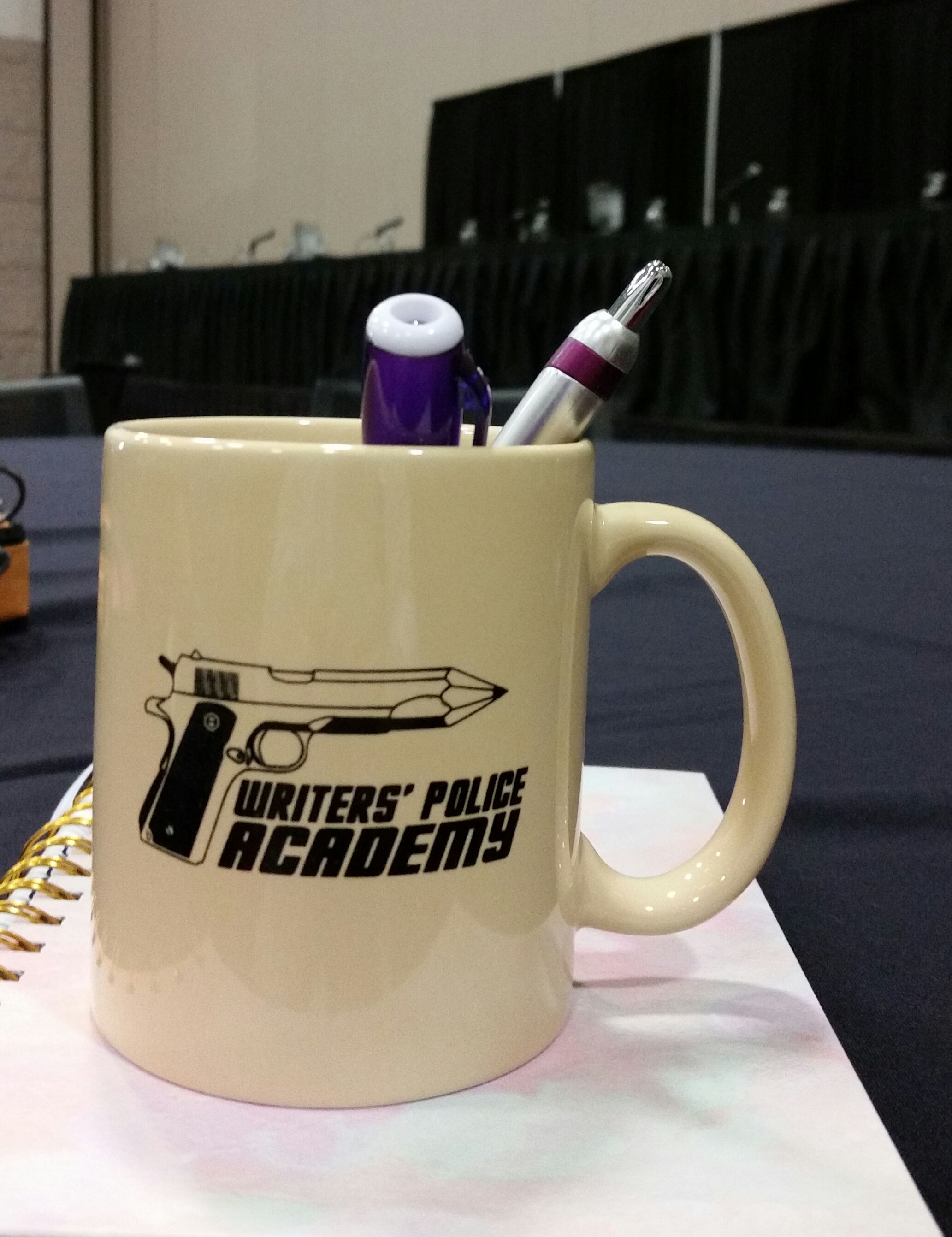
There were mistakes, and while at the moment we’re trying to find them and fix them for the online version of the program, the original printing will always have them. Corrections are coming along, but I’m about to hit the road for another conference — the Writers’ Police Academy, this year in Green Bay and Appleton, Wisconsin. It will be my third trip, and I’m looking forward to it.
And, when I get back, I’ll be making the final corrections to the program. Fingers crossed next year goes better.
 sharon p. lynn