Every year in April the Academy of American Poets (AAP) celebrate their literary form for the whole month. As a sometime poet, I love to think about verses, scrawl them in random notebooks, and sometimes try to have them published.
The first poems I ever wrote are lost to me now. My youngest sisters–twins–needed to find a poem to take to school the next morning. I must have been in high school and they must have been in second or third grade. I was the most prolific reader of us four sisters, so they came to me for help.
We looked for a poem in one of the books in the house, but it wasn’t something our parents had. We might have found examples in our World Book encyclopedias, but I don’t think it occurred to us. Or if we did check, there were no poems for kids.
At the rate I’m going this year, I may actually have a completely revised (and possibly ready to pitch) manuscript.
Since I started working through Jim Jackson’s revision and self-editing process in January, I’ve made it through the total read-through and identified the major changes. Yes, I’ve been at it since January, but it’s not like I’ve put in eight hours a day on the project. In fact, I did some rough math and calculated I’ve actually spent a little more than week and a half on this project. If I didn’t have other “retirement” activities, I might have finished the entire revision by now.
But I do have other activities and, frankly, I don’t plan to drop too many more of them. I have a couple of board memberships that will expire next spring, but by then I may have a solid revision plan to work with.
December has flown by in my life. I didn’t get as much writing done as I’d hoped, although this week I started a wonderful adventure at the Winter Writing Sanctuary, offered by British woman named Beth Kempton. My friend Sharon Michalove, a writer I see nearly every day in online writing groups, spent a week last winter with Beth and told several of us about it Monday.
It’s only Wednesday (yes, New Year’s Eve), and I’ve already made some critical discoveries about the main character in a novel I’ve been trying to revise for several years now. I don’t think Sharon M. knew just how serendipitous her suggestion would be for me.
For example, the novel’s working title is Lovely, Dark and Deep. I took it from Robert Frost’s poem, “Stopping by Woods on a Snowy Evening” by Robert Frost. Amazingly (to me), that poem opened the welcome message for this year’s sanctuary.
The main character, after a few trial names, is now called Beth. That decision I made long before I ever heard of Beth Kempton.
The exercises–really suggestions for things a writer might try this week–have focused on the palette of winter, greens, greys, golds and more. And each day’s inspiration has taken me down a path, when I journey as my character, has helped me really understand my MC much better than I have. I wrote the first draft of this novel for National Novel Writing Month (a now defunct event) in 2020. Other things have gotten in the way of my finishing–including wonderful family distractions this month. But just a couple of hours these past few days have really helped me get back into the revisions.
I’m going to be distracted yet again with an impromptu family dinner tonight, and, no doubt with some surprise that will come up tomorrow. But I think this week’s writing exercises will make the beginning of 2026 much more productive than I imagined.
So, farewell to 2025. It was a great writing year for me.
{In fact, I added a page to this website to post my short stories. Check out “Blood on the White Rose” if you haven’t read it yet.)
And hello to 2026. I’m hoping for more of the same.
Because it was my turn to write a post for my Writing Gals group, I’m sharing it here too. I wrote about some of the things I’ve learned from being in writing critique groups.
No cause of death was reported as the news flew through social media, but I suspected sagging subscriptions and ad sales, coupled with rising materials costs as likely culprits in its demise. A press release reported later by area television stations and a regional daily said as much.
One more small piece of the formerly ubiquitous press is part of history. And I find it saddening for many reasons.
It was the first place I ever saw my words in print. In grade school, after I learned to read, I scanned every newspaper and magazine that came into our house. There were lots. We had a subscription to the now deceased local paper, which was actually two papers. The News and The Leader carried separate nameplates when I was growing up. The News was printed on Tuesday, with home mail delivery on Wednesday. The Leader came out Thursday, with Friday delivery.
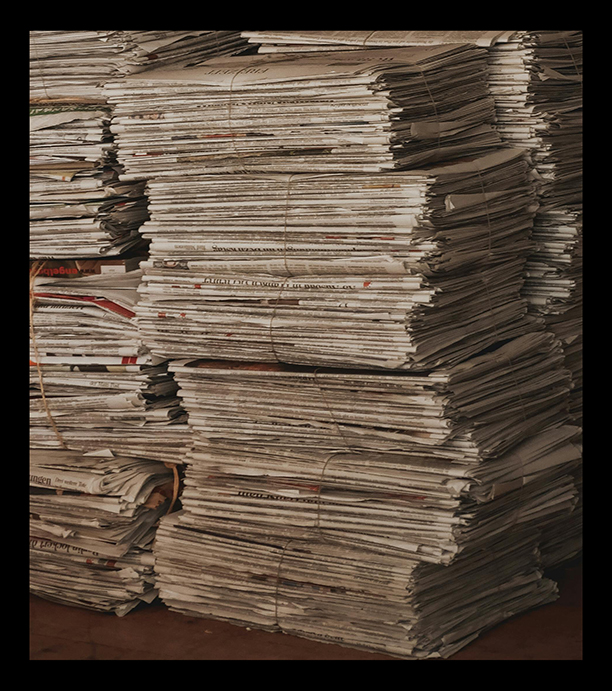
(Pexels photo, Maxim)
I read lots of the articles, and looked at all the pictures. When I was elected scribe of my Camp Fire group in fourth grade, I copied the format of the new officer announcments from the adult clubs and wrote a short article. I recopied it in my best penmanship, carried it the four blocks from my school to the newspaper office, and handed it in. A week later, I read it in the paper. I remember the editor changed one word. (I learned early not to be too attached to my prose.)
The firt time I worked with a newspaper photographer was after I wrote to an area daily’s kids’ column, “Ask Andy.” I’ve always suspected my question was drawn from a hat, not selected because it was so interesting. But I won a set of World Books, which I still have despite its being hopelessly out of date. I remember going to the local newspaper office, the same one I carried articles to, for a photo shoot. The picture still shows up from time to time on my hometown museum’s Facebook post.
I grew up respecting our local newspaper photographer. We all knew to step over the cables in the high school gym because he brought extra lighting to the basketball games so he could get good shots. By the time I was taking sports pictures for the paper, we had strobe flashes for the cameras we carried but I don’t think our shots were as good as his.
I kept writing stories for school groups, from the seventh-and-eighth grade civics club to high school drama club, walking them downtown, and seeing my stories in print. I guess it’s no wonder I kept writing for newspapers for a good chunk of my life.
My first full time job was at that newspaper. I started in the backshop as a typesetter, eventually graduating to page design. I also got to help fix page negatives with a special red pen, “stuff” papers coming off the press, counting and tying them as I went. I could flip a stack of 100 papers back then. I even got to help change “dink” rolls on the press.
My boss in the back shop knew my goal was to work up front, so he helped me organize my schedule to attend classes at Northern Illinois University. Eventually I got a journalism degree there, but not until after my hometown paper had been sold to a young man my age who had dreams of building a nationwide newspaper group. He hired me as an editor for a county weekly, also owned by my hometown paper.
That was 1975. And 50 years later, his company closed, shuttering the papers in Rochelle, several other small towns in Illinois and in other states throughout the U.S.
But he really ended a tradition in my hometown that started in the 1800s. There were newspaperswhen the town was called Lane, before railroad progress required a name change. The Lane Leader ran from 1858 to 1859. The Lane Register was published from 1863 to `1865. The University of Illinois Newspaper Project says Lane changed its name to Rochelle on April 10, 1872.
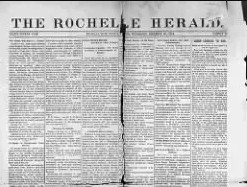
The earliest papers I could find labeled Rochelle were the Herald, 1865-1877, and the longer-lasting Register, 1865-1926, although both seem to predate the changing of the town’s name. I think the records just include some of the Lane years.
The Library of Congress lists 1921 for the founding of the Rochelle News. According to the U of I Newspaper Project database, the Rochelle News succeeded the Rochelle Independent and the Rochelle Register when those nameplates died in 1926.
The News went into business with the .Rochelle Leader in 1934 but each continued under its own nameplate until 1994 when the two papers became the Rochelle News-Leader under the ownership that just closed its doors.
Sadly, no services have been scheduled to commemorate the loss.